Polar Verity Sense Review: A Comfortable Arm Sensor for Training, Not a Medical Monitor
ReviewPolar Verity Sense optical armband
Best for chest-strap avoidersBest Use: Running, cycling, indoor rowing, and gym sessions where wrist watches bounce or chest straps annoy you
$80-100
Quick picks
Polar Verity Sense optical armband
★ Top pick Best for chest-strap avoiders- Best Use: Running, cycling, indoor rowing, and gym sessions where wrist watches bounce or chest straps annoy you
- Caveat: Still an optical sensor; rapid intervals and poor placement can lag
Bottom line
The Polar Verity Sense is worth considering if wrist-based heart-rate readings jump around during running, rowing, cycling, or strength circuits, but you dislike chest straps. The strongest use case is steady training where comfort and consistent placement matter more than laboratory precision. Start by searching Amazon for Polar Verity Sense if you already train with heart-rate zones and want fewer wrist-watch dropouts.
Skip it if you need medical-grade rhythm information, ECG features, or the tightest possible interval response. For that, a chest strap or a medical device discussion is a better path. The Verity Sense is a training sensor, not a diagnosis tool.
Who should buy it
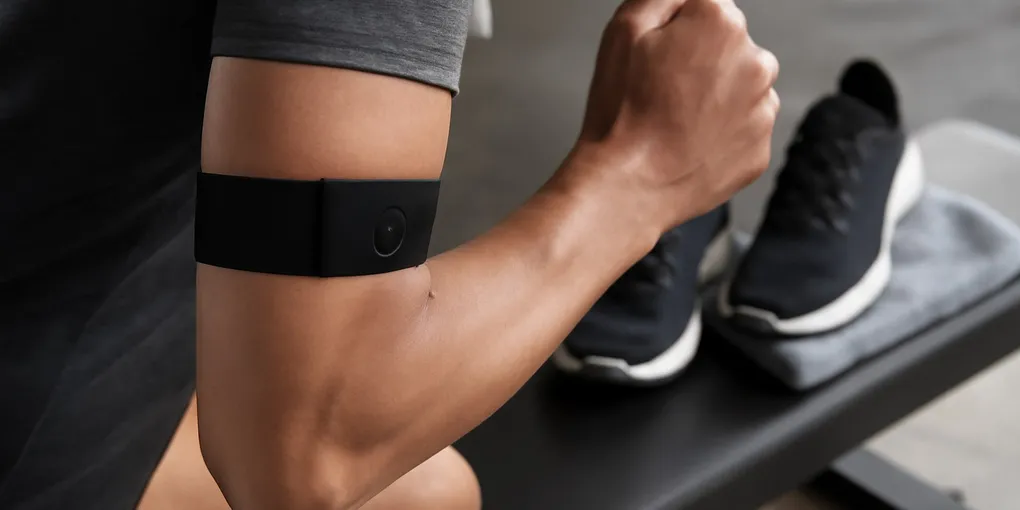
Buy the Polar Verity Sense if your watch loses readings during cold runs, rowing sessions, kettlebell work, or rides where your wrist angle changes. The upper arm or forearm is usually a cleaner optical location because the sensor sits against more stable tissue than the wrist.
It is also a good fit if chest straps rub, slide, or feel too distracting. Comfort matters because a sensor you actually wear is more useful than a theoretically better sensor left in a drawer. For runners building easier aerobic days, pair it with a simple protocol such as our RPE scale protocol for cardio and strength instead of chasing every beat.
Who should skip it
Skip it if you already get clean data from a chest strap and do not mind wearing one. Chest straps still tend to respond faster to abrupt intensity changes because they measure electrical cardiac activity rather than optical blood-flow changes at the skin.
Also skip it if you want atrial fibrillation alerts, ECG strips, blood-pressure interpretation, or medical reassurance. Those are not the job. If symptoms, palpitations, fainting, chest pain, or unusual shortness of breath are part of the question, stop shopping and get clinical advice.
Accuracy reality
Optical heart-rate sensors shine light into tissue and estimate pulse from blood-flow changes. Placement, movement, skin contact, temperature, tattoos, and strap tightness can all affect readings. An arm sensor can be more stable than a wrist watch during exercise, but it can still lag when effort changes quickly.
For zone 2 runs, long rides, and gym conditioning, that lag is usually acceptable. For short sprints, repeated intervals, or testing sessions where every second matters, compare against a trusted chest strap before relying on it. The best review test is not one perfect workout; it is five ordinary sessions where you check whether the readings match perceived effort and session notes.
Setup notes that matter
Wear the sensor snugly enough that it does not bounce but not so tight that it leaves deep marks. Try the upper arm first for running and cycling. For rowing or strength circuits, test both upper arm and forearm because grip position and elbow bend can change sensor contact.
Charge it before travel, rinse the strap after sweaty sessions, and keep the optical window clean. If the first few minutes look strange, warm up and check placement before assuming the device is wrong. Cold skin and loose straps can make early readings look noisy.
How it compares with cheaper armbands
The cheaper alternative is a generic optical armband. That can be fine for casual zone tracking, but the reason people pay more for Polar is usually ecosystem support, strap comfort, and fewer pairing headaches. If price is the main concern, search Amazon for optical armband heart rate monitors and compare return policies, app support, and replacement straps before choosing.
The more precise alternative is still a chest strap. If your workouts revolve around short intervals, threshold tests, or coach-reviewed files, search Amazon for Bluetooth chest strap heart rate monitors and decide whether comfort or response speed matters more.
Product-led fit check
The Verity Sense makes the most sense when you need a middle path: more stable than many watches, less intrusive than many chest straps. It is not the cheapest way to record heart rate, but it is one of the cleaner comfort upgrades for people who already train by zones.
If you only glance at heart rate after workouts, use your watch. If you actively adjust pace, watts, or rest based on live heart rate, an armband can be worth the extra device.
Sources and safety notes
Wearable optical heart-rate measurement is useful for training feedback, but it has known limits during movement and intensity changes. A validation review in JMIR mHealth and uHealth discusses variation in wrist-worn heart-rate accuracy across devices and activities (PMID: 30429120). The American Heart Association describes target heart-rate zones as a general exercise-intensity tool rather than a medical diagnosis system (AHA: target heart rates).
Reader test
Buy the Polar Verity Sense if your wrist watch drops readings and a chest strap annoys you. Keep a chest strap if interval precision is the main job. Keep your watch if heart-rate data is only a casual after-workout note. The Verity Sense is best when comfort makes you more consistent with a training metric you already understand.
FAQ
Is Polar Verity Sense more accurate than a watch?
Often during exercise, because the arm location can be more stable than the wrist. It is still an optical sensor, so expect occasional lag or noise.
Should I buy Verity Sense or a chest strap?
Buy Verity Sense for comfort and convenience. Buy a chest strap if fast interval response and tightest precision matter more than comfort.
Can Polar Verity Sense detect heart problems?
No. It is not an ECG or medical monitor. Use it for training feedback, not symptom evaluation.