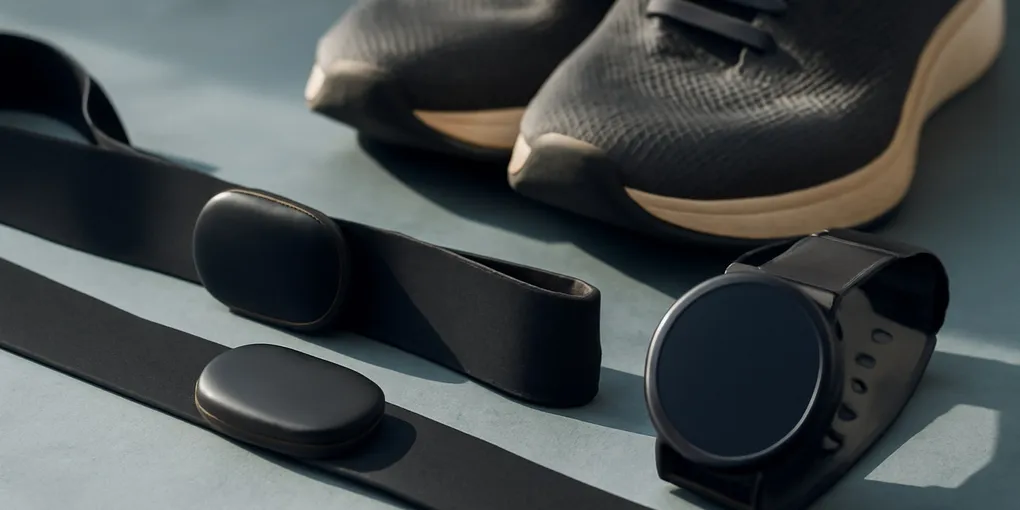
Polar H10 Chest Strap Review: Reliable Heart-Rate Data Without Turning Training Into a Spreadsheet
ReviewPolar H10 chest strap heart-rate monitor
$75-100
Quick picks
| Product | Key Specs |
|---|---|
| See price on Amazon | — |
| See price on Amazon | — |
Product availability, certifications, and retailer details can change; check the current Amazon page before buying.
Bottom line
The Polar H10 is a sensible upgrade when wrist heart-rate data is the weak link in your training. It is not a recovery coach, medical device, or automatic fitness plan. It is a chest strap that usually gives cleaner heart-rate data during intervals, tempo work, indoor cycling, and cold-weather sessions where wrist sensors can lag or spike.
If that problem sounds familiar, search Amazon for the Polar H10 chest strap heart-rate monitor. If your watch already tracks easy runs well and you never adjust training from heart rate, skip the purchase.
Who should buy it
Buy the H10 if you train by zones, compare similar workouts over time, or use a treadmill, bike trainer, rower, or watch that supports Bluetooth or ANT+ heart-rate accessories. It is especially useful for workouts with fast intensity changes because electrical chest-strap sensing tends to respond more cleanly than wrist optical sensing.
It also makes sense for runners who have seen impossible wrist readings: a heart rate that locks to cadence, jumps during cold starts, or stays suspiciously low during hard repeats. Before replacing your watch, try a strap.
Who should skip it
Skip it if the feel of a chest strap will make you avoid using it. Some people dislike the pressure, sweat, or pre-wetting routine. Skip it if you only want step counts and broad activity tracking. A strap is most useful when you care about session-level training data.
Also skip it as a health alarm. Consumer heart-rate gear can support exercise tracking, but chest pain, faintness, unexplained palpitations, or unusual shortness of breath needs medical care, not a better accessory.
Fit and setup notes
Wet the electrode area before workouts, especially in dry or cold conditions. Tighten the strap enough that it stays in place when you breathe hard, but not so tight that it feels like a rib brace. Rinse the strap after sweaty sessions and follow battery/strap care instructions.
Pairing matters. Check whether your watch, bike computer, treadmill, or app supports the connection mode you plan to use. If you live in the Garmin ecosystem and want running dynamics, search Amazon for Garmin HRM-Pro Plus before defaulting to Polar.
BSR review score
We score the Polar H10 at 8.9/10 for its job: reliable heart-rate capture for training. Accuracy and signal stability carry 40% of the score, compatibility 20%, comfort 15%, maintenance 10%, value 10%, and claim restraint 5%.
The main drawback is friction. A strap you leave in a drawer has a score of zero for you. The H10 is best for people who already know why wrist data is not enough.
How it compares with a wrist sensor
Wrist optical sensors are convenient and good enough for many easy runs. They struggle more when blood flow, motion, watch fit, cold weather, tattoos, or gripping movements interfere with the signal. A chest strap is less convenient but often cleaner during the sessions where accuracy matters most.
Use the strap for workouts where decisions depend on data: threshold sessions, zone 2 drift checks, indoor bike intervals, and repeatable field tests. Use your watch alone for casual walking and easy days if it behaves well.
Best use cases for the H10
The H10 earns its keep when the workout has a decision attached to the number. Zone 2 runs, tempo progressions, indoor cycling intervals, and treadmill drift checks all benefit from cleaner heart-rate capture. If your watch shows 145 bpm while you can barely speak, then 105 bpm during a hard hill, the training decision becomes guesswork. A strap reduces that noise.
For zone work, pair the strap with a simple protocol rather than chasing every beat. Our zone 2 cardio protocol explains how to use effort, talk-test cues, and heart rate together. The strap should make that process calmer, not turn every run into a spreadsheet audit.
Buying and maintenance details
The H10 sensor is only half the product; the soft strap is the wear part. If you train often, budget for eventual strap replacement. Erratic readings after months of use are often a strap, battery, or electrode-care issue rather than proof the sensor failed. Rinse sweat out, dry it flat, and detach the pod when storing it.
Before buying, check your main device list. Most modern watches and bike computers support Bluetooth heart-rate sensors, ANT+, or both, but gym equipment can be inconsistent. If treadmill display pairing is the main reason you are buying, search the treadmill manual first. If running dynamics inside Garmin Connect matter more than cross-platform use, the Garmin HRM-Pro Plus may fit that ecosystem better.
Sources and safety notes
A validation study found accuracy varies across wearable heart-rate devices and conditions (PMID: 31134789). AHA target heart-rate guidance frames heart rate as a general exercise-intensity tool, not a perfect prescription (AHA: target heart rates). CDC adult activity guidance supports regular aerobic and strengthening activity without requiring consumer sensor upgrades (CDC: adult physical activity guidelines).
Polar H10 FAQ
Is the Polar H10 worth it for zone 2 training?
Yes, if wrist readings are noisy enough that you cannot tell whether you are staying in the intended range. No, if perceived effort and watch data already agree.
Can I use it for lifting?
You can, but straps may shift during some movements. It is most valuable for conditioning blocks, circuits, and cardio intervals.
How long does the strap last?
The sensor can last years, but the soft strap is a wear item. Rinse it, dry it, and replace it when readings become erratic despite a fresh battery.
Frequently Asked Questions
- For many interval, cold-weather, and strength sessions, chest straps produce more stable data than wrist optical sensors.
- It can pair with compatible phone apps and equipment, but watch/app compatibility should be checked before buying.
- Skip it if your wrist sensor already matches effort and you do not review heart-rate trends.