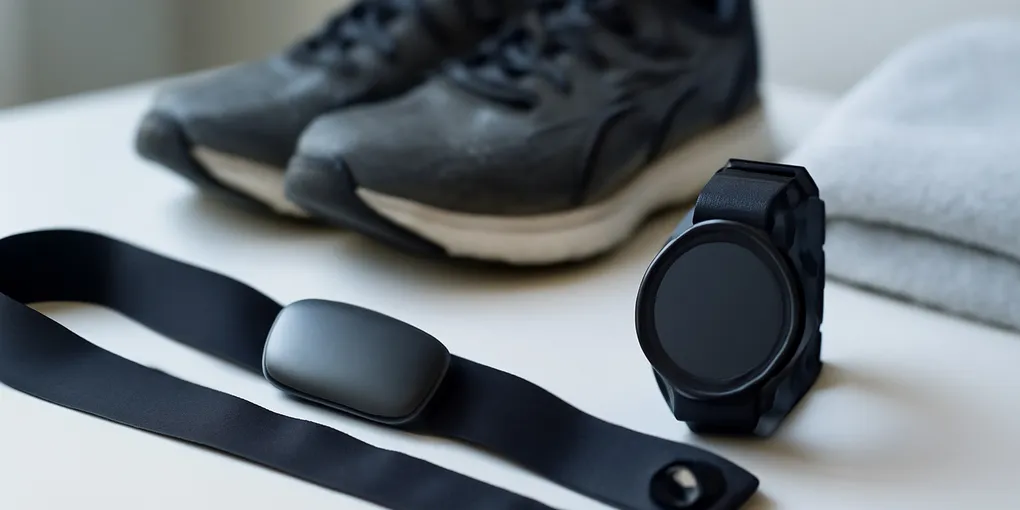
Garmin HRM-Pro Plus Review: Chest-Strap Accuracy for Training, Not a Health Diagnosis
ReviewGarmin HRM-Pro Plus chest strap
Best for Garmin runners who care about interval dataBest Use: Intervals, tempo runs, cycling, and Garmin watch users who want cleaner heart-rate files
$90-130
Quick picks
Garmin HRM-Pro Plus chest strap
★ Top pick Best for Garmin runners who care about interval data- Best Use: Intervals, tempo runs, cycling, and Garmin watch users who want cleaner heart-rate files
- Caveat: A chest strap is still a training accessory, not a medical monitor
Bottom line
The Garmin HRM-Pro Plus is worth buying if your Garmin watch gives jumpy wrist readings during intervals, cold runs, cycling, rowing, or strength circuits. It is not exciting, but that is the point: a good chest strap should disappear, pair reliably, and give cleaner heart-rate data than a watch sensor when movement gets messy.
Start by searching Amazon for Garmin HRM-Pro Plus if you already train by zones, use Garmin Connect, and care about the difference between an easy run and a tempo run in your file. Skip it if you only glance at average heart rate after workouts or dislike wearing anything around your chest.
Who should buy it
Buy the HRM-Pro Plus if you run intervals, hill repeats, tempo sessions, bike workouts, or treadmill sessions where wrist optical readings lag behind effort. Chest straps measure electrical cardiac activity through electrodes at the chest, so they usually respond faster to abrupt intensity changes than optical sensors at the wrist or arm.
It is also a fit for Garmin users who want one accessory that stays inside the Garmin ecosystem. Garmin’s product page lists Bluetooth and ANT+ connectivity, running dynamics support with compatible Garmin watches, and a tool-free battery door. Those details matter more than another vague promise of accuracy.
Who should skip it
Skip it if your watch readings already match perceived effort and you do not structure workouts around heart-rate zones. A strap adds another battery, another piece of laundry, and another thing to remember before training. Casual lifters and walkers often get enough feedback from a watch, talk test, or RPE scale protocol.
Skip it for health reassurance. The HRM-Pro Plus is not an ECG diagnostic device, not a blood-pressure monitor, and not a substitute for clinical evaluation. Chest pain, fainting, new palpitations, or unusual shortness of breath belong with a clinician, not a shopping cart.
Accuracy reality
For training, the main benefit is not a perfect number every second. It is fewer ridiculous spikes, fewer dead zones, and faster response when you surge. Wrist sensors can work well on steady runs, but they are more exposed to cold skin, loose fit, wrist angle, grip pressure, and vibration. A chest strap avoids many of those problems.
That does not make every data point sacred. Dry electrodes, a loose strap, static from synthetic shirts, and a weak battery can still create bad readings. Wet the contacts before starting, tighten the strap so it does not slide, and wash the strap according to the manual instead of letting salt build up.
How it compares with cheaper straps
Cheaper Bluetooth and ANT+ chest straps can be good enough if all you need is heart rate. The Garmin premium makes more sense when you want Garmin compatibility, running dynamics with supported watches, and a battery door that does not require tiny screws. If you are outside the Garmin ecosystem, search Amazon for Bluetooth chest strap heart-rate monitors and compare app compatibility before paying extra.
If comfort is the reason you avoid chest straps, an arm sensor may be the better compromise. Our Polar Verity Sense review covers that middle ground: more stable than many watches, less intrusive than many straps, but still optical.
Setup notes that prevent bad data
Put the strap on before the warm-up and give it a minute to settle. Moisten the electrode pads if the first few minutes are noisy. Pair it to the device you actually use for recording rather than every nearby app. Replace the battery when dropouts become frequent instead of assuming your fitness changed overnight.
For intervals, judge the session by the pattern, not one isolated peak. Heart rate lags effort, even with a chest strap. Power, pace, RPE, and recovery between reps still matter.
Comfort, battery, and laundry details
The HRM-Pro Plus is easier to live with than older screw-door straps, but it is still a chest strap. The soft strap needs rinsing after sweaty sessions, and the pod should be removed before a full wash. If you already skip simple gear maintenance, that matters more than another spec line. Salt buildup is one of the easiest ways to turn a good strap into a dropout machine.
Battery access is one of the practical upgrades over many budget models. A tool-free door makes replacement less annoying, which means you are more likely to fix dropouts before blaming the workout. Keep a spare coin-cell battery in the same drawer as your gels or charging cables if the strap is part of race preparation.
Fit is personal. The strap should sit snugly below the chest muscles without sliding when you breathe hard. Too loose creates spikes and dropouts; too tight makes tempo runs feel like a chore before you start. If chest straps always bother your skin, do not force this model just because the data is cleaner.
Best use cases
The strongest case is interval or tempo training where wrist data changes late. If your watch reports easy-zone heart rate while your breathing is already controlled-hard, a chest strap can keep the file honest. It is also useful on bikes and rowers because wrist angle and grip pressure can confuse optical sensors.
The weaker case is all-day health tracking. The HRM-Pro Plus is not a replacement for a watch, sleep tracker, blood-pressure cuff, or clinician-reviewed ECG. It is a workout sensor. Treating it as anything else invites overreading normal training noise.
For buyers comparing options, the decision is simple: choose the Garmin strap when Garmin integration and running dynamics matter, choose a cheaper Bluetooth strap when basic heart rate is enough, and choose an optical arm band when chest comfort is the real blocker.
Sources and product notes
Garmin’s product page for the HRM-Pro Plus lists the strap’s connectivity and compatibility details (Garmin: HRM-Pro Plus). A review of consumer wearable accuracy notes that device and activity conditions affect heart-rate validity (PMID: 31134789). The American Heart Association describes target heart-rate zones as a general exercise-intensity guide, not a medical diagnostic framework (AHA: target heart rates).
Reader test
Buy the HRM-Pro Plus if your Garmin watch is central to your training and you need cleaner interval files. Buy a cheaper strap if you only need basic Bluetooth heart rate. Buy an arm sensor if chest comfort is the dealbreaker. Do not buy any of them for symptom interpretation.
Garmin HRM-Pro Plus FAQ
Is Garmin HRM-Pro Plus more accurate than a watch?
Usually during hard or variable exercise, especially intervals and cold-weather runs. Wrist sensors can still be fine for steady sessions.
Does HRM-Pro Plus work without a Garmin watch?
It can broadcast heart rate over Bluetooth and ANT+, but the best reason to buy it is Garmin ecosystem integration. Check your app or watch compatibility before ordering.
Can it detect heart problems?
No. It is a training heart-rate strap, not a clinical ECG device.