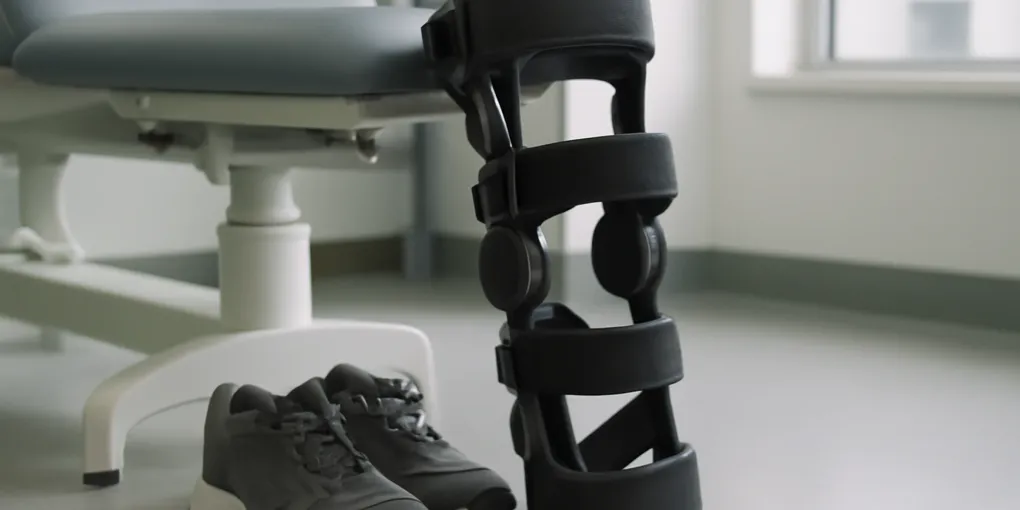
Knee Unloader Braces for Osteoarthritis: Who Should Buy One?
Evidence ExplainerQuick picks
| Product | Key Specs |
|---|---|
| View current product details |
|
| View current product details |
|
| See price on Amazon |
|
Product availability, certifications, and retailer details can change; check the current Amazon page before buying.
Bottom line
A knee unloader brace is worth discussing when imaging and examination identify osteoarthritis concentrated in one side of the tibiofemoral joint and walking, standing, or work remains painful despite a reasonable first-line plan. It is not the best blind purchase for undiagnosed knee pain, kneecap-dominant pain, widespread arthritis across several compartments, a hot swollen joint, or a knee that has not been properly assessed.
Choose a dedicated unloader only after confirming whether the medial or lateral compartment needs unloading. DonJoy and Össur make named compartment-specific systems, but the correct model, side, correction direction, and size matter more than brand reputation. A generic hinged Amazon brace may provide compression and a feeling of stability, but it should not be marketed or bought as if it delivers the same mechanical correction.
Unloader, hinged brace, and sleeve are different products
| Product | What it is designed to do | Best-fit question | Main failure mode |
|---|---|---|---|
| Unloader brace | Apply a three-point force intended to reduce load through one knee compartment | Is OA predominantly medial or lateral, and did a clinician recommend correction? | Wrong direction, migration, skin pressure, or low adherence |
| Generic hinged brace | Limit some side-to-side motion and add external support | Is the goal general support rather than compartment correction? | Bulky fit and overconfidence without meaningful unloading |
| Compression sleeve | Provide warmth, compression, and proprioceptive feedback | Does a low-profile sleeve improve comfort enough for activity? | Minimal structural correction despite strong marketing claims |
| Patellofemoral brace | Influence kneecap tracking or contact pattern | Is pain primarily around or behind the kneecap? | Treating tibiofemoral OA with the wrong brace concept |
The product category only makes sense after identifying the pain generator. “Arthritis knee brace” is not a diagnosis.
What unloading means
Many people with knee osteoarthritis have greater cartilage loss and joint-space narrowing in the medial compartment, the inner side of the knee. A valgus-producing unloader brace is designed to shift some load away from that medial compartment. Less commonly, lateral-compartment OA may call for the opposite correction.
The brace does not regrow cartilage. Its goal is functional: reduce pain during weight-bearing, improve walking tolerance, or make work and daily movement more manageable. The effect exists only while the brace is worn and correctly tensioned.
A 2015 systematic review in Sports Health found generally favorable pain outcomes for valgus offloader braces in medial-compartment knee OA, while also noting variability in studies and adherence. More recent reviews continue to describe potential symptom benefit but emphasize heterogeneous devices, methods, and patient selection. That supports a trial in the right patient, not a universal recommendation.
Who is most likely to benefit
A reasonable candidate usually has several of these features:
- A diagnosis of tibiofemoral knee osteoarthritis rather than unexplained pain.
- Symptoms and imaging that point mainly to one compartment.
- Pain that increases with walking or prolonged standing.
- A desire to delay or avoid surgery while using other recommended care.
- Enough hand function and mobility to apply and adjust the brace.
- Skin and circulation that can tolerate straps and contact pressure.
- Access to a return, refitting, or orthotics service if the first setup migrates.
A brace trial is less compelling when pain is mostly patellofemoral, arthritis is equally severe across the knee, symptoms come from the hip or lumbar spine, or the person will not wear a rigid frame under normal clothing.
Named products and the safe shopping path
The Össur Unloader One X is a dedicated unloader with a low-profile frame and strap system. The company provides sizing and professional resources. It is the type of product to shortlist when a clinician has identified compartment-specific OA and a qualified fitter can confirm setup.
DonJoy offers several OA brace families through its official knee-bracing catalog. Model availability and names change, so confirm the exact current device rather than buying from an old review. Ask whether the prescribed brace unloads the medial or lateral side and how its adjustment mechanism should be used.
If the clinical goal is only general support, use the generic hinged knee brace results to Check Hinged Knee Brace Osteoarthritis on Amazon. Treat that as a bounded shopping path, not a substitute prescription. Check bilateral versus side-specific design, thigh and calf circumference ranges, hinge removability, strap layout, return policy, and whether replacement parts exist.
Why fitting is not optional
An unloader can fail even when the diagnosis is right. Common problems include slipping down the leg, pinching at the back of the knee, excessive pressure over the shin or thigh, numbness, skin irritation, and straps that are tightened until the brace becomes intolerable.
Measure at the exact locations specified by the manufacturer. Do not choose size from pants waist or body weight. If measurements fall between sizes, ask the fitter or manufacturer rather than guessing. Leg shape, not only circumference, affects migration.
During fitting, learn:
- Which hinge belongs on which side of the knee.
- The order in which straps are secured.
- The starting tension or correction setting.
- How much knee bend is expected.
- What clothing or liner can be used underneath.
- Which red marks are temporary and which require adjustment.
- How to clean liners without damaging hook-and-loop material.
Take a short walk before leaving. A brace that feels acceptable while seated may rotate or slide after fifty steps.
A two-week brace trial
Use the brace for the specific task that currently causes trouble, such as a neighborhood walk or a standing work block. Keep footwear and pain medication stable if medically appropriate so the comparison means something.
Record four items at baseline and during the trial: pain during the task, minutes or distance completed, confidence or instability, and skin response. Build wear time gradually according to the fitting instructions. Do not start with an all-day shift simply because the brace felt comfortable for ten minutes.
At the end of two weeks, ask whether the brace produced a useful functional gain. A one-point pain change with no improvement in walking may not justify a bulky device. Being able to complete grocery shopping with less pain may justify it even if the knee is not symptom-free.
If the brace repeatedly migrates, return for refitting before deciding that all unloaders fail. If pressure causes numbness, persistent discoloration, blistering, or worsening swelling, stop and obtain advice.
What the evidence does and does not establish
The American Academy of Orthopaedic Surgeons guideline states that brace treatment could be used to improve function, pain, and quality of life in people with knee osteoarthritis, with recommendation strength limited by the underlying evidence. That wording matters. It supports bracing as an option, not as a cure or mandatory step.
Trials often differ in brace design, comparator, wear schedule, OA severity, alignment, and follow-up. Blinding is difficult because users know whether they are wearing a rigid device. Adherence is also a major issue. A brace may produce biomechanical change in a laboratory but add no value if heat, bulk, or skin pressure keeps it in a closet.
The relevant outcome is therefore not “Does bracing work?” in the abstract. It is “Does this correctly selected and fitted brace improve this person’s target activity enough to justify its cost and burden?”
Combine the brace with first-line care
A brace generally works alongside, not instead of, exercise therapy, weight management when appropriate, topical or oral medication decisions, activity modification, and education. The 2019 American College of Rheumatology and Arthritis Foundation guideline includes tibiofemoral bracing among strongly recommended options for tibiofemoral knee OA, while the full treatment plan depends on the individual.
Do not stop strength or mobility work just because the brace reduces pain. Use the improved tolerance to participate in the plan your clinician or physical therapist recommends. The brace is a tool for loading, not permission to ignore a rapidly changing knee.
Safety checks before ordering
Ask before bracing if you have peripheral neuropathy, reduced skin sensation, peripheral arterial disease, significant leg swelling, fragile skin, an open wound, a recent blood clot, or a recent operation. These conditions may change whether compression and rigid contact are safe.
Seek prompt assessment for a hot, red, markedly swollen knee; fever; inability to bear weight after injury; a locked knee; calf swelling or shortness of breath; or sudden major instability. An online brace cannot rule out infection, fracture, clot, or an acute internal injury.
What to avoid
Avoid listings that use “unloader” for a simple elastic sleeve without explaining the correction mechanism. Avoid one-size products for a job that depends on precise force and alignment. Do not buy a medial-unloading brace because medial knee pain “sounds close” without confirming the affected compartment. Do not crank the adjustment beyond instructions to force more relief.
Concrete decision
- Shortlist Össur or DonJoy dedicated unloaders: you have diagnosed unicompartmental tibiofemoral OA and access to fitting.
- Choose a generic hinged brace: the agreed goal is general support, and nobody has prescribed compartment unloading.
- Choose a sleeve: warmth and light compression help, while rigid frames are disproportionate to the problem.
- Buy nothing yet: the diagnosis, compartment, or cause of swelling and instability is unclear.
FAQ
Can I buy an unloader knee brace without a prescription?
Access varies by product, seller, insurer, and location. Even when a brace is sold directly, compartment selection and fitting still justify clinical input.
How tight should an unloader brace be?
Secure enough to remain positioned and deliver the prescribed correction, but not so tight that it causes numbness, color change, blistering, or escalating pain. Follow the model-specific fitting guide.
Is a knee sleeve an unloader brace?
Usually not. A sleeve may provide compression and warmth. A dedicated unloader applies a compartment-specific corrective force through a frame and straps.
Will an unloader prevent knee replacement?
It may reduce symptoms and support function for some people, but it cannot guarantee avoidance of surgery or reverse cartilage loss.
Sources
- AAOS, Management of Osteoarthritis of the Knee (Non-Arthroplasty), Third Edition: https://www.aaos.org/oak3cpg
- American College of Rheumatology/Arthritis Foundation OA guideline: https://pubmed.ncbi.nlm.nih.gov/31908149/
- Moyer et al., valgus bracing systematic review: https://pubmed.ncbi.nlm.nih.gov/25556557/
- Össur, Unloader One X official product information: https://www.ossur.com/en-us/bracing-and-supports/knee/unloader-one-x
- DonJoy, official knee-bracing product catalog: https://www.djoglobal.com/products/donjoy
- Related reading: best knee sleeves for squats and stairs and best TENS units for pain relief.