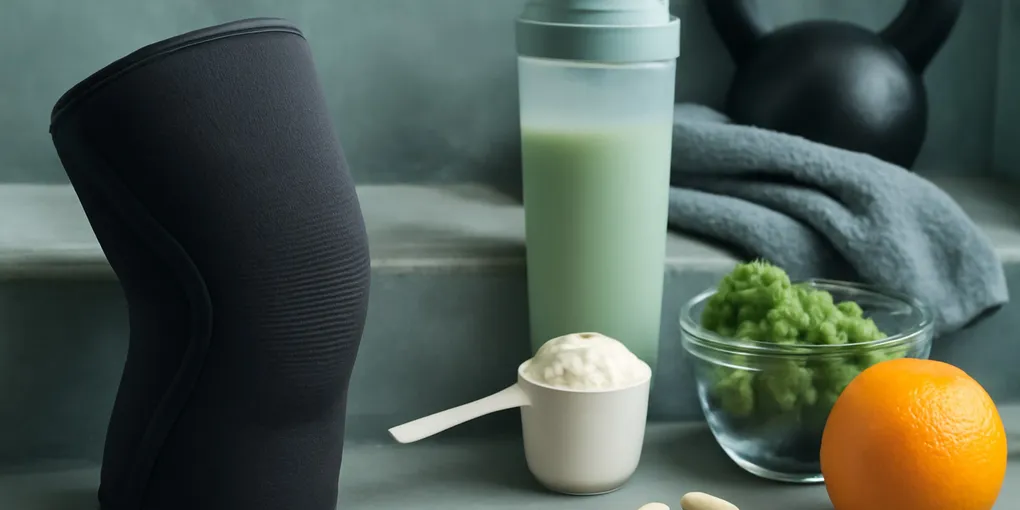
Best Knee Sleeves for Squats and Stairs: Compression, Warmth, and Fit
Buyer's GuideStoic 7mm Knee Sleeves
Best heavy-squat sleeveBest Use: Barbell squats and leg presses when firm neoprene warmth matters
Check current price
Quick picks
| Product | Key Specs |
|---|---|
| See price on Amazon |
|
| See price on Amazon |
|
| See price on Amazon |
|
Product availability, certifications, and retailer details can change; check the current Amazon page before buying.
Bottom line
For squats and stairs, the useful shortlist is Stoic 7mm for heavy barbell sessions, Rehband Rx 5mm when you want a less bulky gym sleeve, and Copper Fit Freedom when thin daily compression matters most. Treat the quick picks as model-specific shortlists, then confirm current dimensions, materials, return terms, and seller details before ordering.
Quick picks
- Best heavy-squat sleeve: Search Amazon for Stoic 7mm Knee Sleeves — barbell squats and leg presses when firm neoprene warmth matters. Too stiff and sweaty for all-day stair-heavy use.
- Best mixed gym and stairs sleeve: Search Amazon for Rehband Rx 5mm Knee Sleeve — readers who want moderate support that bends better than 7mm powerlifting sleeves. Usually sold singly; compare pair cost before checkout.
- Best thin daily-wear option: Search Amazon for Copper Fit Freedom Knee Compression Sleeve — walking, stairs, travel days, and light gym sessions under pants. Less rebound and joint warmth than thick neoprene.
Choose knee sleeves by activity and tolerance. A thick 7 mm sleeve is for heavy squat sessions, a 5 mm Rehband-style sleeve is easier to wear across mixed training, and a lighter compression sleeve is the stair-and-walking option when warmth matters more than barbell rebound.
How we evaluated these picks
This comparison weighed sleeve thickness, heat retention, knee-flexion comfort, sizing risk, and whether the support matches squats, stairs, or clinician-guided bracing. The pick changes with the main use: 7mm neoprene wins for repeated heavy squat sets, thinner compression wins for stair-heavy days, and hinged/open-patella supports move out of the default path unless instability or a diagnosis calls for more structure.
Best fit is not the tightest sleeve. A useful sleeve stays put through the exact movement, warms the joint without numbness, and can be washed after training. Avoid using any sleeve to push through swelling, locking, giving way, or a sudden injury, because the public evidence supports support devices as adjuncts, not as diagnosis or treatment replacements.
Buying checks that change the pick
Knee sleeves differ most in thickness, warmth, and how much they restrict movement. Use these checks before choosing a sleeve:
- For squats: 7mm neoprene gives more warmth and stiffness, but it can feel bulky for walking or stairs.
- For stairs and daily chores: thinner compression is easier to wear longer and less likely to bunch behind the knee.
- For pain or instability: a sleeve is not a diagnosis; swelling, locking, giving way, or worsening pain needs clinical advice before shopping.
What a knee sleeve can and cannot do
A sleeve is a compression garment, not a new ligament. It can keep the joint warm, give the skin and nervous system more feedback, and make the knee feel more prepared during squats or stair climbing. That is valuable if the sleeve helps you train consistently with good mechanics.
It should not be used to mask sharp pain, repeated swelling, locking, buckling, or a sudden injury. If stairs suddenly become painful after a twist, fall, or pop, a sleeve is not the first answer. Start with medical evaluation and a structured knee-strength plan.
7mm neoprene: best for squats
A 7mm neoprene sleeve is the classic powerlifting-style choice. The thickness traps heat and creates firm compression around the joint. In deep squats, that can make the bottom position feel more predictable. Some lifters also notice a small rebound effect, especially with a tight competition-style fit.
The tradeoff is comfort. A sleeve that feels great for five working sets may be annoying for a day of stair climbing. Thick neoprene can bunch behind the knee, sweat heavily, and feel restrictive when you sit. Buy this category if your priority is squatting, not all-day wear.
Fit is the whole product. Measure according to the listing, usually around the mid-patella or a specified point above the knee. General fitness users should avoid a fit that causes numbness, calf tingling, or deep red pressure marks.
Thin compression sleeves: best for stairs
For stairs, the sleeve has to bend repeatedly without rolling. A thinner knit or light neoprene sleeve is usually better than a thick squat sleeve because it allows the knee to flex while adding mild warmth and pressure. It should feel like a steady hug, not a tourniquet.
This is the category for achy knees during household stairs, walking breaks, travel days, or warm-up sets. It will not provide the locked-in feel of 7mm neoprene, but it is far more likely to stay on long enough to matter.
Look closely at the top band. Silicone grippers can help, but they can also irritate skin. A sleeve that slides down every flight of stairs is the wrong size or shape. If your thigh and calf measurements fall into different sizes, choose a listing with a better size chart rather than forcing a generic sleeve.
Hinged and open-patella supports: caveat option
Hinged and open-patella products are often marketed next to sleeves, but they solve a different problem. Hinges, straps, and cutouts can change how force feels around the knee. That may help some people with specific diagnoses or post-injury guidance, but it can also create false confidence.
Use this category cautiously. If a brace changes your walking pattern, rubs the back of the knee, or makes stairs feel awkward, it is not helping. For general squat warmth, a hinged brace is usually too bulky.
Buying and fit checks
Confirm whether the listing sells one sleeve or a pair. Many knee products look like a pair in photos but ship as a single sleeve. Then check thickness and material: “compression” can mean thin knit fabric, 3mm neoprene, 5mm neoprene, or 7mm neoprene.
Read the size chart before the reviews. Your thigh-to-calf shape matters more than someone else’s star rating. Also check wash instructions, because a sleeve that cannot be washed easily will smell quickly if you squat in it.
Put squat sleeves on after a general warm-up, not as a replacement for one. For stair use, test the sleeve at home before wearing it all day: climb one or two flights, sit for ten minutes, and check whether it rolls or pinches. Pair sleeve use with actual capacity work such as step-ups, controlled split squats, hip strengthening, and calf raises. For adjacent lower-leg work, our balance board guide for ankle stability can help if ankle control is part of your squat or stair problem.
Match the sleeve to the session
For a squat day, the sleeve has to survive repeated knee flexion under load. That means seams should not sit exactly where the back of the knee folds, the top edge should not dig into the lower thigh during the descent, and the pair should be tight enough to stay put between sets. If you have to keep twisting the sleeve straight after every warm-up set, the cut is wrong for your leg shape.
For stair-heavy days, breathability becomes more important than rebound. A thick neoprene sleeve that feels supportive under a barbell may trap heat during a commute, then roll behind the knee when you sit. A thinner sleeve with a softer top band is usually easier to wear for errands, office stairs, or travel. If you are choosing one sleeve for both squats and daily stairs, a moderate 5mm-style sleeve may be the compromise, but it will not feel as supportive as a dedicated 7mm squat sleeve or as comfortable as a thin compression sleeve.
For kneeling, lunges, and split squats, check the front panel. Some sleeves wrinkle directly over the kneecap and become uncomfortable on the floor. Others have thick seams that rub during repeated reverse lunges. Try the exact movement pattern at home before assuming the sleeve works because standing feels fine.
When a sleeve is the wrong purchase
A sleeve is not the right purchase if the knee is hot, visibly swollen, recently injured, locking, catching, or giving way. It is also not the right answer if stairs hurt more every week despite lower training load. Those signs point to diagnosis and programming, not more compression.
If the problem is squat discomfort, also inspect depth, stance width, shoe choice, ankle mobility, and weekly volume. A sleeve can improve comfort, but it cannot fix a sudden jump in heavy sets or a squat pattern that your hips and ankles cannot support yet.
FAQ
Are 7mm knee sleeves better than 5mm sleeves for squats?
For heavy squats, 7mm sleeves feel warmer and more supportive. For general gym training, 5mm or thinner sleeves may be easier to move in. Choose the thickness that matches the session, not the most aggressive option by default.
Can knee sleeves help with stair pain?
They can help some people feel warmer and more supported on stairs, especially when symptoms are mild and activity-related. They should not be used to ignore swelling, sharp pain, locking, or giving way.
Should a knee sleeve cover the kneecap?
Most pull-on sleeves cover the kneecap fully. Open-patella supports leave a cutout, but that design is not automatically better. Comfort, sizing, and the reason you are using the support matter more than the cutout.
How tight should a knee sleeve be?
It should be snug enough to stay in place and provide compression, but not so tight that it causes numbness, tingling, skin color changes, or pain behind the knee.
Sources and further reading
- The American Academy of Orthopaedic Surgeons provides a practical knee conditioning program focused on strengthening the muscles that support the knee.
- A systematic review on knee bracing and sleeves discusses the mixed but potentially useful role of support devices in knee symptoms and function.
- For strength-training setup context, see our guide to adjustable weight benches for small home gyms.