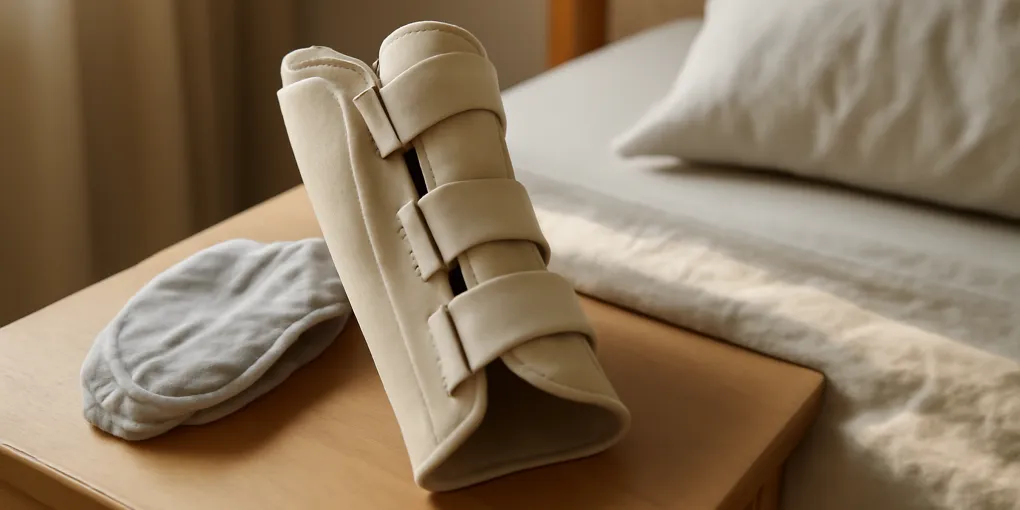
Best Night Wrist Braces for Carpal Tunnel: Neutral Splints That Do Not Over-Bend the Wrist
Buyer's GuideFUTURO Night Wrist Support
Best dedicated night designBest Use: Sleepers who want a soft, cushioned brace that limits wrist curling
Quick picks
| Product | Key Specs |
|---|---|
| See price on Amazon |
|
| See price on Amazon |
|
| See price on Amazon |
|
Product availability, certifications, and retailer details can change; check the current Amazon page before buying.
Quick answer
A useful carpal tunnel night brace does one job: it stops the wrist from curling forward or backward while you sleep. It should hold the wrist close to neutral without squeezing the forearm, digging into the palm, or forcing the hand into extension. A brace with more straps is not automatically better.
For a purpose-built cushioned night splint, compare the FUTURO Night Wrist Support: Check Futuro Night Wrist Support on Amazon. Choose the Mueller Green Fitted Wrist Brace when a slimmer shell matters more than plush padding: Check Mueller Green Fitted Wrist Brace on Amazon. The ACE Night Wrist Sleep Support is a simpler trial purchase for readers who are not yet sure they can sleep in a brace: Check Ace Night Wrist Sleep Support on Amazon.
Confirm the hand, size chart, return window, and current seller before buying. Product names can remain similar while sizing or construction changes.
Why neutral wrist position matters
The median nerve passes through the carpal tunnel at the wrist. Wrist flexion and extension can increase pressure within that confined space. During sleep, many people unknowingly tuck a hand under a pillow or curl the wrist toward the forearm for hours. A neutral splint reduces that sustained position; it does not “open” the tunnel permanently or repair nerve damage.
The American Academy of Orthopaedic Surgeons includes night splinting among nonoperative options for carpal tunnel syndrome. Evidence reviews suggest splinting can help some people, especially with mild or intermittent nighttime symptoms, but results are not uniform. That limited claim is the right reason to buy: symptom management while arranging appropriate evaluation, not a guaranteed cure.
The three braces worth comparing
FUTURO Night Wrist Support: best dedicated night design
This style uses a cushioned body and palmar stabilizer to discourage wrist curling. It suits someone whose main problem is waking with numbness and who does not need to type or grip tools in the brace. The extra padding can feel calmer against bedding than exposed straps.
Skip it if your hand runs hot, you dislike bulky sleep gear, or the available size range puts your wrist at an edge. Make sure the listing matches the affected hand. A right-hand brace is not a reversible detail when the stay and thumb opening are shaped for one side.
Mueller Green Fitted Wrist Brace: best lower-profile option
The Mueller is the more practical choice when you want a fitted shell that can also handle quiet evening use before bed. Its narrower profile may interfere less with a sleeve or blanket. The tradeoff is more contact from straps and edges.
The removable or bendable metal stay deserves attention. It should support a neutral wrist, not lever the palm backward. If the stay arrives sharply curved, follow manufacturer instructions rather than aggressively reshaping it and weakening the material.
ACE Night Wrist Sleep Support: best simple trial
A soft night-support design is a reasonable first purchase when you want to learn whether bracing is tolerable before spending more. It is less compelling for very small or large wrists when the listing offers broad “one-size” fit rather than precise sizes.
Treat the return period as a fit test. Three nights are enough to notice rotation, sweating, thumb-web pressure, and whether the splint actually stops wrist curling. They are not enough to decide that persistent nerve symptoms are harmless.
How to size and fit a night brace
Measure around the wrist where the manufacturer’s diagram specifies, then use that product’s chart. Do not transfer a medium size from one brand to another. If you land exactly between sizes, compare forearm taper, strap overlap, and the seller’s exchange terms rather than automatically sizing down.
Put the brace on with the wrist straight, fingers relaxed, and thumb free. Tighten the middle strap first, then the forearm and hand straps. You should be able to slide a fingertip under a strap. The brace may limit wrist motion, but it should not reduce finger motion or make the fingertips cold, pale, blue, or more numb.
The palm stay should end before it blocks finger flexion. A brace that is too long can press into the palm when you make a loose fist; one that is too short may pivot and let the wrist bend anyway.
Price and replacement cues
Night wrist braces are usually a budget-to-midrange purchase rather than durable medical equipment. Compare current prices, but use construction to decide whether a premium is justified: replaceable stays, washable liners, specific left/right sizing, and several circumference sizes matter more than cosmetic fabric.
Avoid paying extra for copper-infused fabric, magnets, or “compression therapy” claims. For carpal tunnel at night, neutral positioning and tolerable fit are the relevant features. If the stay pokes through, hook-and-loop stops holding, or the fabric remains damp after washing, replace the brace rather than tightening it harder.
What to avoid
Skip flexible compression sleeves with no stay if your wrist still folds while sleeping. They may feel supportive but do not perform the same mechanical job. Also avoid rigid splints marketed to force a strong backward bend, thumb-spica braces intended for thumb injuries, and listings that omit hand orientation or a size chart.
Fingerless arthritis gloves are another different category. They compress the hand but usually do not prevent wrist flexion. Readers primarily managing finger-joint stiffness can see our compression gloves guide; that page should not be used as a substitute for median-nerve evaluation.
When not to keep experimenting at home
Seek prompt medical evaluation for constant numbness, dropping objects, loss of thumb strength, visible muscle wasting at the thumb base, symptoms after an injury, or rapidly worsening pain. Neck problems, diabetic neuropathy, ulnar nerve compression, and other conditions can mimic parts of the pattern.
Pregnancy-related symptoms may improve after delivery, but severe or function-limiting numbness still deserves care. People with diabetes, thyroid disease, inflammatory arthritis, kidney disease, or prior wrist trauma should not assume every nighttime hand symptom is uncomplicated carpal tunnel syndrome.
A brace is also the wrong response to new one-sided weakness, facial droop, or speech difficulty; those are emergency warning signs.
A seven-night fit check
On night one, wear the brace for one to two hours before sleep. Check skin, fingertip color, and whether tingling changes. On nights two through four, use it through the night if comfortable and note awakenings, morning numbness, and any pressure points. On nights five through seven, confirm that improvement is not coming at the cost of forearm pain or thumb irritation.
Wash or wipe the brace only as its label allows. Remove a metal stay before washing if directed. Let the padding dry fully before the next use; damp foam increases friction and odor.
Side-sleeper and hot-sleeper details
A side sleeper should inspect the brace where the ulnar edge of the hand rests against the mattress. A hard strap buckle or exposed stay on that edge can create a new pressure point even when the wrist itself is neutral. Place the hand on the pillow in the normal sleep position during the return-window test; fit judged while sitting upright can miss this problem.
Hot sleepers should favor a narrower brace with mesh panels and removable stays over a thick neoprene sleeve. More ventilation can reduce sweat, but a narrow strap must not concentrate pressure across the carpal tunnel. Washable liners are useful only if the brace dries before bedtime and the stay can be reinserted in the correct orientation.
If both hands have symptoms, buy the correct left and right sizes rather than sharing one reversible-looking brace unless its manufacturer explicitly supports bilateral use. Two affected wrists can also increase the importance of evaluation because sleeping position may not be the whole explanation.
Neutral is a range, not a dramatic angle
The wrist should look like a continuation of the forearm. A small natural extension may be comfortable, but the brace should not create the pronounced “cock-up” position used for some daytime tasks. Check from the thumb side while the straps are closed. If the palm is visibly levered upward, loosen the brace or ask a hand therapist whether the stay shape is appropriate.
Morning finger swelling can change fit. If the brace is comfortable at bedtime but leaves deep strap marks or worsened tingling at waking, reduce tension and reassess size. Tightening is not the solution to every rotation problem; a more anatomically fitted shell may be needed.
FAQ
Should the brace be worn during the day too?
Only if it helps with a specific aggravating task and does not create stiffness or interfere with safe work. Continuous bracing is not automatically better. A clinician or hand therapist can help separate night positioning from daytime ergonomic changes.
Can I use the same brace on either hand?
Only if the manufacturer explicitly labels it reversible. Contoured stays and thumb openings are commonly hand-specific.
How long should I try night splinting?
Clinical trials often evaluate several weeks, not one night. If symptoms are severe, constant, or worsening, do not delay evaluation for a long self-treatment trial. For mild nighttime symptoms, ask a clinician how long to try a correctly fitted neutral splint and what improvement should look like.
Sources
- AAOS clinical practice guideline, Management of Carpal Tunnel Syndrome: https://www.aaos.org/quality/quality-programs/upper-extremity-programs/carpal-tunnel-syndrome/
- Cochrane review of splinting for carpal tunnel syndrome: https://www.cochrane.org/CD010003/NEUROMUSC_splinting-carpal-tunnel-syndrome
- American Society for Surgery of the Hand, carpal tunnel syndrome overview: https://www.assh.org/handcare/condition/carpal-tunnel-syndrome
- Mayo Clinic, symptoms and reasons to seek care: https://www.mayoclinic.org/diseases-conditions/carpal-tunnel-syndrome/symptoms-causes/syc-20355603