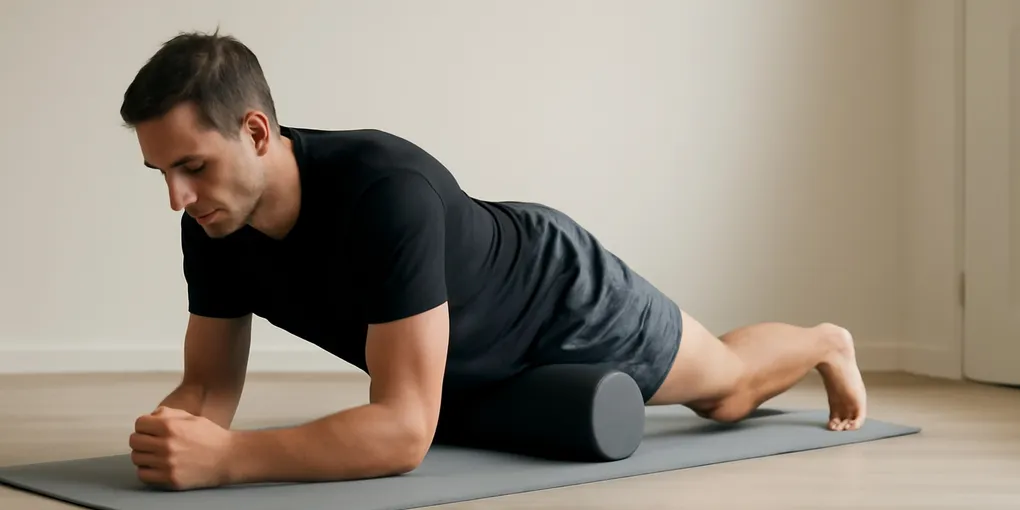
Foam Rolling Quads and IT Band Area: A Safer Protocol Than Grinding the Outside of Your Thigh
ProtocolQuick picks
TriggerPoint GRID Foam Roller
★ Top pick Best durable textured roller- Best Use: Quads, glutes, calves, and warm-ups when you want a firmer roller that is not spiked
- Caveat: Can feel too firm for very pressure-sensitive beginners
OPTP PRO-ROLLER Soft Density
Best gentler first roller- Best Use: Beginners, sensitive quads, and users who need lower-pressure rolling
- Caveat: Too soft for people who prefer firm pressure or heavy daily use
Amazon Basics High-Density Round Foam Roller
Budget firm option- Best Use: Low-cost broad pressure for quads and calves
- Caveat: Firm density can encourage over-pressing if you chase pain
Bottom line
Foam rolling the quad and IT-band area works best when you roll the muscles around the outer thigh, not when you grind directly on the most painful strip until your eyes water. Start with Search Amazon for TriggerPoint GRID Foam Roller if you like a firmer textured surface, Search Amazon for OPTP PRO-ROLLER Soft Density if you want gentler pressure, or Amazon Basics High-Density Round Foam Roller if budget matters and you can control the pressure.
A systematic review in Frontiers in Physiology found foam rolling can produce small short-term improvements in flexibility and soreness perception, with limited evidence that it improves performance by itself (PMID: 30524239). That fits how this protocol should be used: two to five minutes before training or after long sitting, then retest a squat, step-down, or easy jog.
Quick picks
- Durable firmer roller: Search Amazon for TriggerPoint GRID Foam Roller for quads, glutes, calves, and warm-ups when you want a textured roller that is not spiked.
- Gentler beginner roller: Search Amazon for OPTP PRO-ROLLER Soft Density for pressure-sensitive quads or users who tend to overdo rolling.
- Budget firm roller: Amazon Basics High-Density Round Foam Roller if you want a low-cost option and can keep pressure at a 4 to 6 out of 10.
What not to do
Do not spend ten minutes crushing the outside of the thigh because someone called it an IT-band release. The iliotibial band is a dense connective structure, and aggressive pressure over a sensitive lateral thigh can irritate more than it helps. Work the front thigh, outer quad border, glutes, and hip muscles with tolerable pressure. If pain becomes sharp, electrical, bruising, or changes your gait, stop.
For a smaller pressure tool under the foot, see our lacrosse-ball foot mobility protocol. The same rule applies: pressure should be adjustable and useful, not heroic.
The five-minute protocol
- Start with 30 seconds of easy walking or bodyweight squats so you know your baseline.
- Roll the front of each thigh for 30 to 45 seconds using slow passes from upper quad to above the kneecap.
- Shift slightly toward the outer quad, not directly onto the sharpest lateral strip, for another 30 seconds.
- Pause on one or two tolerable spots for three slow breaths. Keep pressure at a 4 to 6 out of 10.
- Stand up and retest the movement that felt stiff. If it is better, train. If it is worse, stop rolling and use a gentler warm-up.
How to judge a foam-rolling setup
- Research, 30%: Foam rolling has modest short-term evidence for flexibility and soreness perception, not structural miracle claims.
- Evidence quality, 25%: Best used as an adjunct to warm-up, strength work, and load management.
- Value, 20%: A simple medium-density roller covers most use cases for less than many specialty tools.
- User signals, 15%: Comfort and consistent use matter more than spikes, knobs, or extreme firmness.
- Transparency, 10%: Good products list length, diameter, density, and material.
When to skip rolling
Skip this protocol over bruises, skin infection, open wounds, numb areas, suspected clot symptoms, recent significant injury, unexplained swelling, or severe one-sided calf pain. If knee pain is persistent, swelling, locking, or giving way, get evaluated rather than rolling harder.
How to choose the roller
A medium-density smooth roller is the safest first purchase because it gives clear pressure without forcing you to brace against sharp knobs. Very soft rollers can be pleasant but may collapse under the thigh. Very hard textured rollers can make beginners tense up, which defeats the purpose of a warm-up. Search Amazon for Amazon Basics 18-inch high-density foam roller if storage or travel matters more than full-length back work.
Length matters less for quad work than for upper-back work. A 12- to 18-inch roller is usually fine for legs. A 36-inch roller is more versatile for spine-position drills and broad support, but it is harder to store. If you only plan to roll quads, calves, and glutes, do not overbuy a giant specialty tool.
How hard should it feel
Use pressure that lets you breathe normally. A useful range is uncomfortable but controlled, roughly 4 to 6 out of 10. If you hold your breath, clench your jaw, or need to twist away from the roller, the pressure is too high. More pain does not mean more tissue change.
Foam rolling is most useful when it changes your next movement. After each short pass, stand up and check a squat, lunge, or easy jog. If you feel freer, continue with training. If you feel bruised, wobbly, or more protective, switch to walking, gentle cycling, or a dynamic warm-up.
Best fit
This protocol is best for lifters, runners, and desk workers who feel general thigh stiffness but can still move normally. It is not a treatment plan for acute injury. Pair it with squats, hinges, walking, or cycling so the temporary change in sensation becomes better movement practice.
If the roller helps, keep the dose small and repeatable. If it never changes the next movement, spend that time on strength or walking instead.
Use the roller as a brief readiness check, not as the main workout.
FAQ
Should I foam roll directly on the IT band?
Most people should not grind directly on the most sensitive outer-thigh strip. Use tolerable pressure on the quads, outer quad border, glutes, and hip muscles instead.
How long should I foam roll before training?
Two to five minutes total is enough for most warm-ups. Longer sessions can turn into irritation or time filler without better results.
Is a textured roller better than a smooth roller?
Not for most beginners. A smooth medium-density roller gives enough pressure while making it easier to control intensity.
Sources
- Wiewelhove T, Döweling A, Schneider C, et al. A meta-analysis of the effects of foam rolling on performance and recovery. Front Physiol. 2019. PMID: 30524239. https://pubmed.ncbi.nlm.nih.gov/30524239/
- American Council on Exercise overview of foam rolling technique and precautions: https://www.acefitness.org/resources/everyone/blog/5656/foam-rolling-applying-the-technique-of-self-myofascial-release/