Yoga Wheel for Back Mobility: Helpful Prop or Overhyped Spine Stretch?
Evidence ExplainerQuick picks
Medium-density yoga wheel
★ Top pick Best if you want a guided back-extension prop- Best Use: Thoracic extension practice and supported chest opening
- Caveat: Too much pressure can irritate sensitive backs
Firm foam roller
Better first buy for many beginners- Best Use: Lower-cost thoracic mobility and soft-tissue work
- Caveat: Less dramatic extension than a wheel
Bottom line
A yoga wheel can help some people practice gentle thoracic extension, chest opening, and supported back-bend positions. It is not a spine treatment and it is not automatically better than a foam roller. If you want a larger curved prop for slow mobility work, choose a Search Amazon for medium-density yoga wheels with a grippy outer layer and clear weight rating. If you are new to back mobility or want a cheaper, less intense tool, start with a Search Amazon for firm foam rollers.
The buying decision should depend on where you need motion. A wheel biases a bigger extension arc. That can feel great across the upper back and chest, but it can also be too aggressive for the low back if you roll without control.
Quick picks
- Want a guided upper-back extension prop? Search Amazon for a medium-density yoga wheel and use it slowly.
- Want the safer first mobility tool? Search Amazon for a firm foam roller before buying a deeper back-bend prop.
What a yoga wheel is good at
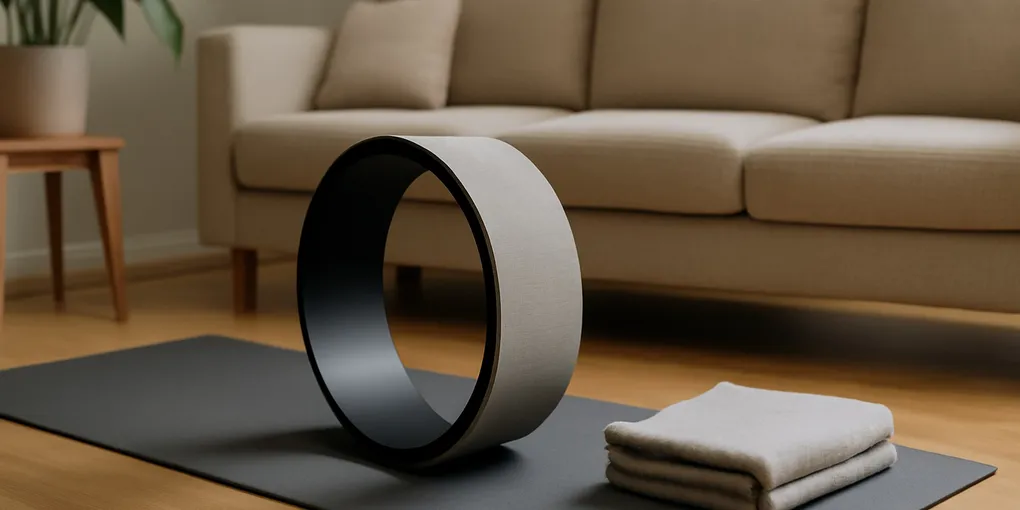
A yoga wheel is a rigid or semi-rigid circular prop, usually wide enough to support the spine between the shoulder blades. Its main advantage is shape. The curve encourages extension through the upper back while the chest opens and the shoulders move overhead or out to the side.
That makes it useful for people who sit a lot, lift with rounded upper-back positions, or want a controlled way to explore back-bend range. It is less useful if the real limiter is hip extension, shoulder pain, or fear of loading the spine. In those cases, the wheel may simply move stress somewhere else.
Evidence in plain English
There is not strong yoga-wheel-specific clinical evidence showing that the prop fixes back pain or posture. The better-supported idea is broader: mobility, stretching, and strengthening can improve function for many people when matched to the person and dosed sensibly. The American College of Sports Medicine includes flexibility work as part of a rounded activity plan, and clinical back-pain guidance generally favors staying active over passive fixes.
So the evidence-backed claim is modest. A yoga wheel can be a useful prop for practicing positions. It should not be marketed as a cure for disc problems, chronic pain, or posture by itself.
What makes a yoga wheel worth buying
A yoga wheel is worth considering when you specifically want a curved prop for supported upper-back extension. The useful purchase details are width, padding, floor grip, and a clearly stated weight rating. Those details matter more than dramatic product photos of deep back bends.
The evidence case is modest: mobility practice can help some people move and feel better, but a wheel is not a stand-alone back-pain treatment. Choose it only if you can use small ranges, keep the pressure in the upper back rather than the low back, and stop when symptoms feel sharp, radiating, or unfamiliar.
Who should consider one
A yoga wheel fits a healthy adult who wants a supported upper-back extension drill and already tolerates floor mobility work. It also fits yoga practitioners who want help building comfort in back-bend shapes without dropping straight into a deep pose.
It is a poor fit for anyone with unexplained neurologic symptoms, recent spine injury, worsening pain with extension, osteoporosis concerns, or dizziness when changing positions. In those cases, a prop purchase should not replace individualized medical or physical-therapy guidance.
How to use it without dumping into the low back
Start with the wheel under the upper back, not the low back. Sit on the floor, place the wheel behind the ribs, support your head with your hands, and lean back slowly. Keep the hips heavy and breathe. The first goal is a mild stretch across the chest and upper back, not a full bridge.
Use short holds: 20 to 40 seconds for two or three rounds. If the stretch moves into pinching, sharp pain, or pressure that makes you brace, stop. Smaller range beats forcing a dramatic photo position.
Yoga wheel versus foam roller
A foam roller is the better first buy for most people because it is cheaper, more versatile, and less intense. It can support thoracic extensions, calf work, glute pressure, and general floor mobility. A yoga wheel is more specialized. It gives a deeper curved support for chest opening and back-bend practice.
If you already use our foam rolling protocol for soreness and mobility and want a more back-extension-specific prop, the wheel is a logical next step. If the foam roller still feels too intense, do not upgrade to a wheel yet.
Shopping checklist
Look for a width that feels stable under your back, a grippy outer layer, a clearly stated weight rating, and enough padding to avoid hard pressure on the spine. Avoid very narrow wheels for general back work unless you already know you like precise pressure.
Also check cleaning and floor grip. A slick wheel on a hard floor turns a mobility drill into a balance problem. If you will use it on wood or tile, a mat matters as much as the wheel.
Buy, use, or skip
Buy a yoga wheel if you specifically want supported upper-back extension and you already tolerate gentle back bends. Buy a foam roller if you need one general mobility tool. Skip both and get guidance if extension causes radiating pain, numbness, or symptoms that do not behave like a normal stretch.
FAQ
Does a yoga wheel fix posture?
No. It may help you practice upper-back extension and chest opening, but posture also depends on strength, habits, workspace, and symptom tolerance.
Is a yoga wheel safe for low-back pain?
It depends on the person and the pain pattern. Avoid it when extension worsens symptoms, pain radiates, or you have a recent injury. Start with clinician guidance if you are unsure.
Is a yoga wheel better than a foam roller?
Not for everyone. A foam roller is more versatile and usually gentler. A yoga wheel is more specific for supported back-bend and chest-opening positions.
What size yoga wheel should I buy?
Most adults should start with a standard medium wheel that is wide and padded enough to feel stable. Very small or narrow wheels create more targeted pressure.
Sources and further reading
- ACSM flexibility and physical activity guidance overview: https://www.acsm.org/education-resources/trending-topics-resources/physical-activity-guidelines
- WHO physical activity fact sheet: https://www.who.int/news-room/fact-sheets/detail/physical-activity
- American College of Physicians guideline on noninvasive treatments for low back pain: https://pubmed.ncbi.nlm.nih.gov/28192789/