Lacrosse Ball Foot Mobility Protocol: How to Use Pressure Without Bruising Your Arch
ProtocolQuick picks
Firm lacrosse ball or massage ball
★ Top pick Best simple tool- Best Use: Short controlled pressure sessions under the arch, heel edge, and forefoot
- Caveat: Firm balls can bruise sensitive feet if you chase pain
Textured foot roller
Gentler alternative- Best Use: People who want broader contact and less pinpoint pressure
- Caveat: Less precise than a ball for small tender spots
Bottom line
A lacrosse ball can be useful for foot comfort when you use it like a pressure dial, not a pain contest. The goal is to explore the sole of the foot, spend short blocks on stiff or tender areas, then check whether walking, calf raises, or squats feel smoother. Start by searching Amazon for a lacrosse-style massage ball if you want a cheap tool that fits in a gym bag.
Skip this protocol if you have new severe heel pain, numbness, skin wounds, unexplained swelling, a suspected fracture, or foot pain that changes your gait. A ball can change sensation and tension; it cannot diagnose plantar fasciitis, nerve pain, stress injury, or tendon trouble.
Quick picks
- Start with a firm lacrosse-style massage ball if you want precise, cheap pressure under the arch and can keep the sensation tolerable.
- Use a textured foot roller if the ball feels too sharp, your feet are sensitive, or you want broader contact with less pinpoint pressure.
- Skip foot rolling and get help when pain is severe, numb, swollen, wound-related, or strong enough to change how you walk.
The two-minute starter protocol
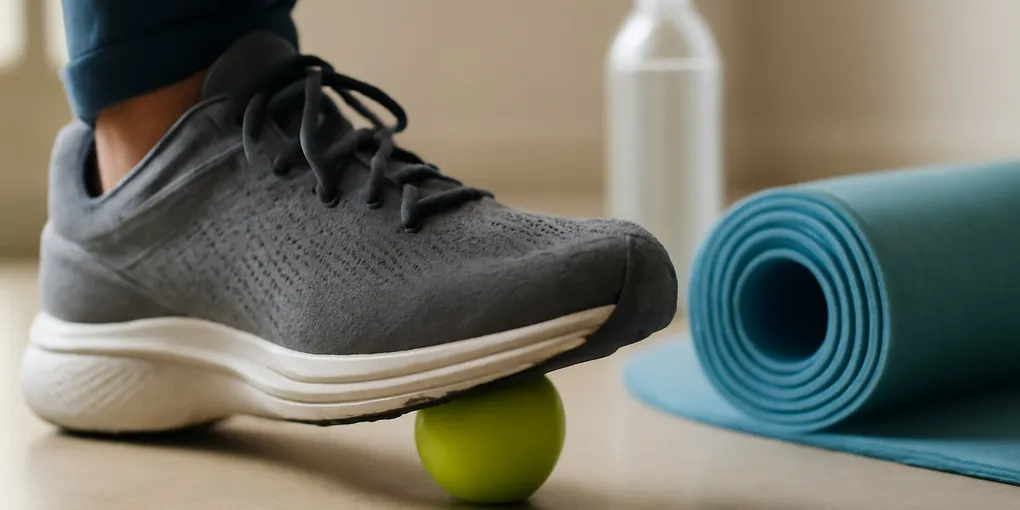
Stand near a wall or counter so balance is not the limiter. Put the ball under the middle of one foot while wearing socks or using a mat if the pressure feels sharp. Start with about 30 percent of your body weight. Roll slowly from the heel edge toward the ball of the foot for 30 seconds, then pause on one mildly tender area for three slow breaths.
Move to the inner arch for 30 seconds, then the outer arch for 30 seconds. Finish with 5 slow calf raises or 10 relaxed walking steps and compare sides. If the treated foot feels looser and not irritated, repeat on the other side. If it feels bruised, nervy, or sharper, you used too much pressure or chose the wrong tool.
Where to put the ball
The safest starting zones are the fleshy parts of the sole: the middle arch, the outer arch, and the area just behind the ball of the foot. Avoid grinding directly on the heel bone, the toes, or any spot that creates electric, burning, or shooting symptoms. Pressure should feel like a strong massage, not a warning sign.
For runners, the most useful check is not whether the ball hurts less after rolling. It is whether the first few steps, ankle rocker, and calf raise feel more natural. For lifters, test a bodyweight squat or split squat before and after. If the foot only feels numb, that is not mobility.
Progression over two weeks
Use the ball three to five days per week for short sessions. Week one is about finding tolerable pressure. Keep each foot under two minutes. Week two can add a slightly firmer pause on one or two spots, but do not double the time just because the tool is cheap.
If you need a gentler option, search Amazon for a textured foot roller. A roller spreads pressure over more tissue, which can be better for sensitive feet. If you want a firmer option, a lacrosse ball is usually plenty. Golf balls are often too small and sharp for routine use.
Pair it with movement
Soft-tissue work tends to be more useful when followed by motion. After rolling, do slow ankle rocks against a wall, calf raises, toe yoga, or an easy walk. The ball changes how the foot feels; movement teaches the foot how to use that new range.
For calf-heavy runners, pair this with a conservative lower-leg plan rather than adding pressure after every painful run. Our slant board calf stretch protocol is a better match when ankle range, calf stiffness, and Achilles sensitivity are part of the pattern.
What not to do
Do not stand with full body weight on a ball and grind until the arch goes numb. Do not roll over bruises, cuts, blisters, or inflamed skin. Do not use the ball as a substitute for shoe changes, training-load changes, or medical assessment when symptoms are persistent.
The common mistake is chasing a tender spot because it feels like you found the problem. Tenderness is information, not a target you must destroy. If a spot stays highly sensitive for more than a few days, gets worse after each session, or changes how you walk, stop the protocol and reassess.
Buyer notes
A smooth lacrosse-style ball is the best first purchase because it is cheap, durable, and easy to clean. Textured balls can feel good but sometimes irritate skin. Peanut-shaped tools work better along the spine than under the foot. Vibrating balls add cost and battery maintenance without solving the basic pressure-control problem.
Check diameter and firmness. A standard lacrosse ball is firm and small enough to target the arch. Softer massage balls are better for sensitive feet. If you train at a gym, choose a color that is easy to see so it does not roll under equipment.
Sources and safety notes
Manual pressure and self-massage can temporarily change pain perception and range of motion, but the evidence does not support treating a ball as a tissue-repair shortcut. A review in Frontiers in Physiology discusses foam rolling and roller massage as short-term mobility and soreness tools rather than cures (PMID: 32318045). MedlinePlus lists heel pain red flags and self-care limits, including the need for evaluation when pain is severe, persistent, or associated with swelling or inability to walk (MedlinePlus: heel pain).
Lacrosse ball foot mobility FAQ
Should lacrosse ball foot rolling hurt?
It should feel like tolerable pressure, not sharp pain. If you hold your breath, limp afterward, or feel burning or tingling, reduce pressure or stop.
How often should I roll my feet?
Start with short sessions three to five days per week. More pressure and more time are not automatically better; the next-day response matters.
Is a lacrosse ball better than a foot roller?
A lacrosse ball is better for precise pressure and low cost. A roller is better if you want broader, gentler contact or find the ball too intense.