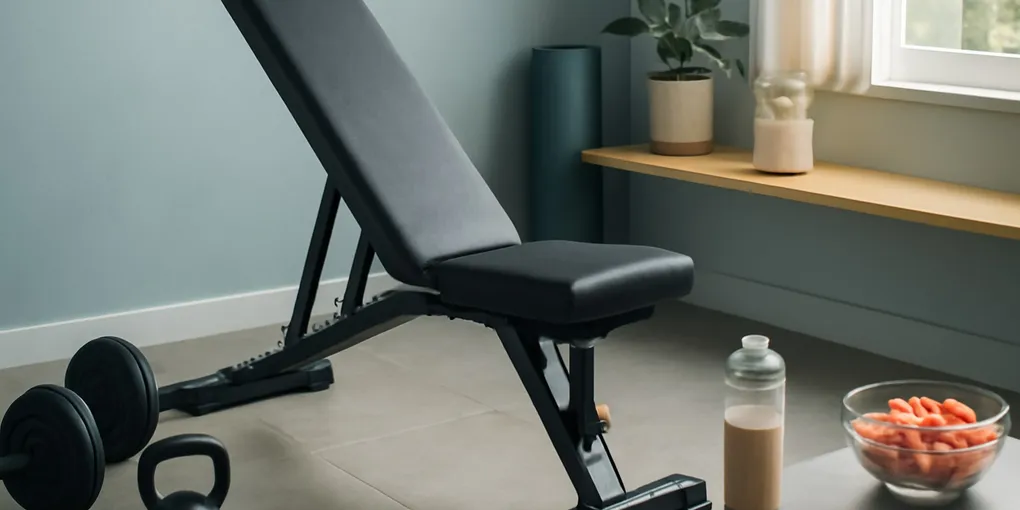
Best Adjustable Weight Benches for Small Home Gyms: Stable Lifting Without Wasted Floor Space
Buyer's GuideRep Fitness AB-3100 adjustable bench
Best stable flat-incline defaultBest Use: Dumbbell pressing, rows, split squats, and incline work
$250-320
Quick picks
| Product | Key Specs |
|---|---|
| See price on Amazon |
|
| See price on Amazon |
|
| See price on Amazon |
|
Product availability, certifications, and retailer details can change; check the current Amazon page before buying.
Bottom line
The best adjustable weight bench for a small home gym is the one that stays planted during dumbbell work, gives useful incline angles, and stores without turning the room into a permanent weight area. Do not buy only from the headline weight capacity. A bench can advertise a large number and still feel narrow, wobbly, or awkward if the pad, feet, ladder, and hinge design are weak.
For most readers, a stable flat-to-incline bench beats a flimsy all-in-one decline bench. Decline settings, preacher-curl pads, and leg developer attachments sound versatile, but they often add wobble and storage friction. If your core training is dumbbell press, incline press, one-arm rows, rear-foot-elevated split squats, hip thrusts, and step-ups, choose stability first.
Quick picks for small spaces
- Check current adjustable bench options similar to Rep Fitness AB-3100 — best for lifters who want a sturdy flat-incline bench and can leave it near a rack or dumbbell stand.
- Search current Flybird adjustable bench prices — best for apartments, lighter dumbbell work, and buyers who need folding storage.
- Check current Ironmaster Super Bench Pro V2 options on Amazon — best if you want a heavier upgrade bench with attachment options.
Practical score
| Factor | Weight | Score | Rationale |
|---|---|---|---|
| Research | 30% | 5.9 | Strength-training evidence supports the exercises; bench brand evidence is mostly mechanical and user-fit based. |
| Evidence Quality | 25% | 5.5 | Product quality is better judged by dimensions, construction, stability, and verified owner feedback than by clinical trials. |
| Value | 20% | 7.4 | A good bench expands home training for years; a wobbly bench becomes unsafe clutter. |
| User Signals | 15% | 7.2 | Pad comfort, storage wheels, ladder play, and width drive real satisfaction. |
| Transparency | 10% | 6.4 | Better listings show actual dimensions, pad gap, weight, and load rating; many budget listings hide the tradeoffs. |
| Composite | 100% | 6.4 | A strong home-gym purchase when stability and storage match the room. |
What matters more than the max load number
The max load rating combines user weight plus lifted weight, usually under ideal conditions. It does not tell you how the bench feels when you kick dumbbells into position, sit on the edge, or row from one side. In a small home gym, side-to-side stability matters because you may be lifting on rubber tiles, carpet, or a slightly uneven garage slab.
Check the footprint and feet before buying. A wide rear foot helps during pressing but can interfere with stance for rows or split squats. A narrow tripod-style front can fit better between your feet but may feel less planted on soft flooring. If you train on carpet, a heavier bench or a firm platform under the feet can feel safer than an ultralight folding model.
Options worth comparing
Rep Fitness AB-3100 style flat-incline bench
This is the best default category for many small gyms: sturdy enough for serious dumbbell work, not as expensive as premium commercial benches, and simpler than benches loaded with attachments. The main reason to choose this style is confidence under load.
- Best fit: regular dumbbell pressing, incline work, chest-supported rows, and users who do not need true decline.
- Watch out for: total weight, storage length, and whether the shipped model matches the listed dimensions.
- Search current flat-incline bench options.
Flybird adjustable folding bench
A folding bench can be the right answer in an apartment or multipurpose room. The tradeoff is that folding hinges, lighter frames, and narrower pads may reduce confidence as dumbbells get heavier.
- Best fit: lighter lifters, beginners, shared living spaces, and quick dumbbell circuits.
- Watch out for: wobble at incline settings, shoulder comfort on narrow pads, and optimistic load claims.
- Search compact folding bench listings.
Ironmaster Super Bench Pro V2
The Ironmaster-style platform makes sense if the bench is part of a long-term home gym rather than a temporary purchase. Attachment options can be useful, but they also create a system decision: you are buying into a bench ecosystem, not just a pad.
- Best fit: users who want one durable bench and may add accessories later.
- Watch out for: accessory cost, storage space, and whether a simpler flat-incline bench would already solve the training need.
- Compare current Ironmaster bench options.
Fit checks before you order
Measure the exact storage path, not only the training spot. A bench that technically fits the room can still be annoying if it blocks a closet door or needs to be lifted around a desk. Check folded dimensions if storage is the point. Check wheel placement if you plan to move it after every session.
Pad width matters for pressing. A very narrow pad can let shoulder blades hang off the sides; a very wide pad can restrict shoulder position for smaller lifters. Pad gap matters most when lying flat. Some benches feel fine at incline but leave an irritating gap under the low back in flat position.
Incline angles should match the exercises you actually do. Most people need flat, low incline, and moderate incline more than steep near-vertical settings. If the ladder has only a few positions, confirm one of them is comfortable for incline dumbbell press.
Also check how the bench behaves around the equipment you already own. If you use adjustable dumbbells with large cradles, you need enough floor on both sides of the bench to pick them up without twisting. If you train beside a half rack, confirm the rear foot does not collide with rack uprights when the bench is pulled in for incline press. For cable towers or wall-mounted pulleys, the bench height and back-pad length determine whether seated rows, incline curls, or face-pull setups feel natural or improvised.
The listed bench weight can be a feature or a problem. A 75-pound bench is often more confidence-inspiring than a 26-pound folding bench during heavy dumbbell press, but it is a poor match if you must carry it through a hallway after every workout. For a garage or basement gym, choose the heavier stable frame. For a bedroom corner, prioritize wheels, upright storage, and a folding latch that does not pinch fingers.
Match the bench to your dumbbell ceiling
If your dumbbells top out around 25 to 40 pounds, a compact folding bench may be enough while you build consistency. Once you are pressing 50-pound-plus dumbbells, doing heavy one-arm rows, or using the bench for Bulgarian split squats, small frame movement becomes more noticeable. That is when a flat-incline bench with fewer moving parts earns its footprint.
For barbell work, be more conservative. A bench used inside a rack should let the lifter plant feet, center the pad between uprights, and unrack without the rear foot rocking. Some budget adjustable benches are fine for dumbbells but too tall, narrow, or unstable for comfortable barbell benching. If barbell pressing is the goal, compare bench height and pad dimensions against commercial flat-bench norms before chasing extra incline settings.
Return-window tests in the first week
Do not wait until the return window is nearly over to find the weak point. On day one, set every back-pad angle, sit on each side edge, roll it over the flooring transition you actually use, and try the three movements you bought it for. Then load only a light pair of dumbbells and rehearse the setup: pick up, sit, kick back, press, sit up, and re-rack safely.
For small spaces, repeat the storage move while tired. If the bench has to stand vertically, check whether it leans securely or needs a wall. If it folds, check whether the hinge leaves greasy contact points near bedding, carpet, or a closet wall. These details sound minor, but they decide whether the bench gets used three times a week or becomes a heavy obstacle.
Safety and setup notes
Place the bench on firm flooring and test it empty before loading. Sit on the edge, lie flat, set each incline, and press lightly with no dumbbells. If the bench rocks, solve the floor problem or return it before heavy sessions. Do not discover instability while kicking up dumbbells.
For programming ideas, pair the bench with basics from our best adjustable dumbbells for small spaces guide. A bench is most valuable when it unlocks repeatable movements, not when it adds novelty attachments that never get used.
FAQ
Is a folding bench safe for dumbbell pressing?
It can be safe for moderate loads if the frame locks securely, the feet sit flat, and the bench does not wobble at the angle you use. For heavy pressing, a sturdier non-folding flat-incline bench is usually the better buy.
Do I need decline settings in a small home gym?
Most home lifters do not. Flat and incline positions cover the highest-value movements. Decline hardware can add complexity and wobble without adding much practical training value.
What bench height is best?
A height around commercial-gym flat benches often feels natural because feet can press firmly into the floor. Very tall benches make leg drive harder for shorter lifters, while very low benches can make setup awkward.
Sources
- American College of Sports Medicine resistance training guidance: ACSM physical activity resources.
- U.S. Department of Health and Human Services. Physical Activity Guidelines for Americans: Health.gov.
- Related reading: Best adjustable dumbbells for small spaces and Best yoga mats for joint-friendly home workouts.
When your bench shares a room with fixed dumbbells, compare the rack footprint as a separate decision in our home gym storage rack format guide.