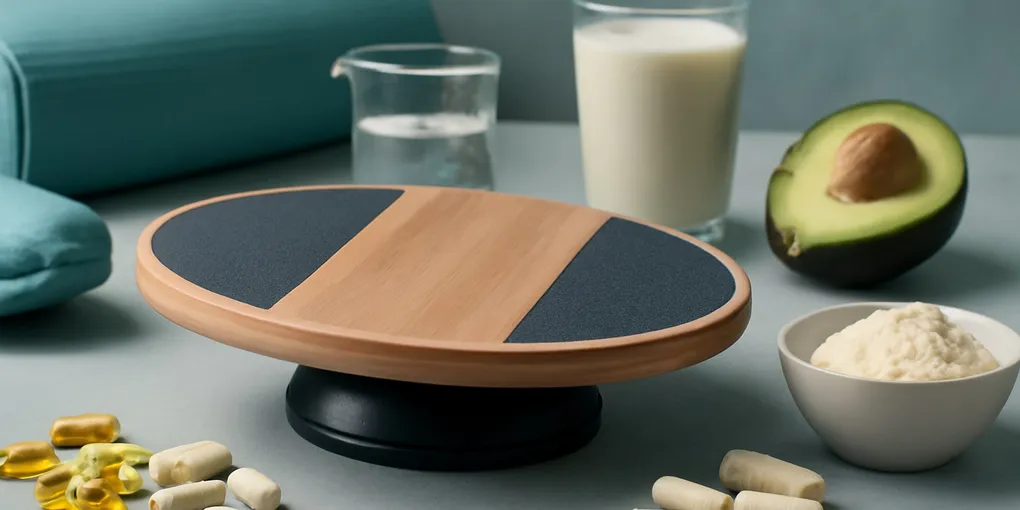
Best Balance Boards for Ankle Stability: Wobble, Rocker, and Cushion Picks
Buyer's GuideYes4All Wooden Wobble Balance Board
Best overall wobble boardBest Use: General ankle proprioception drills once floor balance is comfortable
Check current price
Quick picks
| Product | Key Specs |
|---|---|
| See price on Amazon |
|
| See price on Amazon |
|
| See price on Amazon |
|
| See price on Amazon |
|
Product availability, certifications, and retailer details can change; check the current Amazon page before buying.
Bottom line
For ankle-stability work, the useful shortlist is a Yes4All wobble board for general control, StrongTek rocker board for a gentler first progression, URBNFit disc for compact drills, and Revolution 101 only for advanced board-sport practice. Treat the quick picks as model-specific shortlists, then confirm current dimensions, materials, return terms, and seller details before ordering.
Quick picks
- Best overall wobble board: Search Amazon for Yes4All Wooden Wobble Balance Board — general ankle proprioception drills once floor balance is comfortable. Too unstable for first sessions after an acute sprain.
- Best beginner rocker board: Search Amazon for StrongTek Professional Wooden Balance Board — forward-back or side-side control before a full wobble-board progression. Less useful once single-leg balance is already easy.
- Best compact cushion: Search Amazon for URBNFit Balance Disc — desk-side foot and ankle drills in very small spaces. Inflation level changes difficulty and feel.
- Advanced board-sport option: Search Amazon for Revolution 101 Balance Board Trainer — skate/snow/surf-style balance practice after basic control is solid. High fall risk for rehab and older users.
Match the balance tool to the person using it today. A wobble board adds multidirectional challenge, a rocker board is easier to dose for early ankle work, a cushion is the lowest-profile desk option, and a BOSU-style trainer is a bigger stability station rather than a tiny apartment accessory.
How we evaluated these picks
We compared board type, first-session difficulty, fall-risk consequences, storage footprint, and the evidence for balance/proprioceptive training after ankle sprains. The pick changes when the user cannot already balance calmly on the floor: a rocker board or inflated cushion is a safer first step than a high-dome wobble board. Avoid roller boards unless basic single-leg control is already easy and the goal is board-sport practice, not early rehab.
The evidence supports progressive neuromuscular balance work for ankle-sprain risk and recurrence reduction; it does not prove that one branded board is superior. That is why the recommendation favors clear dimensions, grippy surfaces, moderate tilt, and room to step off safely over aggressive instability claims.
Practical score
| Factor | Weight | Score | Rationale |
|---|---|---|---|
| Research | 30% | 7.2 | Balance/proprioceptive exercise has supportive evidence for ankle-sprain prevention and recurrence reduction. |
| Evidence Quality | 25% | 6.8 | Exercise program design matters more than the exact board brand. |
| Value | 20% | 8.0 | Basic boards are inexpensive and durable. |
| User Signals | 15% | 7.1 | Simple boards get used because setup is fast. |
| Transparency | 10% | 6.5 | Good listings show diameter, height, surface material, and weight rating. |
| Composite | 100% | 7.2 | A worthwhile home-training tool when difficulty is matched to balance capacity. |
What matters when choosing
Board height matters more than marketing language. A high dome creates a bigger tilt angle and faster loss of control. That can be useful later, but it is the wrong starting point for a sensitive ankle. Diameter matters too: a wider platform gives your foot more room and makes two-foot drills easier to control.
Surface texture is not just comfort. A slick plastic top can make socks risky. A grippy wooden or rubberized top is better for barefoot or shoe-on drills. If you are training near a desk or wall, choose a board that will not shoot out on hard flooring; a mat underneath is often worth using.
A rocker board is the simplest progression because it moves mostly forward-back or side-side. That lets you practice calf, shin, and hip control without random rotation. A wobble board adds multi-direction control. A roller board is a different animal: fun, athletic, and much more likely to punish a lapse in attention.
How to start safely
Set the board near a wall, counter, or sturdy rack. Begin with two feet on the board and fingertip support. Your first goal is quiet control: keep the rim from slapping the floor for 20 to 30 seconds. Then practice slow taps front, back, left, and right. If that is easy, reduce hand support.
Progress to single-leg stands only when two-foot control is calm. Keep the first single-leg sets short: 10 to 20 seconds is plenty. Add difficulty by changing stance, not by closing your eyes immediately. Eyes-closed balance is much harder and should be saved for a safe environment with support nearby.
If the goal is ankle-sprain return-to-sport, pair board work with calf raises, hopping progressions, sport-specific cutting, and clinician guidance. Balance-board standing alone does not rebuild full tendon, ligament, and power capacity. Our eccentric calf raise protocol is a better strength companion than more wobbling.
Who should skip or delay it
Delay balance-board work after an acute sprain if weight-bearing is painful, swelling is increasing, or a clinician has not ruled out fracture or significant instability. People with neuropathy, vestibular disorders, recent falls, severe arthritis, or osteoporosis-related fracture risk should be cautious and get individualized guidance.
A board should make drills challenging, not scary. If you feel panic, sharp pain, or uncontrolled twisting, regress to floor balance, supported heel raises, or a rocker board.
Product-specific buying checks
For a wooden wobble board, check platform diameter, dome height, top grip, and stated weight rating. For a rocker board, confirm whether it rocks in one direction only or has adjustable angles. For a cushion, look for a pump and a textured surface. For a roller board, confirm that the roller has stops or a mat recommendation if you are not already skilled.
Avoid vague “rehab grade” claims without dimensions. Also avoid tiny boards if you have large feet; cramped stance changes the drill and can make the board feel less stable than intended.
Evidence snapshot
Systematic reviews suggest that proprioceptive and neuromuscular training can reduce recurrent ankle sprains, especially in people with previous sprain history. The evidence supports structured balance work, not a specific miracle board. Good programs progress from stable to unstable surfaces, two-leg to one-leg stance, and controlled tasks to sport-specific movement.
The practical takeaway is that the board is only one part of the dose. A three-minute standing drill is useful when it is progressed deliberately: narrower stance, slower taps, single-leg holds, then reaches or ball tosses. It is less useful when the user buys the hardest board, flails for a week, and stops because the sessions feel unsafe.
A simple four-week progression
Week one should feel almost too easy. Use a rocker board or a low wobble board with two feet. Do three rounds of 30-second quiet stands, then ten slow edge taps in each direction. Hold a wall lightly. Your goal is control, not fatigue.
Week two adds single-leg exposure on the floor first, then supported single-leg stance on the board. Keep the working foot relaxed enough that the toes do not claw the surface. If the arch cramps, take a break and return to two-foot drills.
Week three adds reach tasks. Stand on the board and reach one hand forward, sideways, and across the body while keeping the knee from collapsing inward. This is where a board becomes more useful than casual one-leg standing because the ankle, knee, hip, and trunk have to coordinate.
Week four connects the board to the activity you care about. Runners can add controlled calf raises and easy hops on the floor after board drills. Court-sport athletes can add lateral steps and deceleration practice off the board. Do not jump on a wobble board; use it for balance, then train power on stable ground.
Match the board to the room
A board used in a cramped hallway is a worse purchase than a slightly easier board used in a clear space. Leave enough room to step off safely. A yoga mat can protect flooring and reduce sliding, but a thick soft mat may make the board unpredictably unstable. Thin rubber is usually better.
Noise matters if you live above someone. Hard plastic boards can slap loudly on tile or wood. Wooden boards with rubber edging or a mat underneath are quieter. If you plan to use the board during work breaks, choose a model that can live near the desk without becoming clutter.
Red flags in product listings
Be skeptical of listings that promise to “fix ankle pain” or “rehab any injury” without dimensions. A real listing should tell you the platform size, tilt angle or height, surface material, and weight rating. Photos should show the underside so you can see whether the pivot is a smooth dome, a rail, or a roller.
Also check return terms. Balance feel is preference-heavy. A board that looks perfect online may be too narrow, too tall, too slick, or too noisy once you stand on it. A clear return window is more valuable than a long list of vague exercise claims.
If two options look similar, choose the one with the clearer dimensions and lower first-session difficulty. You can make a simple board harder with single-leg reaches, slower taps, or longer holds. You cannot make an overly aggressive roller board safe for a reader who still needs hand support.
FAQ
Is a wobble board better than a balance cushion for ankle rehab?
A wobble board gives clearer tilt control and usually lasts longer. A cushion is easier to store and gentler, but its difficulty changes with inflation. For most ankle-stability programs, the board is the more precise tool.
Should I use a balance board barefoot or in shoes?
Use the setup that matches your goal and feels safe. Barefoot work gives more foot feedback, while shoes may be better when returning to running or court sports. Avoid socks on a slick board.
How often should I train ankle balance?
Short sessions three to five days per week are usually more useful than one exhausting session. Stop before fatigue turns control into wobbling chaos.
Sources and further reading
- A systematic review found that proprioceptive training reduced ankle sprain risk in athletic populations.
- A sports medicine review discusses balance training and ankle instability as part of broader neuromuscular rehabilitation.
- The American Academy of Orthopaedic Surgeons outlines ankle sprain diagnosis and rehabilitation basics.