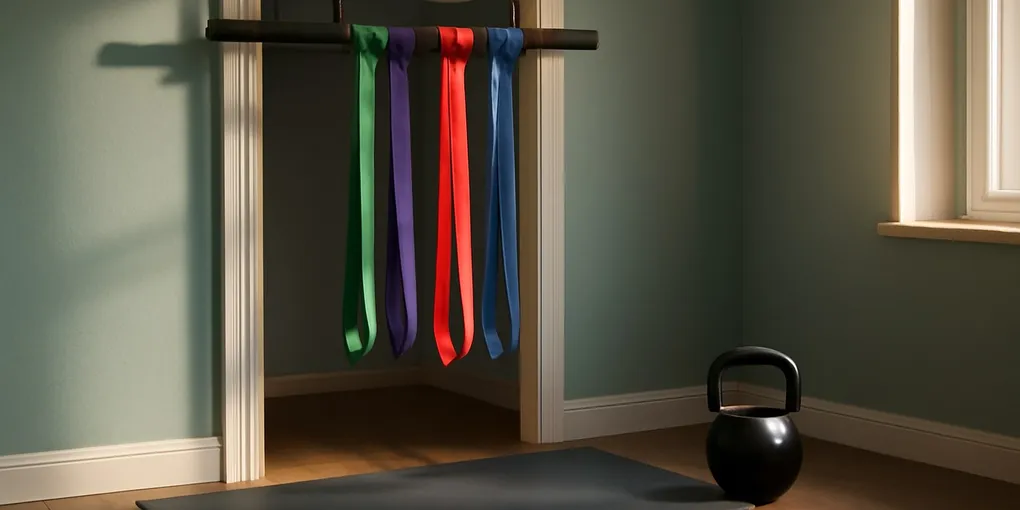
Best Pull-Up Assist Bands for Home Strength: Support, Safety, and Progression
Buyer's GuideSerious Steel Assisted Pull-Up Bands
Best durable latex setBest Use: Learning strict pull-ups with several full-length loop assistance levels
Check current price
Quick picks
| Product | Key Specs |
|---|---|
| See price on Amazon |
|
| See price on Amazon |
|
| See price on Amazon |
|
Product availability, certifications, and retailer details can change; check the current Amazon page before buying.
Bottom line
For assisted pull-ups, the useful shortlist is Serious Steel for durable full-length loops, WODFitters when you need one specific added resistance, and SUNPOW when a beginner wants several assistance levels in one set. Treat the quick picks as model-specific shortlists, then confirm current dimensions, materials, return terms, and seller details before ordering.
Quick picks
- Best durable latex set: Search Amazon for Serious Steel Assisted Pull-Up Bands — learning strict pull-ups with several full-length loop assistance levels. Latex allergy and band wear inspection still matter.
- Best single-band add-on: Search Amazon for WODFitters Pull-Up Assistance Bands — adding one lighter or heavier band to an existing home setup. One band may not give enough progression steps for beginners.
- Best starter bundle: Search Amazon for SUNPOW Pull-Up Assistance Band Set — beginners who need several assistance levels in one purchase. Inspect each band and replace at first signs of cracking or thinning.
For pull-up assistance, buy the band range that matches your current reps rather than the thickest loop on the page. Serious Steel and WODFitters are straightforward strength-gym options; SUNPOW-style sets make sense when multiple users or progression steps matter more than a single premium loop.
How to choose assistance level
Choose the lightest band that lets you complete controlled reps from a dead hang or near-dead hang without kicking. If the band makes the top half effortless, it is too much help. If you cannot start the first rep without swinging, it is too little help for the current exercise.
A good starting set usually includes several loop widths. Narrow bands can assist warm-ups and later progression. Medium bands cover most practice. Heavy bands help beginners experience the full movement pattern, but they can also hide weak starting strength.
Band material and allergy notes
Most pull-up assist bands are latex. Latex gives useful stretch, packs small, and works for other home-gym exercises. The drawback is allergy risk and wear. If latex allergy is relevant in your household, do not buy standard latex bands and hope the exposure is too small.
Fabric-covered bands reduce direct contact and can feel less alarming if the inner band fails, but they are not magic safety devices. They can still wear, stretch unevenly, or be too bulky for some pull-up-bar loops. Inspect stitching and sleeve movement before training.
Width, length, and resistance labels
Band labels are often less precise than shoppers expect. One brand’s medium band may not feel like another brand’s medium band, and listed resistance ranges are usually broad because the force changes as the band stretches. For pull-ups, the practical question is not the exact pound rating. It is whether the band gives help at the bottom without slamming you through the top.
Loop length also matters. Long loop bands are the standard choice for assisted pull-ups because they can wrap over the bar and still reach a knee or foot. Short mini bands are useful for hip and shoulder drills, but they are not a substitute for pull-up assistance. If a product photo shows the band only around thighs or ankles, it is probably the wrong style for this job.
A useful starter set usually has at least three full-length loop bands. The lightest band helps warm-ups, face pulls, and eventual low-assistance reps. The middle band handles most strict pull-up practice. The heaviest band is for first reps, taller bars, or users who need more help from the bottom position.
Best use cases by product type
Choose a latex multi-band set if you want the most versatile home-gym purchase. The same bands can support pull-up practice, banded push-ups, rows, shoulder mobility, and travel workouts. The tradeoff is that bare latex needs inspection and careful storage.
Choose a fabric-covered assist band if the product will be used by a nervous beginner or in a shared household where skin contact, snapping fear, and visual wear are bigger barriers than maximum versatility. The sleeve can make the setup feel friendlier, but it may not slide through every anchor as smoothly.
Choose a doorway bar and band bundle only when the bar is the limiting item. The bundle is convenient, but do not assume the included band is the right resistance. Door trim shape, frame depth, and user height decide whether the setup is practical.
Anchor safety matters more than brand hype
The riskiest part of assisted pull-ups is often not the band; it is the anchor. A doorway bar must be installed exactly as intended, on a compatible frame, with no cracked trim or loose hardware. A wall or ceiling-mounted bar should be fastened into appropriate structure, not drywall alone.
Loop the band over the bar so it cinches securely. Before stepping in, pull down hard with both hands to confirm the loop will not slide. Keep your face out of the band path when mounting. Dismount slowly, especially when using the foot-in-band method.
Knee versus foot placement
Knee placement is usually the better first method for a pull-up assist band. It keeps the 41-inch loop closer to your center of mass, leaves both feet free for a box or step, and makes dismounting less awkward after the last rep. The tradeoff is slightly less band stretch, so a beginner who needs heavy help may need the next-wider pull-up assist loop rather than moving the same band to the foot.
Foot placement gives more assistance because the band is stretched farther, but the mount is riskier. Use a flat shoe sole, keep the band under the midfoot rather than the toe, and avoid sharp tread that can nick latex. Step into the loop from a stable box, not from a jump. If your foot slips, the band can recoil toward your face or groin, so use foot placement only when the bar height, step, and dismount are controlled.
Progression plan
Train assisted pull-ups two or three times per week. Start with three to five sets of three to six controlled reps. Stop sets before swinging or neck craning takes over. Use slow lowers to build strength without needing many reps.
Progress by reducing assistance, not by adding sloppy volume. Move from a heavy band to a medium band for singles or doubles, then build reps. You can also use the same band but pause at the top, lower for three seconds, or start each rep from a dead hang.
For general home strength context, compare bands with our resistance bands for shoulder mobility guide. If you are building a small home gym, our adjustable dumbbells for small apartments guide covers the other side of compact strength training.
What to avoid
Avoid old bands with cracks, chalky texture, sticky spots, or thin areas. Avoid standing in a band with shoes that have sharp tread edges. Avoid leaving bands in sun, heat, or a garage where rubber ages faster.
Also avoid turning assisted pull-ups into a circus trick. Kipping, bouncing, or dropping suddenly into the bottom position increases stress on the band and your shoulders. Clean reps are the product test.
Avoid buying by maximum advertised resistance alone. A very heavy band can make the first assisted pull-up feel possible, but it can also create a trampoline effect at the bottom and remove too much work near the top. If you need that much help, combine band practice with rows, dead hangs, scapular pull-ups, and slow negatives.
Maintenance and replacement
Inspect bands before every session. Stretch a short section under good light and look for surface cracks, whitening, nicks, or uneven thin spots. Check the area that sits over the bar because that is where friction repeats. If the band looks damaged, retire it from pull-ups even if you keep it for low-risk floor exercises.
Clean bands according to the product instructions. Usually that means mild soap, water, and full drying before storage. Avoid oil-based cleaners because they can degrade rubber. Store bands away from direct sun and heat, not looped tightly around a metal hook in a hot garage.
If several people use the same set, assign bands by width or color and keep a simple replacement habit. A home gym does not need a clipboard, but it does need users to notice when the most-used medium band is aging.
Replace the band before it fails, not after a scary rep. The cost of a new medium loop is small compared with the downside of a band snapping near your face or making you avoid the exercise entirely.
FAQ
What pull-up assist band should a beginner buy first?
Most beginners should buy a set with several widths rather than one heavy band, because assistance needs change quickly. One heavy band may help you get reps now, but it can become too much support within a few weeks.
Are pull-up assist bands safe on a doorway bar?
They can be safe only when the bar is installed correctly, the band is inspected, and the band is looped so it cannot slip off the bar. If the bar shifts when you tug it, do not add a band and body weight.
Should the band go under one foot or one knee?
A knee is usually easier to control for beginners. A foot gives more stretch and can provide more assistance, but it is less stable when mounting or dismounting.
Sources and further reading
- The American College of Sports Medicine position stand covers progression models in resistance training.
- The CDC summarizes muscle-strengthening activity recommendations for adults.
- Case reports and reviews of exercise resistance band injuries are a reminder to inspect bands and keep the face out of the recoil path.