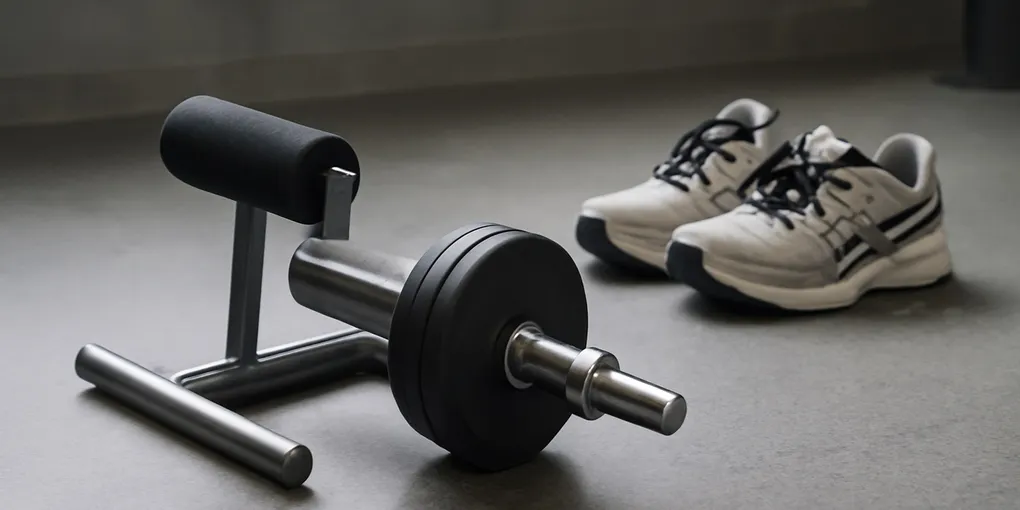
Best Tib Bars for Shin Strength: Build Lower-Leg Capacity Without Guesswork
Buyer's GuideThe Tib Bar Guy Solo Tib Bar
Best single-leg controlBest Use: One-leg tibialis raises when left-right control matters
Check current price
Quick picks
| Product | Key Specs |
|---|---|
| See price on Amazon |
|
| See price on Amazon |
|
| See price on Amazon |
|
| See price on Amazon |
|
Product availability, certifications, and retailer details can change; check the current Amazon page before buying.
Bottom line
A tib bar is worth buying when it gives you repeatable, measurable tibialis-anterior loading without turning shin soreness into guesswork. For most two-leg home-gym work, compare the Search Amazon for HGG Performance Tib Bar. If one side clearly takes over, start with a single-leg model such as Search Amazon for The Tib Bar Guy Solo Tib Bar. If you are building a lower-leg corner with calf range work too, search for a Search Amazon for tib bar and slant-board bundle.
Do not buy one because a video promised it will erase shin splints. Lower-leg pain can come from training load, footwear, bone stress, tendon irritation, or technique. A tib bar is a strength tool, not a diagnosis.
Quick picks
- Best two-foot default: Search Amazon for HGG Performance Tib Bar for progressive home-gym tib raises with small plates.
- Best single-leg control: Search Amazon for The Tib Bar Guy Solo Tib Bar when one side needs cleaner loading.
- Best compact add-on: Search Amazon for Freak Athlete tib bar if you already like compact lower-leg equipment.
- Best paired station: Search Amazon for tib bar and slant-board bundle only if you will train calves and ankle range too.
What a tib bar actually trains
A tib bar loads ankle dorsiflexion. In plain language, it trains the motion of pulling the toes and forefoot upward. Runners, court-sport athletes, hikers, and lifters often ignore this motion because calf raises and squats load the back of the lower leg much more than the front.
That imbalance does not automatically cause injury, but it can leave a gap. If your shins fatigue quickly on hills, your toes slap the ground late in a run, or downhill walking bothers the front of the lower leg, tibialis raises may be a useful accessory. They should sit beside gradual mileage, calf strength, sleep, and footwear decisions, not replace them.
How to choose the right style
For most buyers, the key features are foot security, plate compatibility, and easy loading. A plate-loaded two-foot tib bar should hold both feet without squeezing the shoes together. The sleeve should match the plates you own or plan to buy. If the listing is vague about sleeve diameter, that is a return-risk signal.
Single-leg trainers are better when you need a cleaner left-right comparison. They are also useful for small spaces because they tend to be shorter. The tradeoff is time. You have to train each leg separately, and very light loading may still feel clumsy at first.
Bundles make sense only when the second item solves a real job. A slant board can help calf stretching and heel-elevated squat variations; it is not automatically required for shin training. If you already own a slant board, buy the tib bar by itself.
What makes a tib bar worth buying
A useful tib bar earns its space by making shin loading measurable and repeatable. Prioritize a foot plate that holds your actual training shoes, a sleeve that fits your plates, and small load jumps so the front of the shin is not shocked by one big first week.
The evidence case is strongest for progressive lower-leg strength as part of a broader load-management plan, not for any single tib-bar brand. Treat the device like a durable accessory: good if it lets you add controlled dorsiflexion twice per week, poor if it encourages heavy swinging or replaces attention to mileage, calf capacity, footwear changes, and symptoms.
Fit and setup checks
Before loading plates, test the empty bar. Your feet should sit flat enough that the straps or foot plate do not dig into the top of the shoes. The handle or sleeve should move without scraping your shins. If the bar twists hard to one side, reduce load or consider a single-leg version.
Start seated on a bench with heels on the floor and knees bent. Lift the forefoot slowly, pause, and lower under control. If you feel the movement mostly in the hip flexors because you are leaning back and swinging the whole leg, the setup is too heavy or too far from the body.
How to program tib raises
Use two short sessions per week for the first month. Start with 2 sets of 12 to 20 slow reps using the empty bar or the lightest load that feels clean. Add load only when both the top position and the lowering phase stay controlled.
Runners should be especially conservative. Add tib work on easy or strength days rather than right before a hard downhill session. If you are also stretching calves, our slant board calf stretch protocol explains how to keep ankle work controlled instead of turning it into aggressive pulling.
What to avoid
Avoid heavy sets to failure in week one. The front of the shin can feel fine during training and sore the next day because the movement is new. Also avoid devices with unclear plate compatibility, narrow foot plates, sharp edges near the shoes, or no visible return policy.
Do not use tib raises to push through focal bone pain, night pain, swelling, or worsening pain during running. Those patterns need clinical guidance. MedlinePlus describes shin splints as an overuse pain pattern that can be linked with training changes and should be managed by reducing aggravating load when symptoms occur.
Buyer checklist before you order
Measure the shoes you will actually wear during lower-leg training. Some tib bars look roomy in product photos but pinch wider running shoes or court shoes. If you train barefoot, check whether the foot plate has smooth edges and enough padding; a harsh metal lip that feels fine through a shoe can be distracting against the foot.
Check the loading path too. A tib bar that takes plates far from the feet may feel heavy quickly because the weight sits at the end of a lever. That is not automatically bad, but it means small jumps matter. If your lightest plate is 10 pounds, buy fractional or 2.5-pound plates before you blame the exercise. The goal is repeatable dorsiflexion, not proving you can swing the most load.
For shared home gyms, choose adjustability over the most compact design. Two users with different shoe sizes may need a wider foot platform or more strap range. If the product page does not show the bar with real shoes, look for user photos and return terms.
Tib bar versus bands and wall raises
You do not need a tib bar to train the front of the shin. Wall tib raises, heel walks, and banded dorsiflexion can all work. The tib bar’s advantage is measurable loading and a consistent setup. That matters if you like tracking sets and adding load gradually.
Bands are cheaper and better for travel, but tension changes through the range. Wall raises are free, but they become awkward to progress once high reps are easy. A tib bar is the middle ground: still inexpensive compared with cardio equipment, but more structured than improvised drills.
How it fits with running and jumping
For runners and jump-sport athletes, tib work should be added like any other strength exercise. Put it after an easy run, after lifting, or on a separate short accessory day. Avoid adding it the same week you also add hill sprints, new shoes, and more weekly mileage. If soreness changes your stride, you added too much.
For lifters, tib raises pair well with calf raises, sled pushes, and ankle mobility work. Keep the dose low enough that squats, lunges, and loaded carries still feel normal the next day. Lower-leg accessories are supposed to support training, not steal recovery from the main session.
If you play court sports, use the same restraint. Tib work can support deceleration and foot control, but it should not appear as a sudden high-volume finisher after every practice. Start with two short strength exposures, watch next-day soreness, and increase only one variable at a time.
Maintenance and durability notes
A tib bar is simple equipment, but the contact points matter. Wipe sweat off the foot plate, check the sleeve collar, and inspect straps or welds before loading. If the bar rattles, tilts, or loosens under small plates, return it rather than adapting your reps around a bad tool.
Buy, use, or skip
Buy a plate-loaded tib bar if you already strength train and want a measurable lower-leg accessory. Buy a single-leg tibialis trainer if you need cleaner left-right work. Skip the category for now if the real issue is a sudden mileage jump, focal shin pain, or shoes that changed your running load overnight.
FAQ
Are tib bars good for runners?
They can be useful for runners who want controlled dorsiflexor strength work, especially when hills or downhill running expose shin fatigue. They are not a substitute for gradual mileage changes.
How heavy should tib bar raises be?
Start lighter than you think. Controlled sets of 12 to 20 reps with a slow lowering phase are more useful than swinging a heavy plate.
Can a tib bar fix shin splints?
No device can promise that. Shin pain needs load management, symptom tracking, and sometimes medical evaluation. Tib raises may be one part of a broader plan.
What plates work with a tib bar?
Check the sleeve diameter in the listing. Some bars fit standard one-inch plates, while others use Olympic-size plates or include an adapter.
Sources and further reading
- MedlinePlus overview of shin splints: https://medlineplus.gov/ency/patientinstructions/000654.htm
- AAOS OrthoInfo on shin splints and lower-leg pain context: https://orthoinfo.aaos.org/en/diseases—conditions/shin-splints/
- ACSM physical activity and strength guidance overview: https://www.acsm.org/education-resources/trending-topics-resources/physical-activity-guidelines