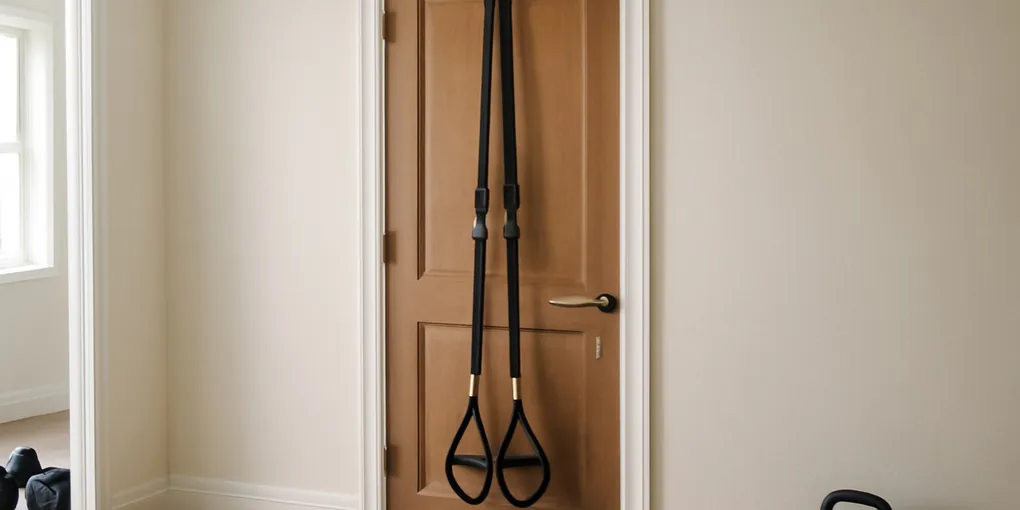
Best Suspension Trainers for Home Strength: Door, Beam, and Travel Setups That Feel Secure
Buyer's GuideTRX GO Suspension Trainer
Best compact door kitBest Use: Door, hotel, and small-apartment rows/presses where a simple single-anchor strap is enough
Check current price
Quick picks
| Product | Key Specs |
|---|---|
| See price on Amazon |
|
| See price on Amazon |
|
| See price on Amazon |
|
| See price on Amazon |
|
Product availability, certifications, and retailer details can change; check the current Amazon page before buying.
Bottom line
Most home users should start with a named door-anchor kit, not a mystery strap bundle. The Search Amazon for TRX GO Suspension Trainer is the clean default for renters and travel because it keeps the setup simple. If you want a more complete home package with padded handles and foot cradles, compare the Search Amazon for TRX HOME2 System. If you specifically want two independent straps for wider anchor options, the Search Amazon for Lifeline Jungle Gym XT is the model family to compare.
The anchor is still the purchase. A good brand name does not make a hollow, outward-opening, glass-panel, or poorly latched door safe. If you cannot verify the anchor point, choose a conservative setup or do not load the straps.
Quick picks
- Best compact door kit: Search Amazon for TRX GO Suspension Trainer for apartments, hotel rooms, and quick rows/presses.
- Best full home kit: Search Amazon for TRX HOME2 System if you want padded handles, foot cradles, and a more complete setup.
- Best independent straps: Search Amazon for Lifeline Jungle Gym XT for wider anchor spacing and unilateral setup options.
- Budget search: Search Amazon for RitFit Bodyweight Resistance Trainer Kit if price matters, but inspect stitching, buckles, and return terms.
What a suspension trainer is good at
Suspension straps make bodyweight exercises easier to scale. Move your feet closer to the anchor and a row becomes harder. Step farther away and the same row becomes a warm-up. That adjustability is why straps work well in small apartments, hotel rooms, and garages where a full cable machine or bench setup is unrealistic.
The strongest use cases are horizontal rows, supported split squats, assisted single-leg squats, incline presses, hamstring curls, fallout-style core work, and mobility drills where the strap lets you control range. They are less convincing as a complete strength plan for heavy squats, deadlifts, or loaded carries. If you need progressive external load, look at adjustable dumbbells or kettlebells instead.
For a compact home gym, suspension trainers pair well with our best wrist wraps for strength training only when pressing volume or grip setup is the limiting factor. Do not buy straps because every exercise needs a gadget; buy them because your home lacks a stable pulling station.
Anchor safety is the buying decision
The strap material is rarely the weak link in normal use. The anchor is the decision that matters. A door-anchor kit should use a thick pad or stopper that sits on the opposite side of a closed door. The door should close toward you, latch fully, and feel solid before you load the straps. Do not use glass-panel doors, hollow doors that flex, sliding doors, closet doors, or doors that open toward your body.
A mounted anchor is cleaner but less forgiving. The hardware must go into a joist, beam, concrete, or another structure that can handle dynamic load. If a listing shows the anchor screwed into drywall without structural detail, skip it. If you are not sure what is above the ceiling surface, hire help or stay with a door-anchor setup.
How to compare straps
Look for length markings, cam buckles or locking adjusters that do not creep under load, and handles that feel secure when your palms sweat. Foam handles are comfortable but can tear. Rubber handles are easier to wipe down. Foot cradles matter if you plan to do hamstring curls, pikes, or suspended lunges.
Single-anchor systems are simpler for most home users. Independent straps can be excellent for travel and gymnastics-style setup, but they require careful matching so one side does not sit longer than the other. Beginners usually do better with one central anchor and straps that adjust together.
Buyer checklist by room
For an apartment bedroom, prioritize a soft door anchor, compact handles, and fast setup. You want straps that can go up and come down without leaving marks, and you want exercises that keep your body away from furniture. Rows, incline presses, assisted squats, and hamstring walkouts are the useful core. A travel-style kit also makes sense here if storage is tight; search Amazon for compact travel suspension trainer straps if a full garage-style package looks bulky.
For a garage gym, prioritize a stable anchor and a handle that will survive chalk, sweat, and outdoor temperature swings. A rack-mounted or ceiling-mounted option can feel much cleaner than a door anchor, especially for heavier rows. Check rack tubing size, pin diameter, and whether the landmine, pull-up bar, or storage hooks already occupy the same space.
For travel, prioritize one large door stopper, a small storage bag, and clear strap-length markings. Hotel doors vary, so you need a conservative setup check every time: the door closes toward you, the latch is firm, and the anchor cannot pull through. Skip suspended foot-cradle moves in unfamiliar rooms until you know the anchor is stable.
Exercise fit matrix
Use suspension trainers for movements where angle changes make progression simple. Rows are the clearest win because you can change foot position in seconds. Incline presses are useful when push-ups from the floor are too hard or irritate wrists. Split-squat assistance helps balance without turning the exercise into a hand-supported pull. Hamstring curls are demanding, so start with short ranges and bent knees before chasing straight-leg versions.
Suspension trainers are weaker for movements that need heavy external load or a fixed path. If your main goal is maximal leg strength, straps are accessory equipment. If your main goal is consistent pulling work in a small room, straps can solve a real equipment gap.
What to avoid
Avoid no-name kits that do not show the anchor, stitching, adjuster, or rated hardware. Also avoid buying the cheapest straps if the listing hides how the door anchor works. A suspension trainer loads your body from an overhead or high wall point, so failure is not just inconvenient.
Avoid turning every movement into an unstable circus exercise. Rows, presses, split squats, and hamstring curls are enough for most people. If an exercise only feels hard because you are wobbling, it may not be the best strength stimulus.
Reader test
Buy a door-anchor kit if you want rows and supported strength work in a rented room. Buy a mounted-anchor setup if you own the space and can install hardware into structure. Buy travel straps if portability matters more than perfect handle feel. The concrete decision is not brand loyalty; it is whether your anchor, door, and exercise plan match the load you are about to put on the straps.
Setup examples for common buyers
A beginner who wants general strength should build the first month around four movements: a row, an incline press, an assisted squat, and a hip-hinge or hamstring curl. Those movements make the strap length, handle comfort, and anchor stability easy to judge. If the straps slip during rows or the handles dig into the palm during presses, return the kit before adding advanced drills.
A runner or cyclist should use straps mostly for pulling strength, trunk control, and single-leg support work. The point is not to turn every endurance day into an exhausting strength session. A simple twice-weekly block of rows, split-squat assistance, and fallouts can fill gaps without stealing recovery from the main sport.
A parent or shared-household user should care about teardown speed. Straps that disappear into a drawer after training are more likely to survive in a living room than a heavy station that blocks the door. Check whether the handles bang against the wall when stored, whether the door still closes normally, and whether the anchor pad leaves marks.
A stronger lifter should be more skeptical. Suspension trainers can still earn a place for warm-ups, high-rep rows, shoulder-friendly presses, and trunk drills, but they will not load the lower body like a rack, barbell, or heavy dumbbells. If the goal is maximal strength, treat straps as assistance work rather than the main purchase. For any buyer, the return-policy test is simple: within the first week, confirm the anchor stays put, the buckles hold length, the handles stay comfortable, and the exercises fit your room. If one of those fails, a different kit or anchor style is a better answer than trying to adapt every workout around bad hardware.
Sources and safety notes
General physical activity guidance supports regular strengthening and balance work across adulthood (WHO: physical activity fact sheet). For suspension trainers, the practical risk is usually setup failure rather than the exercise category itself. ACE’s suspension-trainer guidance emphasizes anchor setup, body angle, and controlled progression (ACE: how to use a suspension trainer). Treat the anchor as load-bearing equipment: mounted hardware should go into structure, and door anchors should only be used on appropriate closed doors.
FAQ
Can a suspension trainer replace weights?
It can replace some home-gym movements, especially rows, presses, core work, and squat assistance. It does not replace heavy lower-body loading for everyone.
Is a door anchor safe for suspension training?
It can be safe on a solid door that closes toward you and latches fully. It is not safe on weak, glass, sliding, loose, or outward-opening doors.
What should beginners buy first?
Most beginners should buy a basic door-anchor kit with clear strap markings and comfortable handles, then learn rows, presses, split squats, and hamstring curls before adding harder drills.