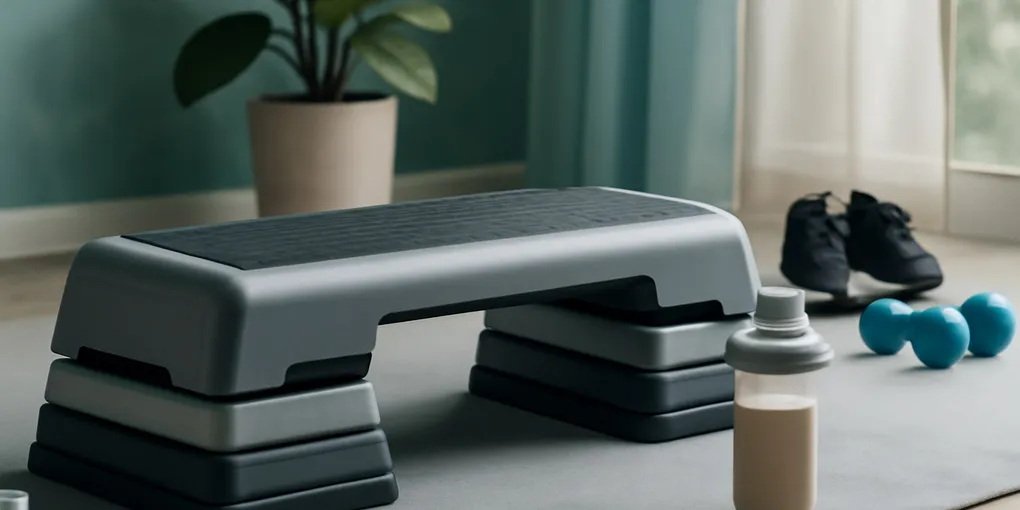
Best Adjustable Step Platforms for Home Cardio: Stable Risers, Wide Decks, and Knee-Friendly Setup
Buyer's GuideThe Step Original Aerobic Platform
Best durable home-cardio stepBest Use: Step classes, low-impact intervals, and loaded step-ups when a wide deck matters
Check current price
Quick picks
| Product | Key Specs |
|---|---|
| See price on Amazon |
|
| See price on Amazon |
|
| See price on Amazon |
|
Product availability, certifications, and retailer details can change; check the current Amazon page before buying.
Bottom line
For home cardio, the useful shortlist is The Step Original when you want a durable wide deck, Yes4All when you need a budget adjustable step, and the Reebok Deck when one piece of gear must double as a bench. Treat the quick picks as model-specific shortlists, then confirm current dimensions, materials, return terms, and seller details before ordering. If your small-space setup also needs floor-based strength gear, compare this with our push-up handle wrist-comfort guide.
Quick picks
- Best durable home-cardio step: Search Amazon for The Step Original Aerobic Platform — step classes, low-impact intervals, and loaded step-ups when a wide deck matters. Measure storage space; club-style decks are larger than compact steppers.
- Best budget adjustable step: Search Amazon for Yes4All Adjustable Aerobic Step Platform — apartments and beginner step-ups where low height and simple risers are enough. Inspect riser stability on your flooring before the return window closes.
- Best multi-use upgrade: Search Amazon for Reebok Deck workout bench step — readers who want a step platform that can also serve as an incline/decline bench. Costs more and is heavier than a basic aerobic step.
What matters before you buy
A good step has three non-negotiables: deck traction, riser security, and enough surface area for your foot placement. The American College of Sports Medicine notes that resistance and aerobic exercise should be progressed gradually rather than added as sudden all-out volume, and that same principle applies to step height and session length (ACSM position stand, PMID: 19204579). A platform that encourages small progressions is better than one that jumps from easy to reckless.
Look for a deck at least long enough for comfortable forward step-ups and wide enough that both shoes can land without toe overlap. Rubberized feet help on hard floors. On thick carpet, test carefully because risers can sink or tilt. If the step moves during a slow test set, it will move more during a sweaty interval.
Use deck width and riser security as the first filter, not maximum advertised height. The Step is the straightforward aerobics platform, Yes4All is the budget adjustable choice, and the Reebok Deck is better when you want a step that can double as a compact bench for floor-to-standing strength circuits.
How to judge step-platform quality
For this category, score the platform before caring about color or bundled videos.
- Research, 30%: Does the product support gradual height changes instead of forcing a high starting box?
- Evidence quality, 25%: Are the training claims limited to conditioning, coordination, and strength accessories rather than fat-loss promises?
- Value, 20%: Does the deck, riser count, and durability match how often you will use it?
- User signals, 15%: Do reviews mention stable risers, no sliding, and realistic storage?
- Transparency, 10%: Are weight capacity, dimensions, and height settings listed clearly?
Knee-friendly setup
Start at the lowest height. Step up with the whole foot on the deck, stand tall, then step down under control. If your knee dives inward, your heel hangs off the edge, or you need to launch off the floor, lower the height or slow the tempo. For cardio, alternate one- to three-minute blocks with easy walking instead of copying a high-speed class on day one.
People with current knee pain, recent surgery, unexplained swelling, chest symptoms, or dizziness should not use a step platform as a self-test. Use it as a training tool only when normal walking and stairs already feel predictable.
Deck size and riser details
A small step can work for slow step-ups, but deck size becomes important as soon as you add side taps, crossover steps, or any class video that asks you to turn. Measure the footprint before buying. A platform that barely fits your closet may also be too narrow for confident foot placement. If your shoe is larger than average, look harder at wide decks and avoid toy-like platforms marketed mainly by color.
Riser design is the second issue. Some steps stack loose risers under the ends. Others use snap-in risers or a more integrated base. Loose risers are fine when they are broad, rubber-footed, and matched to the deck. They are a problem when they rock, slide, or sit unevenly. Before the return window closes, test the step barefoot and in training shoes, then test it on every surface where you might use it. Wood, tile, rubber matting, and carpet can all change stability.
If you plan to use dumbbells, keep the height lower than your ego wants. A loaded step-up magnifies balance mistakes, and the eccentric step-down is where many people lose control. A stable six-inch step used consistently is a better purchase than a tall platform that only feels safe for one week.
Which type fits your room
A wide adjustable aerobic step is the default recommendation for most readers because it gives enough deck for cardio and enough strength utility for step-ups, incline push-ups, and elevated split-squat setup. It is the right starting search if you have a dedicated exercise corner. Search Amazon for The Step Original Aerobic Platform and compare dimensions before comparing colors.
A compact step is the apartment answer. It can sit under a bed or behind a sofa, but it should be used with simpler moves. Think forward step-ups, toe taps, calf raises, and very controlled lateral taps. Do not buy a compact model expecting it to feel like a studio step class deck.
A commercial-style step is for frequent users, larger bodies, shared households, or anyone adding light dumbbells. The extra deck width and heavier platform can feel less twitchy. The downside is obvious: it costs more and is more annoying to store.
How to use it without turning every session into knee stress
The first week should feel almost too easy. Use the lowest riser setting, choose a pace that lets you place the whole foot on the deck, and stop before form changes. If your knee caves inward, your heel hangs off the back, or your landing gets loud, the step is too high, the pace is too fast, or fatigue is winning.
A simple starter session is five rounds of two minutes easy stepping and one minute walking. Keep one hand near a wall if balance is uncertain. Add time before height. Add height before speed. Add load last. That order keeps the tool useful for conditioning instead of turning it into a random joint challenge.
What to avoid
Avoid platforms with vague dimensions, no listed weight rating, slick plastic feet, or risers that only contact the floor at small points. Avoid very tall setups for general cardio unless you are already conditioned for step training. Avoid jumping on a household aerobic step unless the manufacturer clearly rates it for impact, and even then, most home users are better served by controlled stepping.
The best return-window test is simple: set the platform on your workout floor, step on and off 30 times per side at low speed, then do ten slow lateral taps. If the deck clicks, shifts, bows, or makes you stare at your feet the whole time, return it.
Simple programming ideas
For easy cardio, use a talk-test pace. You should be able to speak in short sentences while stepping. Start with 10 to 15 minutes total and add five minutes only after the next day feels normal. For strength, use three sets of six to ten controlled step-ups per side before adding dumbbells. For mobility, use the step as a low support for calf stretching or elevated hands during warm-ups.
A step platform is also useful on days when weather, schedule, or gym access makes training fragile. That does not mean every session needs to be hard. A quiet 12-minute block after lunch may be the most realistic use case, and that is enough reason to choose a platform that stores easily and does not annoy neighbors.
Reader test before checkout
You should be able to answer four questions before buying: where will it live, what floor will it sit on, what is the lowest height, and will your whole shoe land on the deck? If any answer is vague, pause. The right step is boring in the best way: stable under foot, adjustable in small jumps, and simple enough that you use it more than once.
A final useful detail is noise. Hollow plastic steps can be loud on apartment floors. If you train early, pair the platform with a thin rubber mat and choose a model whose feet contact the floor evenly. Quiet equipment gets used more often because it creates fewer household negotiations.
FAQ
Is a wider step platform worth it?
Usually yes if you have room. A wider deck gives you more landing margin for step-ups, lateral taps, and class-style moves. Compact steps are useful, but they demand cleaner foot placement.
How high should beginners set an aerobic step?
Most beginners should start around four inches or the lowest available setting. Add height only when the movement stays quiet, controlled, and pain-free.
Can I use a step platform for strength training?
Yes, for unloaded or light loaded step-ups, elevated push-ups, calf raises, and split-squat variations. Avoid heavy loaded step-ups unless the platform is rated for the load and does not flex.
Sources
- American College of Sports Medicine position stand on progression models in resistance training, PMID: 19204579: https://pubmed.ncbi.nlm.nih.gov/19204579/
- CDC physical activity basics for adults: https://www.cdc.gov/physical-activity-basics/guidelines/adults.html
For a compact stationary-cardio category, see our folding exercise bike guide for small spaces.