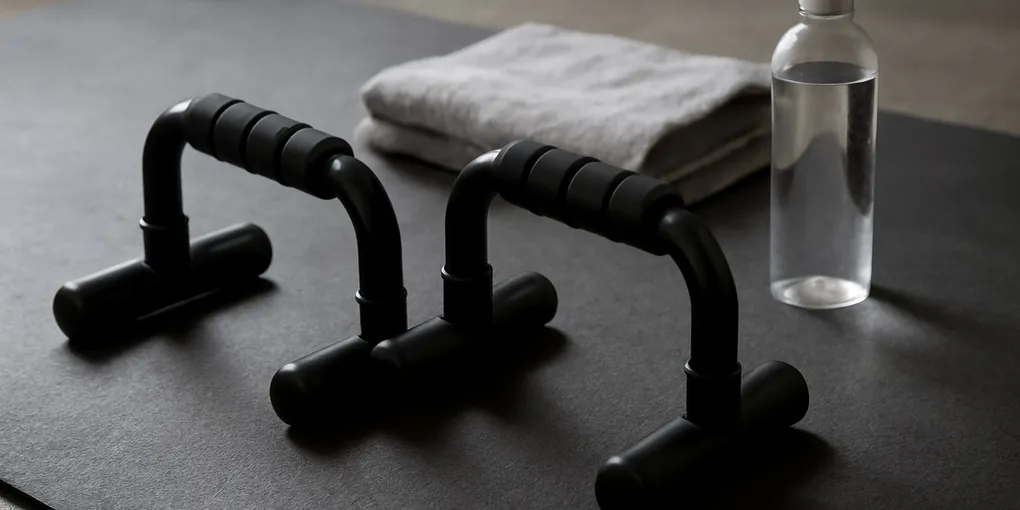
Best Push-Up Handles for Wrist Comfort: Stable Grips That Do Not Turn Push-Ups Into a Gimmick
Buyer's GuideCAP Barbell Push-Up Bars
Best simple fixed handlesBest Use: Standard push-ups on a mat when wrist extension is the limiter
Check current price
Quick picks
| Product | Key Specs |
|---|---|
| See price on Amazon |
|
| See price on Amazon |
|
| See price on Amazon |
|
Product availability, certifications, and retailer details can change; check the current Amazon page before buying.
Bottom line
For wrist-comfort push-ups, the useful shortlist is CAP fixed bars for a simple neutral grip, Perfect Fitness Pushup Elite if you specifically want rotation, and Lebert parallettes when you also want calisthenics progressions. Treat the quick picks as model-specific shortlists, then confirm current dimensions, materials, return terms, and seller details before ordering.
Quick picks
- Best simple fixed handles: Search Amazon for CAP Barbell Push-Up Bars — standard push-ups on a mat when wrist extension is the limiter. Too narrow or slick on hard floors can slide under fatigue.
- Best rotating-handle option: Search Amazon for Perfect Fitness Pushup Elite Handles — readers who specifically want a rotating grip and can control the movement. Rotating handles add motion that some beginners do not need.
- Best sturdy progression tool: Search Amazon for Lebert Fitness Parallettes — deeper push-ups, L-sit practice, and controlled calisthenics progressions. More range is not better if shoulders or elbows complain.
Why handles can help wrists
A standard floor push-up asks the wrist to extend while loaded. Some lifters tolerate that easily; others feel pressure at the heel of the palm before the chest, triceps, or shoulders get enough work. Push-up handles change the hand position so the wrist stays closer to neutral. That does not treat an injury, but it can remove one common comfort barrier.
The tradeoff is depth. Handles raise the hands off the floor, and taller bars let the chest travel lower. Extra range can be useful for strong, pain-free shoulders. It can also irritate the front of the shoulder if you drop past the range you control. The handle should make push-ups cleaner, not automatically deeper.
Push-up handles should solve wrist angle without making the base feel sketchy. CAP-style bars are the simple fixed option, Perfect Fitness rotating handles add a moving grip that some wrists like and others do not, and Lebert parallettes are the taller floor-strength option rather than a tiny travel handle.
How to choose the right style
For most people, a fixed low handle is the safest first purchase. Look for non-slip feet, a handle diameter that does not cramp the fingers, and a shape that cannot roll. A foam grip can feel comfortable at first, but cheap foam tears and absorbs sweat. A textured rubber or molded grip is easier to clean.
Rubber-base bars are the better choice on wood, tile, or smooth garage floors. Test them with a light incline push-up before loading full body weight. If the base twists, slides, or rocks, return it. A push-up handle that moves unexpectedly is worse than the floor.
Mini parallettes are sturdier and more versatile, but they are not automatically better for a beginner. They take more space, cost more, and often encourage deeper reps. Choose them if you also want L-sit holds, planche leans, deficit push-ups, or controlled calisthenics practice.
Setup test before your first workout
Put the handles on a mat or clean floor and set them just wider than shoulder width. Do five slow incline push-ups with your hands on the handles and your knees or feet adjusted so the reps feel easy. The wrist should feel quiet, the handles should not slide, and the elbows should track roughly 30 to 60 degrees from the torso rather than flaring straight out.
Then do one normal set with two reps left in reserve. If the wrist feels better but the shoulder feels pinchy at the bottom, shorten the range until the upper arm is around parallel with the floor. If the handles wobble near fatigue, the product is not stable enough for your floor or body size.
A good home test is boring: place the handles where you expect to use them, load them gradually, and try to twist each one with your palm before the set starts. The base should resist rotation without needing you to press straight down perfectly. If the bars feel stable only when your weight is centered, they may fail exactly when a tired rep shifts forward or sideways.
Check the handle spacing against your shoulders, not against the product photo. Many marketing images put the bars very wide to show the equipment clearly. For most users, a shoulder-width or slightly wider position gives a cleaner press. If your elbows flare hard, your neck tenses, or you feel the front of the shoulder before the chest and triceps, bring the handles in and reduce depth before blaming the product.
Buyer details that matter
Handle height should match the job. Low bars are enough for wrist comfort. Medium-height parallettes add range and skill options. Very tall handles are rarely needed for ordinary strength work and can make storage annoying.
Base shape matters more than the marketing photo. A wide base spreads force and reduces tipping. Rubber feet help only when they contact the floor evenly. On thick carpet, narrow feet can sink and wobble, so a mat or flatter surface may be safer.
Grip angle is personal. Straight handles are predictable. Angled handles can feel natural for some shoulders but awkward for others. If you are buying online, prioritize a returnable pair because hand width, shoulder history, and floor surface change the answer.
For a first purchase, compare the underside before the handle padding. A molded plastic bar with four small hard feet can look stable in a product photo and still skate on vinyl or polished concrete. A slightly heavier pair with continuous rubber pads is usually a better bet for apartment floors, garages, and shared workout rooms. If you train outside, avoid soft foam feet that pick up grit and then scratch indoor flooring.
Handle diameter is another practical filter. Very thin handles can dig into the palm; very thick handles can tire the forearm before the chest. Most buyers should look for a rounded grip that feels closer to a dumbbell handle than a broomstick. If you already rely on wrist support during pressing, read our wrist wraps strength-training guide before assuming handles alone solve the problem. Wraps and handles do different jobs: wraps limit wrist motion under load, while handles change the push-up hand angle.
If your floor is the main concern, search Amazon for rubber-base push-up bars and prioritize wide, flat contact points over folding hinges. If your goal is skill work, search Amazon for mini parallettes and check the listed height and weight rating before buying.
How to progress without irritating joints
Use handles to make push-ups repeatable. Start with 2 to 4 sets of 5 to 12 controlled reps, stopping before form breaks. Add reps first, then sets, then harder variations such as feet-elevated push-ups. Do not chase maximum depth until your shoulders tolerate the regular range for several weeks.
If push-ups remain too hard, use the handles on a bench or sturdy table for incline reps. If they become too easy, slow the lowering phase or add a pause. A weighted vest can work later, but only after the handles stay stable and the wrist, elbow, and shoulder all feel normal the next day.
Who should skip handles and reassess
Skip handle-based push-ups if you have sharp wrist pain, recent trauma, numbness, new swelling, or pain that worsens as the set goes on. A neutral grip can reduce wrist extension, but it cannot distinguish tendinopathy, nerve symptoms, arthritis flare, or a healing sprain. Pain that changes grip strength or daily hand use is a clinical question before it is a shopping question.
Also skip handles that force a very narrow grip. Narrow bars can overload the wrist and elbow even when the wrist angle looks neutral. You should be able to place the handles at a width that lets the chest, triceps, and shoulders do the work.
Sources and safety notes
The American College of Sports Medicine describes resistance training as a progressive loading process, which is the useful frame for push-up handles: they are an access tool, not a shortcut around gradual volume and load management (ACSM resistance training resources). MedlinePlus lists wrist injuries and disorders as a broad category that can include pain, swelling, numbness, and movement limits, which are reasons to stop self-modifying exercises and seek care rather than buying another handle (MedlinePlus: wrist injuries and disorders). For general strength progressions, keep reps controlled and avoid using extra range to force painful positions.
Push-up handles FAQ
Are push-up handles better than doing push-ups on the floor?
They are better if floor push-ups bother your wrists or if you need a grippier setup. They are not automatically better for strength; progression, range control, and consistency matter more than the handle. If floor push-ups already feel comfortable, handles are optional equipment rather than an upgrade you need.
Should I buy push-up bars or mini parallettes?
Buy push-up bars for wrist comfort and simple home workouts. Buy mini parallettes if you also want deeper reps, L-sits, or calisthenics progressions and have room to store them safely.
Can push-up handles fix wrist pain?
No. They can reduce loaded wrist extension during push-ups, but sharp pain, numbness, swelling, or pain that affects daily hand use should be evaluated instead of worked around. Treat the handle as a comfort modification for training, not a diagnosis or rehab plan.