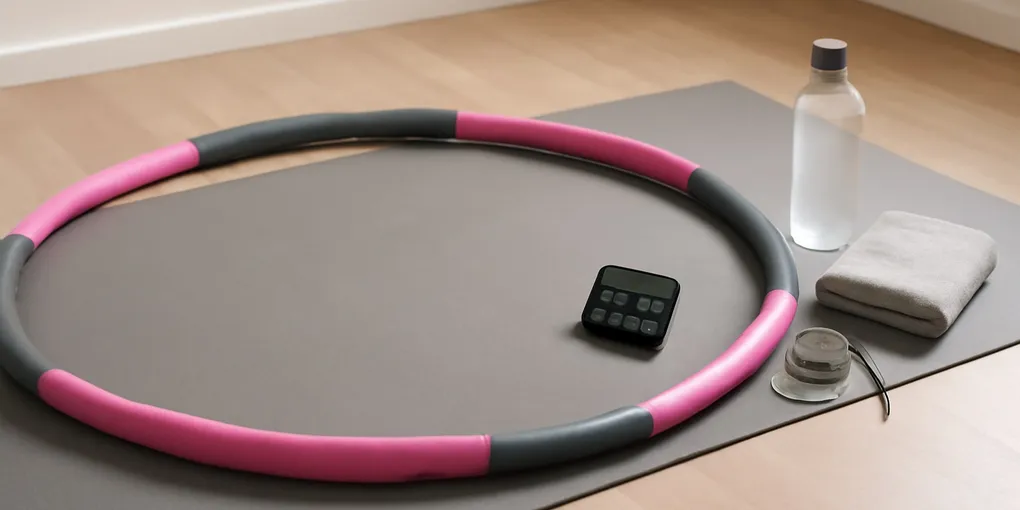
Weighted Hula Hoops for Core and Waist: Fun Cardio Tool or Bruise-Prone Gimmick?
Evidence ExplainerQuick picks
| Product | Key Specs |
|---|---|
| See price on Amazon | — |
| See price on Amazon | — |
| See price on Amazon | — |
Product availability, certifications, and retailer details can change; check the current Amazon page before buying.
Weighted hula hoops sit in the awkward middle between playful cardio and overmarketed waist gadget. They can raise heart rate, make short movement breaks more enjoyable, and train rhythmic trunk control. They cannot melt belly fat from one body part, replace strength training, or make a painful setup smart. The right question is not whether hooping is magic. It is whether a hoop makes you move more often without bruising your hips or annoying your back.
If you want to try the category, search Amazon for the BetterSense weighted hula hoop for a traditional padded hoop, or search Amazon for a Dumoyi smart weighted hula hoop if floor space is tight. Check the current weight, waist fit, return policy, and user reports about bruising before buying.
Bottom line
A weighted hoop can be useful if it makes low-skill cardio feel fun and repeatable. It is a poor buy if you expect targeted waist fat loss, if you bruise easily, if twisting irritates your back, or if your space is too small for a traditional hoop.
The most defensible use is short beginner sessions: 3 to 5 minutes, several times per week, then gradual increases if skin, hips, and back tolerate it. Start lighter than marketing suggests.
What the evidence actually says
One small study reported that weighted hula-hoop training reduced abdominal fat percentage and waist circumference compared with walking over a six-week intervention, but the sample was limited and the result should not be inflated into a universal waist-loss promise (https://pubmed.ncbi.nlm.nih.gov/21691150/). The more practical interpretation is that hooping can create a repeatable moderate activity dose for some people.
That matters because adherence is often the real advantage. If a hoop gets you to stand up, move, breathe harder, and repeat sessions without joint irritation, it has value. If you dread it or bruise every time, a walking plan or simple bike session wins.
Practical score
| Factor | Weight | Score | Rationale |
|---|---|---|---|
| Research | 30% | 5.5 | There is some direct hooping evidence, but it is small and should be interpreted cautiously. |
| Evidence Quality | 25% | 4.5 | Body-composition claims are weaker than the basic case for enjoyable movement. |
| Value | 20% | 7.0 | Hoops are inexpensive if you actually use them and choose a tolerable weight. |
| User Signals | 15% | 6.0 | Enjoyment is high for some users; bruising, fit, and noise complaints are common. |
| Transparency | 10% | 5.5 | Better listings state weight, waist range, link count, padding, and return terms clearly. |
| Composite | 100% | 5.5 | A fun movement tool for the right person, not a core or waist shortcut. |
Which hoop style should you buy?
Traditional padded hoops feel closest to the old-school hula-hoop pattern. They need enough open floor space for the full diameter and can hit furniture if your room is tight. They are better for people who want the classic movement and do not mind assembling sections.
Link-style weighted hoops sit around the waist while a weighted ball travels on a track. They need less room, but fit is everything. Too loose and the motion feels sloppy. Too tight and the links can pinch. The rolling weight can also make noise, which matters in apartments.
Avoid very heavy hoops for your first purchase. Heavier pressure is not better training if it shortens sessions or leaves bruises. A lighter hoop you use three times per week beats a heavier hoop that becomes closet equipment after two painful days.
Who might benefit?
A weighted hoop makes sense for someone who wants short indoor cardio breaks, dislikes treadmills, and enjoys rhythmic movement. It can also be a low-barrier option for people who find dance-style fitness more appealing than sets and reps.
It is not ideal for people with current back pain, rib or hip bruising, pregnancy-related concerns, pelvic symptoms, recent abdominal surgery, or any condition where repeated waist pressure is a bad idea. In those cases, use clinical guidance and choose lower-pressure activity.
For a more conventional low-impact option, compare this category with the best mini steppers for low-impact cardio before buying.
How to start without regretting it
Start with one short session. Wear a fitted shirt, clear the space, and hoop for 2 to 3 minutes in each direction if you can. Stop before the skin feels hot or tender. The goal is to see how your body tolerates the pressure, not to finish a social-media challenge.
If the first session is fine, build toward 10 to 15 minutes total by adding a few minutes per week. Keep intensity conversational at first. If you cannot breathe smoothly or your lower back feels compressed, reduce speed or stop.
Do not hoop over bruises. Waiting a day or two is smarter than layering more pressure onto irritated tissue.
Buying checklist
Check weight first. Many beginners should avoid the heaviest options. Check waist range if buying a link-style hoop. If your waist measurement is near the top or bottom of the stated range, read return terms carefully.
Check padding and connection quality. Traditional sectional hoops should lock together firmly. Link-style hoops should move smoothly without sharp edges. Read recent reviews specifically for pinching, broken links, ball-track noise, and whether the product stays adjusted.
Finally, check storage. A traditional hoop may break into sections, but it is still bulkier than a jump rope or band. If storage friction stops you from using equipment, choose the simpler tool.
Weighted Hula Hoop FAQ
Is a weighted hoop better than walking?
Not universally. Walking is simpler, easier to dose, and less likely to bruise. A hoop can be better for someone who finds it more fun and will actually repeat it indoors.
How heavy should a beginner hoop be?
Choose the lightest model that still moves smoothly for your body size and skill. Very heavy hoops increase pressure and do not prove better results. If the listing emphasizes aggressive waist shaping more than measurements and fit, be skeptical.
Can it replace ab training?
No. Hooping trains rhythm, coordination, and trunk endurance. It does not replace progressive core work such as dead bugs, side planks, loaded carries, or the dead bug core control protocol.
Frequently Asked Questions
- Small studies suggest hooping can change waist measures in some programs, but it is not spot reduction. Diet, total activity, and consistency still matter.
- They challenge trunk rhythm and endurance more than maximal core strength. They do not replace progressive strength work.
- Repeated pressure, poor fit, too much weight, and long first sessions can irritate skin and soft tissue around the waist and hips.