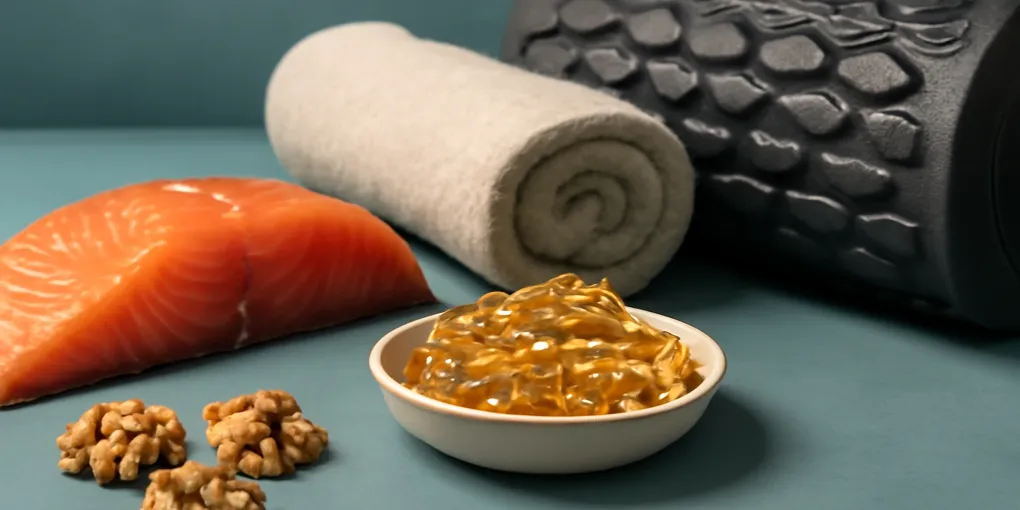
This is a DOMS trial guide, not a fish-oil buyer guide
This page answers a narrow question: after unfamiliar or high-eccentric-load exercise, is a regular omega-3 trial worth testing for delayed-onset muscle soreness (DOMS)? It does not rank fish-oil products or advise on triglyceride treatment. If your job is to compare EPA/DHA labels, third-party testing, burps, algae alternatives, or triglyceride-focused use, see our separate omega-3 fish oil buyer and triglycerides guide.
The useful claim is modest
Omega-3 fatty acids are often marketed as a shortcut for post-workout soreness. Human trials suggest they may modestly reduce delayed-onset muscle soreness (DOMS) or some exercise-induced inflammatory markers in certain settings, but results are inconsistent and a supplement is not a substitute for sensible training progression, sleep, carbohydrate intake, or enough total protein. (PMID: 30894779)
DOMS usually peaks one to three days after an unfamiliar or high-eccentric-load session. The goal is not to suppress every signal from training. It is to recover well enough to continue a sustainable program without turning soreness into an injury-risk contest.
What the evidence says
A meta-analysis of randomized trials reported that omega-3 supplementation may reduce DOMS and some inflammatory measures after exercise, while also noting substantial differences in dose, duration, participants, and exercise protocols (PMID: 30894779). Another controlled trial found less reported soreness after eccentric exercise with fish-oil supplementation, but a single study cannot establish the best dose or guarantee the same effect in all training plans (PMID: 22465909).
The evidence supports cautious language: omega-3s may be a useful adjunct for some people. It does not show that they heal muscle damage overnight, prevent injury, or should be taken at a high dose indefinitely. (PMID: 30894779)
The type of session matters, too. Trials often use deliberately unfamiliar eccentric exercise because it reliably creates soreness. A recreational lifter who has trained consistently for months may have less room for any supplement to change their experience than a person returning after a long break. Judge a trial against comparable sessions rather than against the worst soreness of the year. (PMID: 30894779)
Food first, supplement second
Fatty fish such as salmon, sardines, herring, and trout provide EPA and DHA along with protein and other nutrients. The American Heart Association recommends fish, particularly oily fish, about twice a week for people without a reason to avoid it (AHA dietary guidance). For people who do not eat fish, algae-based DHA/EPA products are a practical alternative, though label amounts and EPA:DHA balance vary.
A supplement becomes more reasonable when fish intake is consistently low and the person has a specific reason to trial it. For a DOMS experiment, use a product with a clearly stated combined EPA+DHA amount, rather than treating the front-label total oil number as the active dose. The separate buyer guide above covers how to compare those labels and quality signals without turning this evidence page into a shopping list.
How to test whether it is worth keeping
Choose one normal training block rather than a personal-record week. Keep your program, sleep routine, and recovery meals broadly stable for four to six weeks. Track soreness 24 and 48 hours after comparable sessions, missed sessions, gastrointestinal tolerance, and whether the cost feels worthwhile.
Do not increase omega-3 intake and add five other recovery products at once. If soreness improves, you will have no meaningful way to attribute the change. If you already eat oily fish several times weekly and notice no difference, an additional supplement may not earn a permanent place. (PMID: 30894779)
Safety and medication checks
Higher-dose omega-3 products can cause fishy burps or gastrointestinal upset. They can also matter for people using anticoagulant or antiplatelet medication, those with a bleeding disorder, or anyone preparing for surgery. The NIH Office of Dietary Supplements summarizes dose and interaction considerations and notes that prescription-strength use should be clinician-directed (NIH fact sheet).
Stop treating persistent focal pain, swelling, weakness, a pop, or loss of function as routine DOMS. Those patterns need clinical assessment, not a larger supplement dose.
People with a history of seafood allergy should not experiment casually with fish-derived products. Algae-based products avoid fish but still deserve the same label and interaction review. Pregnancy, atrial-fibrillation history, and prescription lipid treatment are also reasons to ask a clinician which product and dose make sense rather than using a recovery article as a dosing plan. (PMID: 30894779)
Keep the decision tied to DOMS, not a general recovery promise
Before you keep a supplement, ask whether its benefit was specific to comparable DOMS: less soreness at 24 or 48 hours, fewer missed sessions, or better tolerance of an already-planned workout. Do not count a better week overall as proof if sleep, training load, and meals also changed. If the trial does not improve that narrow outcome enough to justify the cost and routine, stop rather than reframing it as a general recovery insurance policy. (PMID: 30894779)
Better recovery fundamentals to keep first
Progress training volume gradually, include sufficient carbohydrate around hard endurance or high-volume work, spread protein across meals, and preserve sleep opportunity. Light movement can make stiffness feel more tolerable, but there is no need to force a punishing session through severe soreness. These basics have a larger and more reliable effect on training continuity than any single capsule. (PMID: 30894779)
Omega-3s and Muscle Soreness FAQ
How much omega-3 should I take for soreness?
Studies use varied doses, so there is no universally established DOMS dose. Compare the EPA+DHA amount on a label and discuss a higher-dose plan with a clinician, especially if you use medication that affects bleeding. (PMID: 30894779)
Can omega-3s replace protein after training?
No. Omega-3s and protein have different roles. A supplement does not replace adequate food, protein distribution, or total energy intake. (PMID: 30894779)
Should I take omega-3s only after a workout?
Trials generally use regular supplementation rather than a one-time post-workout dose. If you try it, evaluate a consistent routine over weeks rather than expecting an acute rescue effect. (PMID: 30894779)
Sources
- Exercise recovery meta-analysis: PMID: 30894779
- Eccentric-exercise trial: PMID: 22465909
- Intake, safety, and interaction guidance: NIH Office of Dietary Supplements