Best Hot and Cold Gel Packs for Joint Soreness: Wraps, Sleeves, and Freezer Packs That Stay Put
Buyer's GuideFlexiKold Gel Ice Pack with Wrap
Best first buyBest Use: Knees, ankles, elbows, and wrists where a flexible pack needs to stay put
Check current price
Quick picks
| Product | Key Specs |
|---|---|
| See price on Amazon |
|
| See price on Amazon |
|
| See price on Amazon |
|
| See price on Amazon |
|
Product availability, certifications, and retailer details can change; check the current Amazon page before buying.
Bottom line
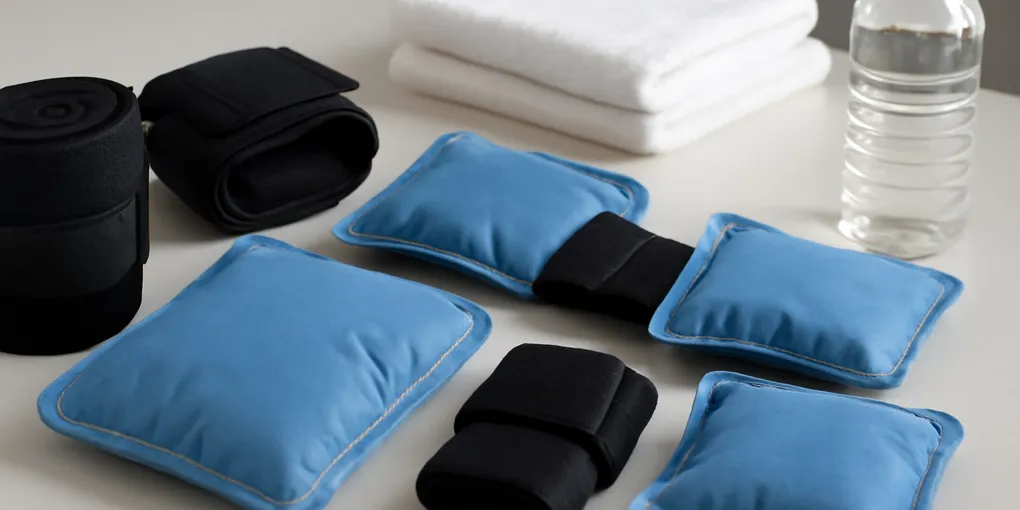
The best hot/cold pack is the one that contacts the sore area without sliding, overcooling skin, or turning into a compression device. Most buyers should compare a flexible wrap kit such as the Search Amazon for FlexiKold Gel Ice Pack with Wrap. For larger areas, the Search Amazon for Chattanooga ColPac Reusable Cold Pack is the clinic-style cold-pack family to compare. For repeated shoulder or knee use, model-specific wraps such as the Search Amazon for REVIX Shoulder Ice Pack Wrap or Search Amazon for TheraICE Hot and Cold Knee Sleeve can fit better than a flat pack.
Do not use heat or cold to ignore swelling, new weakness, fever, loss of sensation, or pain after a major fall. Those are not shopping problems.
Quick picks
- Best first buy: Search Amazon for FlexiKold Gel Ice Pack with Wrap for small joints and timed home sessions.
- Best broad cold pack: Search Amazon for Chattanooga ColPac Reusable Cold Pack for low back, hip, thigh, or shoulder blade coverage.
- Best shoulder contour: Search Amazon for REVIX Shoulder Ice Pack Wrap when straps and shape matter.
- Best slip-on knee option: Search Amazon for TheraICE Hot and Cold Knee Sleeve if sleeve sizing fits your leg.
Before keeping any pack, do one conservative timed session with a towel barrier and check skin color, sensation, strap pressure, and whether the pack stayed positioned without cutting off circulation.
Cold or heat: choose by the job
Cold is most useful when the goal is short-term symptom control after an irritated joint, minor bump, or workout-related soreness. It can reduce the feeling of pain and make the area easier to rest. Heat is more useful when the area feels stiff, guarded, or chronically tight and you want a gentler warm-up before movement. Neither one repairs tissue by itself, and neither should be used long enough to change skin color or sensation.
The practical buying decision is temperature control. A gel pack that freezes rock hard can be awkward on knees and ankles. A pack that stays flexible is easier to contour but can warm up faster. For joints, flexibility usually matters more than maximum cold. For a broad back area, coverage matters more than a perfect sleeve.
Fit matters more than gel volume
A knee or ankle pack that slides off will not be used consistently. Look for a wrap that holds the pack in place without creating a tourniquet effect. The goal is contact, not compression. If your toes or fingers tingle, the wrap is too tight. If the pack leaves a deep cold mark, you need a thicker barrier or a shorter session.
Sleeve-style products can be convenient for people who treat the same spot after repeated training. The tradeoff is sizing. A sleeve that fits a smaller knee may be painfully tight on a larger leg, while an oversized sleeve can sag. Check circumference ranges and return terms before buying. For mixed household use, a rectangular gel pack with a separate strap is usually more adaptable.
Safety rules that change the purchase
Use a cloth barrier between skin and pack unless the product has a built-in cover and the instructions clearly allow direct contact. Set a timer. Do not sleep on a heating pad or frozen pack. Avoid heat over new swelling, open wounds, or areas with poor sensation. Avoid cold if you have a condition that makes cold exposure unsafe or if you cannot reliably feel the area.
People with diabetes-related nerve changes, vascular disease, Raynaud symptoms, fragile skin, or reduced sensation should be conservative and ask a clinician before using aggressive cold or heat. The risk is not only the sore joint; it is skin injury from an otherwise ordinary home product.
How to compare listings
Look for flexible gel, sealed seams, a washable cover, clear microwave and freezer instructions, and a wrap that can be replaced if it wears out. Avoid listings that promise to cure arthritis, rebuild cartilage, or erase inflammation. A good pack helps you manage a session; it does not diagnose the cause of pain.
Photos should show how the pack bends around a joint, not only how large it looks flat on a table. For knee use, a pack that reaches both sides of the joint is more useful than a narrow strip that only cools the kneecap. For ankle use, the wrap needs enough length to hold the pack without forcing the foot inward or outward. For shoulder use, a strap system matters because gravity will pull a flat pack away from the joint unless you sit still and hold it.
Check the temperature instructions before buying. Some packs are freezer-only, some are microwave-safe, and some have strict heating limits. If the instructions are vague in the listing, assume the product will be frustrating. A clear label with heating time, cooling time, cleaning instructions, and replacement warnings is part of the product, not a minor detail.
For a knee, ankle, or elbow, search Amazon for a joint hot-cold therapy sleeve only after measuring. For back and hip use, a large rectangle is simpler. For travel or gym bags, smaller gel packs with covers are easier to pack but less useful on broad areas.
Setup protocol for first use
Test the pack on a less sensitive area first. Use a towel barrier, set a 10-minute timer, and check skin color and sensation halfway through. If the product is too intense, add another cloth layer. If it warms too quickly, buy a second pack rather than extending one overlong session.
For heat, follow the microwave instructions exactly and knead the pack if the label says to distribute temperature. Hot spots can burn. For cold, store the pack flat so it stays usable against joints. Label one pack for food-free freezer storage if the gel pack sits near groceries.
Buyer scenarios
For a runner with an irritated ankle after a long downhill route, a small flexible pack with a gentle wrap is easier to use than a heavy back-size pack. The pack should cover both sides of the ankle without forcing the foot into an awkward angle. The useful test is whether you can elevate the leg, keep the wrap loose, and stop the session on time.
For a lifter with a cranky shoulder after pressing volume, a broad flexible pack or shoulder-shaped sleeve makes more sense than a tiny sports gel pack. The shoulder is curved and mobile, so the product has to stay in place while you sit upright. If you have to hunch or trap the pack with your neck, the fit is wrong.
For low-back stiffness before an easy mobility session, gentle heat can be more comfortable than cold. Use a larger pack, a thick fabric layer, and a short session before walking or light movement. Do not use heat to push through pain that travels down the leg, causes weakness, or changes sensation.
Cleaning and storage details
A reusable pack should be easy to wipe down because it will sit on skin, gym clothes, floors, couches, and freezer shelves. Removable covers are worth paying for if multiple people use the same pack. If the cover is not removable, check whether the surface can tolerate mild soap and water.
Store cold packs flat and away from sharp freezer items. A leaking gel pack is not worth saving. For microwaveable packs, inspect seams before heating and stop using any pack that bulges, leaks, smells burnt, or heats unevenly. Replacement cost is lower than a burn or freezer mess.
When a pack is not enough
Do not keep treating worsening pain with a better wrap. New inability to bear weight, major swelling, deformity, fever, spreading redness, numbness, chest pain, shortness of breath, or pain after a significant injury needs medical triage. If pain keeps returning during training, pair symptom control with load management such as our weighted vest walking protocol approach: change the stressor, do not only cool the result.
Sources and safety notes
MedlinePlus describes cold and heat as short-term home-care tools for soreness and injury symptoms, with cautions about skin protection and appropriate timing (MedlinePlus: using heat and cold). The American Academy of Orthopaedic Surgeons notes that persistent or severe joint symptoms require evaluation rather than self-treatment alone (AAOS OrthoInfo). Treat product claims cautiously: a gel pack can make a recovery window more comfortable, but it does not replace diagnosis, progressive loading, sleep, or clinical care.
Gel pack FAQ
How long should I use a cold gel pack?
A short timed session is the safest default. Many people start around 10 to 15 minutes with a cloth barrier, then stop if skin becomes numb, painful, unusually pale, or blotchy.
Is heat or cold better for sore knees?
Cold often fits a newly irritated or swollen-feeling knee. Gentle heat can fit stiffness before easy movement. If the knee is hot, very swollen, unstable, or newly injured, get medical advice instead of choosing by comfort alone.
Should I buy a sleeve or a flat gel pack?
Buy a sleeve if you repeatedly treat one body part and can match the size. Buy a flat gel pack with a separate strap if multiple people or multiple joints will use it.