Iron Deficiency Without Anemia: Fatigue Questions
Evidence ExplainerFatigue alone cannot diagnose low iron
It is possible to have depleted iron stores before hemoglobin falls low enough to meet the definition of anemia. Some research links iron deficiency without anemia to fatigue in menstruating women, and some trials find that iron treatment improves fatigue in selected people with low ferritin. But tiredness is common and nonspecific: sleep loss, depression, thyroid disease, infection, under-fueling, medication effects, pregnancy, and many other conditions can look similar.
The safer next step is testing and a clinical conversation, not taking high-dose iron because a social-media symptom list sounds familiar.
Which tests answer different questions
Hemoglobin and a complete blood count help identify anemia. Ferritin is commonly used as a marker of iron stores, although it can rise with inflammation or infection and needs interpretation in context. Transferrin saturation and other iron studies may clarify the picture when ferritin is hard to interpret. A clinician can also assess menstrual blood loss, diet, gastrointestinal symptoms, pregnancy, blood donation, and medications.
The World Health Organization provides ferritin guidance that emphasizes using inflammatory markers and clinical context rather than applying one number in isolation (WHO guideline). Ask what your result means in your situation and whether repeat testing is needed after treatment.
What the treatment evidence actually supports
In a randomized trial of nonanemic women with unexplained fatigue and lower ferritin, oral iron improved fatigue more than placebo in a selected group (PMID: 22777991). That is useful evidence, but it does not mean every tired person benefits from iron or that the same dose suits everyone. Another trial in menstruating women likewise found fatigue improvement with oral iron in women with ferritin below a defined threshold (PMID: 21705493).
These studies support clinician-guided treatment after a compatible workup. They do not justify using iron to push ferritin as high as possible or to ignore a potential reason for blood loss.
Why finding the cause matters
Heavy menstrual bleeding is a common reason for low iron stores in premenopausal women. Pregnancy raises iron needs. Restrictive eating patterns, endurance training with insufficient intake, frequent blood donation, and conditions affecting absorption can also contribute. In men and postmenopausal women, iron deficiency may prompt a different evaluation because gastrointestinal blood loss becomes a more important concern.
Tell a clinician about black or bloody stools, persistent abdominal pain, unexplained weight loss, shortness of breath, chest pain, fainting, or rapidly worsening fatigue. Those are not problems to solve with a supplement trial.
Food can support iron intake, but it is not always enough
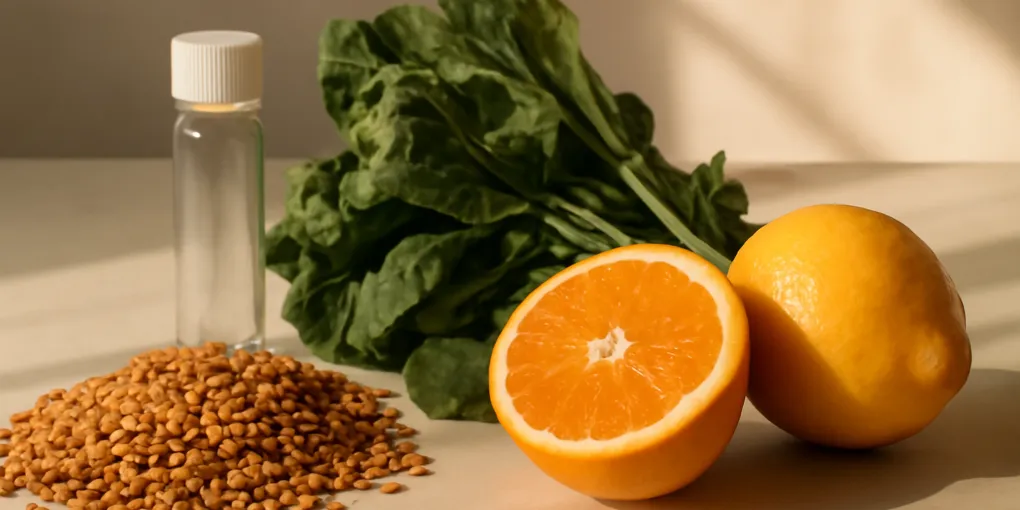
Heme iron in meat and seafood is generally absorbed more readily than nonheme iron in beans, lentils, tofu, fortified grains, and leafy greens. Vitamin C-containing foods can improve nonheme-iron absorption when eaten with the meal, while tea and coffee taken with an iron-rich meal can reduce absorption. This can help someone build a better pattern, but it may not correct a meaningful deficiency quickly enough on its own.
If a clinician recommends an iron product, follow the product, timing, and follow-up plan they specify. Iron commonly causes nausea, constipation, abdominal discomfort, and darker stools. Keep it out of children’s reach: accidental iron overdose is dangerous.
Some people are told to take iron on an empty stomach because absorption can be higher, yet that approach can be hard to tolerate. A clinician or pharmacist can help balance absorption with nausea, constipation, other medications, and the form prescribed. Do not assume a more frequent or higher milligram dose is automatically better; follow-up testing is how treatment is judged.
A useful appointment checklist
Bring your symptoms, duration, menstrual history if relevant, diet changes, donation history, medications, supplements, and previous lab results. Ask whether the fatigue pattern fits iron deficiency, what other causes need consideration, whether oral iron is appropriate, and when labs should be rechecked. This is more useful than choosing a supplement by milligrams alone.
If heavy periods are part of the picture, describe how often protection needs changing, clotting, overnight leakage, and whether bleeding disrupts ordinary activity. These details help distinguish a nutrition conversation from a bleeding pattern that needs gynecologic care. Do not normalize a rapid change in menstrual bleeding simply because fatigue is also present.
Also mention recent infections or inflammatory conditions when reviewing a ferritin result. Those conditions can complicate interpretation, which is why a single laboratory value should not become a self-diagnosis. The goal is a clear explanation for the result and a follow-up plan that matches the cause.
Iron Deficiency Without Anemia FAQ
Can ferritin be low if my hemoglobin is normal?
Yes. Ferritin reflects stored iron, while hemoglobin reflects oxygen-carrying capacity. Interpretation still needs clinical context because inflammation can affect ferritin values.
Should I take iron for fatigue without a blood test?
No. Fatigue has many causes, and unnecessary iron can cause side effects and obscure the real issue. Testing and clinician guidance are the safer route.
How quickly does fatigue improve after treatment?
Some trials measured change over weeks, not days. The timing depends on the cause, severity, product, adherence, tolerance, and whether ongoing blood loss is addressed.
Sources
- Ferritin interpretation guideline: World Health Organization
- Oral iron and fatigue trial: PMID: 22777991
- Iron supplementation trial in menstruating women: PMID: 21705493
- Iron fact sheet and safety context: NIH Office of Dietary Supplements