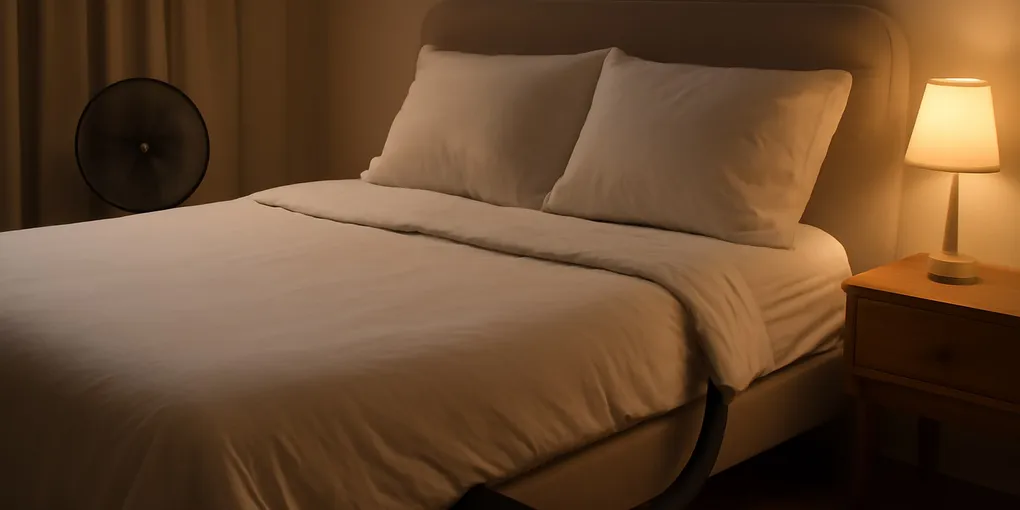
Cooling Sleep Systems for Menopause Hot Flashes: What Is Worth Trying
Buyer's GuideBedJet Cooling Sleep System
Airflow optionBest Use: Someone who dislikes a chilled mattress surface and wants moving air
Quick picks
| Product | Key Specs |
|---|---|
| See price on Amazon |
|
| See price on Amazon |
|
Product availability, certifications, and retailer details can change; check the current Amazon page before buying.
Buy for the heat pattern, not the marketing claim
Menopause-related hot flashes can interrupt sleep even in a room that feels comfortable at bedtime. A cooling system can make the bed more tolerable, but it does not treat the hormonal cause, diagnose night sweats, or replace a menopause-care conversation. The useful choice is between an airflow system and a water-circulating pad after simpler bedding and room changes have failed.
Check current BedJet cooling-system options if moving air under the top sheet sounds more comfortable. Check current water-circulating cooling-pad options if you want direct control of the bed surface. Before checkout, compare bed fit, noise, cleaning, warranty, return terms, and whether a partner needs a different temperature.
Airflow versus water circulation
An air system changes the feel inside the bedding. It can be a better fit when sweat, humidity, and a trapped feeling are the main complaint. It may be a poor fit for a light sleeper who notices fan cycling or for a bedroom with no safe place to route the hose and power cord.
A water-circulating pad changes the temperature under the body more directly. It can be helpful for a person who wakes with a hot back or chest, but it adds a reservoir or control unit, maintenance, tubing, and a higher purchase cost. Do not put either system into service until you have read the current cleaning and electrical instructions for that exact model.
The lower-cost checks that come first
Change the bed stack before adding a powered device. Waterproof protectors, dense memory foam, polyester sheets, heavy duvets, and layered blankets can trap heat. A breathable protector, percale or linen sheets, a lighter washable blanket, and a fan may solve a milder problem with no maintenance burden.
Then measure the actual sleep environment for a week: bedside temperature, humidity if available, hot awakenings, alcohol, late meals, new medications, and bedding layers. That log helps distinguish a bed that holds heat from sudden flushing. It also makes a return decision more defensible than a single bad night.
Menopause-specific buying checks
Prioritize controls that can be changed in the dark without opening a phone, a return policy long enough to test several ordinary nights, and a setup that does not make a 2 a.m. awakening more disruptive. For a shared bed, a dual-zone system can be more useful than a colder single setting if one person is hot and the other is cold.
Avoid treating the lowest advertised temperature as the goal. A system that makes you chilly at 4 a.m. can fragment sleep as much as overheating. The preferred setting is the mildest one that reduces wake-ups and lets you return to sleep without adjustment.
When this is not a bedding purchase
New drenching sweats, fever, unexplained weight loss, chest symptoms, shortness of breath, or symptoms that start after a medication change deserve medical assessment. Menopause can cause vasomotor symptoms, but it should not become an explanation for every night sweat. If hot flashes are frequent, severe, or affecting daytime function, discuss evidence-based menopause treatment options with a clinician rather than escalating cooling-device spending.
For vaginal dryness or friction symptoms, see our separate menopause moisturizer and lubricant guide. It addresses a different symptom and should not be used as a hot-flash solution.
A two-week keep-or-return test
Use one product setting for two weeks. Record hot awakenings, time to return to sleep, noise annoyance, partner disruption, leaks or setup friction, and whether you feel chilled before morning. Keep caffeine, alcohol, and bedding stable enough to interpret the pattern.
Keep the device if it clearly reduces heat-related awakenings without creating a new sleep problem. Return it if it adds noise, maintenance, discomfort, or cord hazards with no practical benefit. A cooling system earns its place by making sleep simpler, not by producing impressive app screens.
Compare the hardware before the temperature range
Start with bedroom constraints. Air systems need floor space for a fan unit and a clear path for a hose under the top sheet. Check bed-frame clearance and whether the hose will be pulled when you make the bed. Water systems need a stable place for a control unit, an outlet that does not create a trip risk, and a realistic plan for filling and cleaning the reservoir. A system can be technically effective yet be a poor purchase in a small bedroom or with an adjustable bed that pinches tubing.
The mattress itself matters. A thick pillow top, deep fitted sheet, mattress protector, and adjustable base can change how a pad lies and whether heat reaches the body. Measure mattress depth before ordering, then verify that the exact pad fits your bed size. If you share the bed, check whether each side has separate controls or whether a compromise setting will be required.
Maintenance, electrical safety, and water handling
Read the manual before filling, connecting, or cleaning a powered sleep system. Use the manufacturer’s instructions for water type, additives, cleaning cycle, filter replacement, and storage. Do not route cords under rugs, overload a bedside power strip, or allow a hose to be crushed under a moving bed frame. Keep the control unit away from spills and make sure any nighttime setting change can be done without climbing over a cord.
Maintenance is a buyer factor, not an afterthought. A water system may need periodic draining and cleaning; an air system may need lint or dust attention. If the schedule feels unrealistic at checkout, choose breathable bedding and a fan instead. The more complex option is only better when its additional cooling is worth the work.
How to choose when symptoms differ night to night
Some people wake overheated only around a hot flash and sleep comfortably the rest of the night. Others find that the mattress stores heat for hours. The first pattern may respond well to a fan, lighter layers, and a system with a fast-access control. The second may justify a pad that changes the surface temperature consistently. Record the pattern rather than assuming the most expensive system covers both.
Also consider partner impact. A fan aimed at one sleeper can be easy to tolerate; a vibrating unit or cold mattress surface can wake the other person. Test noise and airflow at bedtime, not during the day. If one partner is cold, dual-zone control or separate blankets can solve a real household constraint that a single thermostat cannot.
Pairing comfort tools with menopause care
Cooling devices belong in the comfort column. They may reduce the sleep disruption caused by heat, but they do not assess bleeding, medication interactions, or other new symptoms. A menopause clinician can help distinguish a comfort purchase from a symptom pattern that deserves treatment. Bring a list of frequency, triggers, sleep disruption, medications, and night-sweat red flags.
This distinction is important when a new symptom appears suddenly. A device may make a bedroom more bearable while delaying the conversation needed to identify an unrelated cause. Use the return period as a practical trial, not as a diagnostic test.
Cost and return-policy math
Compare the full first-month cost: device, any required accessories, shipping, return shipping, water-treatment supplies, and replacement parts. A low entry price is less useful if the return window ends before you have enough ordinary nights to test it. Save the order confirmation, installation photo, and manual, because a leak or compatibility question is easier to resolve with documentation.
For a less expensive trial, price a breathable sheet set, a lighter washable blanket, and a quiet fan against the system. Those items may be sufficient for a bedroom that is simply too warm. A powered cooling system makes more sense when bed-surface heat remains the specific recurring problem after those basics are in place. Measure nightly comfort, not just the thermostat setting, because humidity and bedding layers change the actual sleeping experience. Note whether the system changes the time required to fall back asleep after a hot flash. That is a more meaningful result than a colder display reading alone, especially on humid nights or after a late meal.
Cooling Systems for Menopause FAQ
Can a cooling bed system stop hot flashes?
No. It can improve comfort during an episode or reduce heat retained by the bed, but it does not treat the underlying vasomotor symptom or replace medical care when symptoms are severe.
Is water cooling better than airflow for night sweats?
Water systems typically influence the sleep surface more directly; airflow systems can feel less clammy. The better option is the one that matches your sensation, bedroom layout, noise tolerance, and maintenance tolerance.
Should I buy a device before discussing menopause treatment?
A device may be a reasonable comfort tool, but frequent or disruptive hot flashes are worth discussing with a clinician. Nonhormonal and hormonal treatment options may be more meaningful than more bedding changes.
Sources
- North American Menopause Society, nonhormone therapy position statement: https://pubmed.ncbi.nlm.nih.gov/37252752/
- ACOG, menopause symptoms and treatment options: https://www.acog.org/womens-health/faqs/the-menopause-years
- Thermoregulation and sleep review: https://pubmed.ncbi.nlm.nih.gov/9322266/
- Related reading: cooling mattress pad sleep temperature protocol and vaginal moisturizers vs lubricants in menopause.