Quick picks
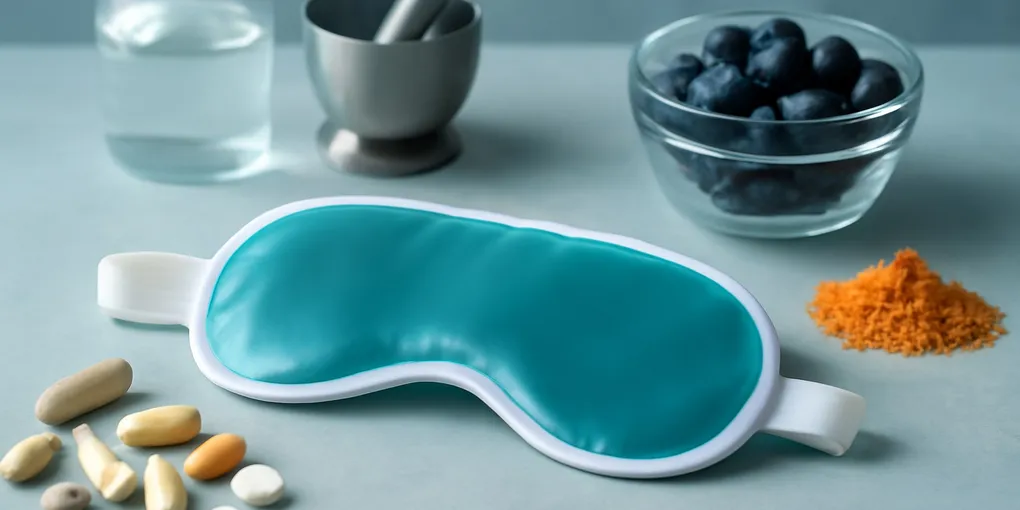
Cooling gel eye mask
★ Top pick Best first pick- Best Use: Short headache comfort sessions and light blocking
- Caveat: Wrap if too cold; do not sleep with a frozen-hard mask
Weighted cooling eye mask
Best pressure feel- Best Use: Gentle pressure over the brow and eyes
- Caveat: Avoid if pressure worsens symptoms
Blackout sleep mask
Best non-cold option- Best Use: Nightly light control without freezer prep
- Caveat: No cooling effect for acute comfort
Bottom line
A cooling eye mask is a comfort tool, not a cure. It can block light, add gentle pressure, and provide cold sensation that some people find soothing during tension headaches, migraine prodrome, sinus pressure, or hot bedrooms; small migraine cold-therapy studies support short-term symptom relief for some patients (https://pubmed.ncbi.nlm.nih.gov/26121370/). It should not replace migraine evaluation, prescribed rescue medication, sleep apnea screening, or medical care for new or severe headache patterns.
The most useful first option is one of the current cooling gel eye masks that stays flexible after chilling. Choose from current weighted cooling eye masks only if pressure feels calming. If the real problem is bedroom light, current blackout sleep mask options may be more useful than a freezer-dependent product.
Quick picks
- See current cooling gel masks — best first pick for short cold-comfort sessions because it is inexpensive and easy to test.
- See current weighted cooling masks — best for people who already know gentle brow pressure helps them relax.
- See current blackout masks — best if light leakage, not heat, is the nightly sleep issue.
Practical score
| Factor | Weight | Score | Rationale |
|---|---|---|---|
| Research | 30% | 4.8 | Cold therapy and sensory modulation are plausible, but consumer mask trials are limited. |
| Evidence Quality | 25% | 4.2 | Most support is indirect from headache care, cold application, and light sensitivity management. |
| Value | 20% | 7.4 | Low price and low maintenance if the mask stays comfortable. |
| User Signals | 15% | 6.7 | Many users like cold and darkness; others find straps, pressure, or condensation annoying. |
| Transparency | 10% | 6.0 | Better products state cover material, chill method, and whether gel stays flexible. |
| Composite | 100% | 5.5 | Reasonable comfort buy, weak as a stand-alone health intervention. |
What the evidence actually supports
Cold can reduce pain perception for some people, and light avoidance is a common migraine behavior. That does not mean a mask treats the cause of headache. It means the mask may help with the sensory environment around a headache: less light, less heat, and a clear cue to stop scrolling and rest.
For sleep, the strongest argument is light blocking. Darkness supports circadian timing and reduces unwanted awakenings in light-polluted rooms (light-at-night review: https://pmc.ncbi.nlm.nih.gov/articles/PMC6751071/). Cooling is more individual. Some people fall asleep more easily with a cool face; others wake when the mask warms up or slips.
If you mainly need darkness, compare a regular mask with our sleep mask protocol. If headache patterns are frequent, disabling, one-sided with neurologic symptoms, or changing rapidly, product shopping is the wrong first step.
How to choose a cooling mask
Flexibility after chilling is the first criterion. A mask that freezes into a hard crescent can press on the eye socket and feel awful. Look for gel or bead designs that remain pliable from the refrigerator. Freezer use should be cautious and brief.
The second criterion is cover material. A soft removable cover helps prevent cold injury and improves hygiene. Direct frozen plastic on skin is a bad idea. The third criterion is strap design. A mask that needs tight elastic to stay on may create pressure headaches instead of relieving them.
For weighted masks, weight distribution matters. Gentle, even pressure can feel calming. Dense pressure on the eyeballs or bridge of the nose is not acceptable. Avoid products that make it hard to blink, breathe through the nose, or relax the jaw.
Safe use protocol
Chill the mask in the refrigerator first. Apply for 10 to 15 minutes while lying or sitting quietly. Use a cloth layer if the mask feels sharply cold. Stop if you feel burning, numbness, eye pain, skin whitening, dizziness, or worsening headache.
Do not sleep overnight with a frozen or very cold mask. Cold therapy for headache is best treated as a short symptom-management exposure rather than all-night pressure on the eyes or skin (migraine cold-therapy study: https://pubmed.ncbi.nlm.nih.gov/26121370/). If you want a nightly sleep mask, choose a comfortable blackout mask and reserve cooling for short sessions before bed or during symptoms.
Clean the cover regularly, especially if you use skincare products or sweat at night. Replace masks with leaks, odor, cracked gel packs, or straps that require overtightening.
Who should be careful
People with cold sensitivity, Raynaud-type symptoms, trigeminal neuralgia, eye disease, recent eye surgery, facial nerve issues, skin injury, or neuropathy should be cautious. Anyone with sudden worst-ever headache, fever, stiff neck, weakness, vision loss, confusion, head trauma, or a new headache after age 50 needs urgent medical evaluation.
Migraine patients should treat a cooling mask as an accessory around an evidence-based plan. It may help the room feel tolerable while medication, hydration, and rest do their work.
Product fit by use case
For migraine light sensitivity, prioritize blackout coverage, soft edges, and a shape that does not press the eyeballs. For sinus-pressure comfort, choose a mask that can sit across the brow and cheeks without crushing the nose. For hot sleepers, a lighter mask may be better than a heavy gel pack because it is less likely to wake you when it shifts.
For travel, skip freezer-dependent designs and choose a regular blackout mask. A chilled mask is useful at home; it is awkward in a hotel room without a freezer and can create condensation in a bag.
FAQ
Can a cooling eye mask stop a migraine?
It may make the environment more tolerable, but it should not be treated as a migraine treatment by itself. Frequent or severe migraine needs a clinician-directed plan.
Is a weighted cooling mask safe for sleep?
Use caution. Gentle pressure may feel good before sleep, but overnight use can become uncomfortable if the mask shifts. Use the short-session cold-comfort evidence conservatively (https://pubmed.ncbi.nlm.nih.gov/26121370/) and avoid any mask that presses on the eyeballs.
Refrigerator or freezer?
Start with the refrigerator. Freezer use can make some masks too hard or too cold. If you use the freezer, shorten the time and add a cloth layer.
Sources and further reading
- The American Migraine Foundation explains migraine triggers, light sensitivity, and management basics.
- MedlinePlus lists headache warning signs and when to seek medical care.
- A sleep-health review explains how light exposure affects circadian rhythm and sleep.