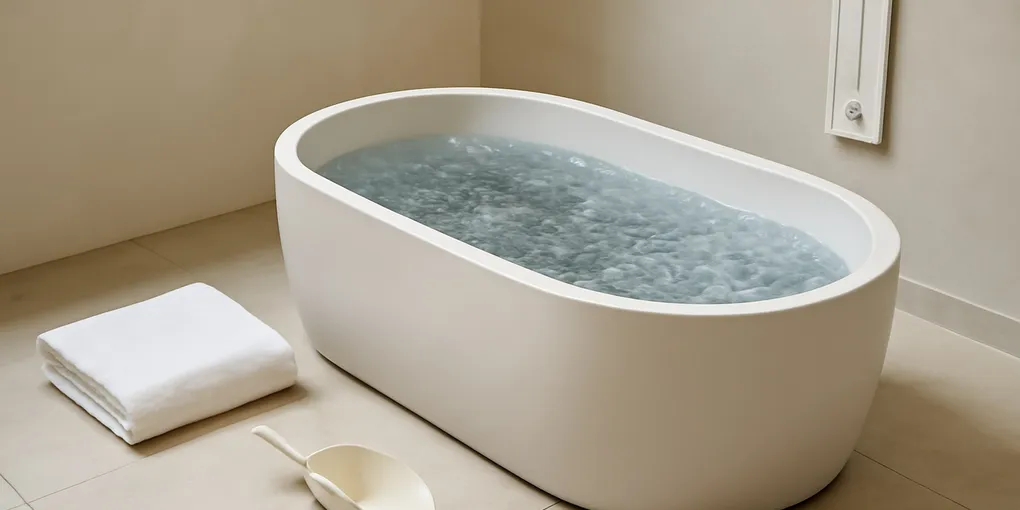
Quick picks
Insulated cold plunge tub
★ Top pick Best dedicated setup- Best Use: Repeat users who can control water temperature and sanitation
- Caveat: Costs more and needs cleaning discipline
Floating water thermometer
Best safety check- Best Use: Verifying water temperature instead of guessing from ice amount
- Caveat: A thermometer does not make cold exposure safe for high-risk users
Basic bathtub cold-water setup
Best low-cost trial- Best Use: Testing whether cold water is useful before buying a tub
- Caveat: Harder to control temperature and water depth
Bottom line
Cold plunges can reduce perceived soreness for some people, especially after hard endurance events, tournaments, or dense training weeks, but the effect is mainly about perceived recovery rather than guaranteed tissue repair (Hohenauer et al., 2015). They are not a recovery upgrade for everyone. If your main goal is muscle growth from lifting, frequent cold water immersion immediately after hypertrophy sessions may blunt some adaptation signals (Roberts et al., 2015). If your main goal is feeling less sore before the next event, cold can be useful when used briefly and safely.
A dedicated search Amazon for an insulated cold plunge tub only makes sense after you know you will use it. Most readers should start with a thermometer and a bathtub trial. At minimum, use a search Amazon for a floating water thermometer so you are not guessing.
Quick picks
- Best dedicated setup: Search Amazon for insulated cold plunge tubs if you want repeatable water depth, insulation, and easier cleaning than a random bin.
- Best safety check: Search Amazon for cold plunge thermometers before changing session length or ice amount.
- Best low-cost trial: Search Amazon for reusable ice packs for cold baths if you want to test a bathtub setup before buying a plunge.
For a non-immersion option, compare this with our foam rolling protocol for soreness and mobility.
Who should not self-prescribe cold plunges
Do not start cold plunges without medical clearance if you have heart disease, uncontrolled blood pressure, fainting history, arrhythmia, chest pain, Raynaud’s symptoms, cold urticaria, seizure risk, neuropathy, pregnancy-related concerns, or any clinician restriction on cold exposure; cold-water safety guidance specifically warns that sudden immersion can create dangerous breathing and cardiovascular stress (National Weather Service cold-water safety). Skip cold water if you are alone, intoxicated, severely fatigued, feverish, or unable to exit the tub quickly.
Cold shock is real. Sudden immersion can trigger gasping, panic breathing, and cardiovascular strain. The protocol below is intentionally conservative because soreness relief is not worth a medical emergency.
The conservative 2-week protocol
Step 1: choose the water temperature
Start around 55 to 60°F, or 13 to 16°C. Colder is not automatically better. If you do not own a thermometer, buy one before trying to progress. Ice amount is a poor guide because tub volume, starting tap temperature, and room temperature change the result.
Step 2: start with short exposure
Begin with 1 to 3 minutes. Sit or stand so you can breathe normally and exit without slipping. Keep the first sessions boring: no breath-hold games, no dunking the head, no social-media challenge pacing, and no trying to prove toughness.
If breathing stays panicked after the first 30 to 60 seconds, get out. If you feel chest tightness, dizziness, confusion, numbness that does not quickly resolve, or unusual weakness, stop and seek appropriate care.
Step 3: use cold after the right sessions
Use cold water after events where short-term soreness reduction matters more than maximizing adaptation: back-to-back sport days, tournaments, long downhill runs, or unusually dense conditioning blocks. Avoid making cold plunges automatic after every strength or hypertrophy workout if muscle gain is the priority.
For lifting-focused blocks, place cold exposure on rest days, several hours after training, or after conditioning sessions rather than immediately after heavy leg work. The evidence is not uniform, but this timing protects the main adaptation goal.
Step 4: cap the dose
For a home self-test, cap sessions at 5 to 10 minutes; the soreness literature supports brief post-exercise cryotherapy for perceived recovery, not open-ended exposure (Hohenauer et al., 2015). Most readers do not need longer exposure. Try two sessions per week for two weeks, then judge whether soreness, sleep, mood, or next-session readiness actually improved. If the only benefit is that the routine feels impressive, do not buy a tub.
How to warm up afterward
Exit slowly, dry off, and put on warm clothing. Let the body rewarm gradually. Do not jump into a hot shower if you feel lightheaded. Do not drive until shivering and brain fog are gone. If you used an outdoor tub, secure the area afterward so children, pets, and guests cannot access cold water unattended.
Buying checks for cold plunge tubs
The tub is less important than temperature control, cleaning, drainage, and safe entry. Check:
- Stable entry and exit: slippery sides are a bigger problem than marketing claims.
- Drainage: you need a practical way to empty water without flooding a patio or bathroom.
- Cleaning: standing water grows biofilm if you treat sanitation as optional.
- Insulation: useful if you repeat sessions, not essential for a one-week test.
- Temperature measurement: a thermometer is mandatory for repeatability.
Avoid tubs that require awkward climbing, have sharp internal seams, or cannot be cleaned according to the manufacturer’s instructions. If you cannot explain how you will sanitize and drain it, do not buy it yet.
Cold versus heat versus movement
Cold tends to win when the goal is short-term perceived soreness reduction, based on recovery-outcome reviews that show symptom relief more clearly than broad performance improvement (Hohenauer et al., 2015). Heat, light movement, sleep, and nutrition may be better when the goal is relaxation, tissue extensibility, or general recovery habits. If you are sore because training volume jumped too fast, cold water can make you feel better while leaving the programming mistake in place.
Use a simple log: session type, water temperature, minutes, soreness next morning, and next-workout performance. Keep cold only if the log supports it.
FAQ
How cold should a beginner cold plunge be?
Start around 55 to 60°F, or 13 to 16°C. Colder temperatures raise discomfort and risk without proving better recovery for most home users; cold-water safety guidance treats cold shock and breathing control as the central hazard, not a challenge to push through (National Weather Service cold-water safety).
How long should I stay in?
Begin with 1 to 3 minutes and cap ordinary home sessions at 5 to 10 minutes. Exit immediately for chest symptoms, dizziness, confusion, uncontrolled breathing, or unusual weakness.
Should I cold plunge after lifting?
Not automatically. If muscle growth is the priority, avoid frequent cold plunges immediately after hypertrophy sessions. Save cold for soreness-management situations or separate it from lifting by several hours.
Is a cold plunge tub better than a bathtub?
A tub is more convenient and repeatable, but a bathtub plus thermometer is a better first test. Buy the tub only after you know cold water helps your actual training week.
Sources
- Hohenauer E, Taeymans J, Baeyens JP, Clarys P, Clijsen R. The effect of post-exercise cryotherapy on recovery characteristics: a systematic review and meta-analysis.
- Roberts LA, Raastad T, Markworth JF, et al. Post-exercise cold water immersion attenuates acute anabolic signalling and long-term adaptations in muscle to strength training.
- National Weather Service. Cold water safety.