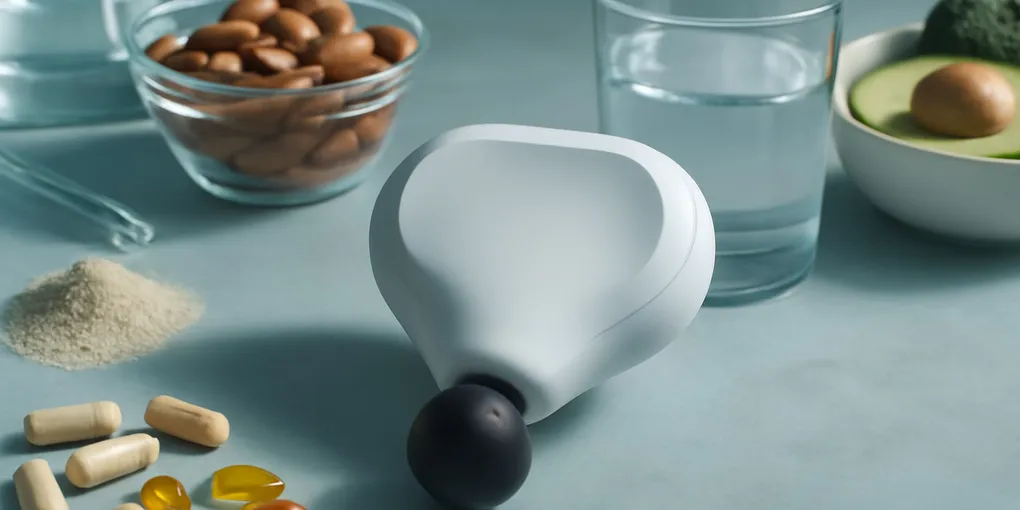
Therabody Theragun Mini
Portable massage gunBest Use: Travel and quick warmups
$150–220
Quick picks
| Product | Key Specs |
|---|---|
| See price on Amazon |
|
| See price on Amazon |
|
Product availability, certifications, and retailer details can change; check the current Amazon page before buying.
Bottom line
The Theragun Mini is best understood as a convenient comfort tool. It can make tight calves, quads, glutes, or upper-back muscles feel better for a few minutes before training or after travel. It is not a substitute for progressive loading, sleep, protein, physical therapy, or injury evaluation; reviews of massage after exercise generally support short-term soreness or flexibility effects more than tissue-healing claims: https://pubmed.ncbi.nlm.nih.gov/26744335/. If you already use massage guns consistently and want a smaller device, it makes sense. If you are buying it because marketing implies faster healing, save money and start with a foam roller or lacrosse ball.
Product snapshot
The Mini is the compact model in Therabody’s massage-gun line. Its appeal is portability: it fits in a gym bag and is easier to hold than many full-size devices. The tradeoff is less reach, less handle leverage, and fewer attachment options than larger models. For many users that is fine. The question is whether the premium over generic massage guns or manual tools is justified.
Research on percussive therapy is still developing. Reviews generally suggest possible short-term improvements in perceived soreness and range of motion, with less certainty about strength recovery or injury prevention. A useful overview is available in sports-rehabilitation literature: https://pubmed.ncbi.nlm.nih.gov/35417265/.
Practical score
| Factor | Weight | Score | Rationale |
|---|---|---|---|
| Research | 30% | 6.1 | Percussive therapy evidence is emerging but not definitive. |
| Evidence Quality | 25% | 5.8 | Small studies and mixed outcomes limit strong claims. |
| Value | 20% | 6.4 | Convenient but expensive versus manual tools. |
| User Signals | 15% | 8.0 | Portability and ease of use are strong. |
| Transparency | 10% | 7.6 | Specs and use cases are easy to compare. |
| Composite | 100% | 6.6 | Good convenience buy for frequent users, not essential recovery gear. |
Who should consider it
Consider the Mini if you travel often, warm up in small spaces, dislike foam rolling, or already know that percussive massage helps you relax tight areas. It is especially practical for calves, quads, glutes, pecs, and upper traps. It is less ideal for people who need a long handle for the mid-back or who want many attachments for specific tissues.
Who should skip it
Skip it if you have unexplained pain, swelling, bruising, numbness, suspected strain, blood-clot risk, fracture risk, or a condition where aggressive massage is not appropriate; NIH MedlinePlus lists swelling, numbness, severe pain, or inability to use a limb as reasons to seek medical evaluation rather than self-treating an injury: https://medlineplus.gov/sportsinjuries.html. Also skip it if you are still missing the basics: consistent training progression, sleep, daily walking, and adequate protein. Recovery tools cannot compensate for poor load management.
Buying comparison
| Check price | Option | Best for |
|---|---|---|
| Search Amazon | Therabody Theragun Mini | premium compact percussive massage |
| Search Amazon | Hypervolt Go | compact alternative |
| Search Amazon | Foam roller | low-cost large-muscle self-massage |
| Search Amazon | Lacrosse massage ball | targeted feet, glutes, and upper back pressure |
Use marketplace search links as a starting point only; confirm the current label, serving size, seller, and return policy before buying.
How to use it without overdoing it
Use low to moderate pressure for 30 to 60 seconds per muscle area. Keep the head moving slowly. Do not grind directly on joints, bones, bruises, or sharp pain. Before training, use it as part of a warmup: light massage, dynamic mobility, then sport-specific movement. After training, use it for comfort, not as proof that you can ignore fatigue.
For tendon-sensitive areas, be conservative. A massage gun may feel good around calves or quads, but tendon capacity comes from progressive loading. Our Achilles calf raise protocol is a better framework for building tissue tolerance.
Pros
The Mini is portable, simple, and likely to be used more often than a bulky device. It can reduce friction for people who avoid longer mobility sessions. The build quality and brand ecosystem are also stronger than many no-name devices.
Cons
The price is high for a comfort tool. The small handle can make some angles awkward. It can also encourage the false belief that recovery is something you buy rather than a result of training design. Users who press too hard may irritate tissue instead of relaxing it; MedlinePlus sports-injury guidance treats bruising, swelling, numbness, and severe pain as reasons to avoid self-treatment and seek appropriate evaluation: https://medlineplus.gov/sportsinjuries.html.
Real-world performance
The Mini’s main advantage is friction reduction. A recovery tool that is available and easy to hold will be used more than a perfect tool stored in a closet. For office workers, it can loosen upper traps and forearms during breaks. For runners, it can provide quick calf and quad comfort before an easy session. For lifters, it can be a warmup accessory before movement-specific ramp-up sets; a sports-massage review supports positioning massage as a comfort and range-of-motion aid rather than a required recovery intervention: https://pubmed.ncbi.nlm.nih.gov/26744335/.
The limitation is depth and leverage. Full-size massage guns often have handles that make the back and hips easier to reach. The Mini can feel awkward for the mid-back unless another person helps. It is also not the best choice for athletes who want many attachments, stall-force specs, or long sessions.
Battery life is usually less important than people think. Most sensible sessions are short. If you need thirty minutes of high-pressure use every day, the bigger question is why your body needs that much symptom management.
Evidence-informed expectations
Massage and vibration can change sensation. They may reduce perceived soreness, increase short-term range of motion, and make warmups feel smoother. Those are worthwhile outcomes when priced correctly. They are not the same as repairing tissue, flushing toxins, or preventing injury; a review of massage for performance and recovery found the clearest signals around flexibility and delayed-onset soreness, not broad performance rescue: https://pubmed.ncbi.nlm.nih.gov/26744335/. Recovery is dominated by load management, sleep, nutrition, and time.
A good test is simple: use the device on one or two target areas for two weeks and write down whether it changes warmup quality, soreness perception, or willingness to move. If the effect is small and you dread using it, return or skip it. If it reliably helps you start easy movement, it may earn its place.
Alternatives worth considering
A foam roller is better for broad pressure on quads, hamstrings, calves, and upper back. A lacrosse ball is better for small targeted areas like the arch of the foot or glute trigger points. A massage stick is better for travel if you do not want batteries. A warm shower and five minutes of mobility may be better than any device for general stiffness.
The Mini wins when you want powered percussion in a small package. It loses when budget, reach, or simplicity matter more.
Safety boundaries
Do not use a massage gun over acute injuries, varicose veins, unexplained swelling, numb areas, open wounds, or areas where a clinician told you to avoid massage. Be careful around the neck. Avoid direct pressure over the front of the throat, spine, kneecaps, and bony points. People with blood-clot risk, neuropathy, cancer treatment considerations, implanted devices, or pregnancy-related concerns should get personalized guidance; Mayo Clinic’s massage overview lists several medical situations where clinician input is prudent before massage: https://www.mayoclinic.org/tests-procedures/massage-therapy/about/pac-20384595.
Pain is not a dosage target. The useful sensation is tolerable pressure that fades after the session. Sharp, electric, or worsening pain means stop.
Cost and ownership
A premium compact massage gun should be judged by use frequency. If you use it four times per week for several years, the cost per use becomes reasonable. If you use it twice in the first month, it is expensive clutter. Before buying, decide where it will live, when you will use it, and which two body areas it is meant to help.
Check return policy and warranty before purchase. Recovery devices are preference-heavy. Grip comfort, noise, and vibration feel cannot be fully judged from specs.
FAQ
Is the Theragun Mini better than a foam roller?
It is more convenient for some spots and easier to use while seated. A foam roller is cheaper and works well for large muscle groups. Neither is mandatory.
Can I use it every day?
Yes, if pressure is light and there is no irritation. Daily aggressive use on the same sore area is not a good plan.
Will it reduce delayed-onset muscle soreness?
It may reduce perceived soreness temporarily. It has not been proven to erase the training stress that caused soreness.
Is it worth the price?
It is worth considering if portability makes you use it regularly. If it will sit in a drawer, a cheaper manual tool is the better buy.