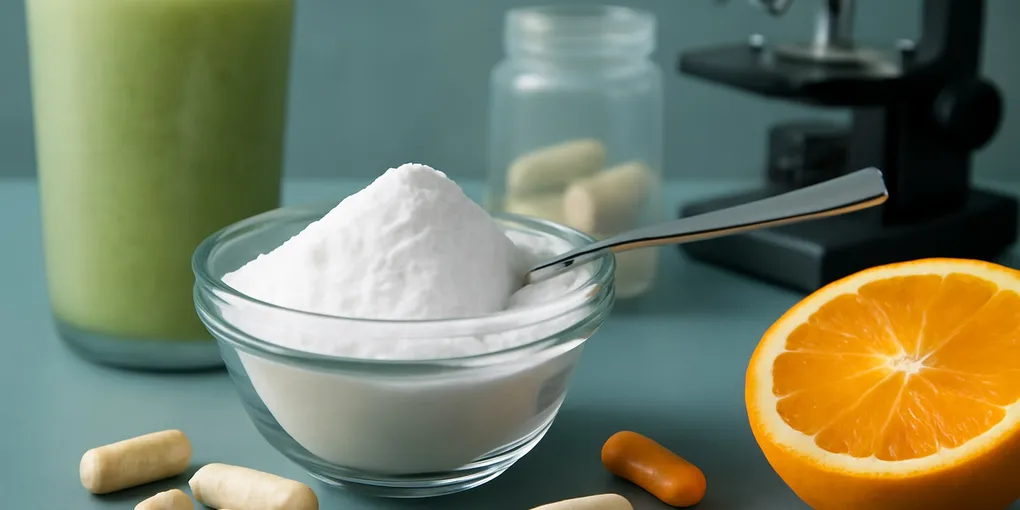
Sodium Bicarbonate for High-Intensity Exercise: Evidence, Dose, and GI Reality
Evidence ExplainerQuick picks
| Product | Key Specs |
|---|---|
| See price on Amazon |
|
| See price on Amazon |
|
Product availability, certifications, and retailer details can change; check the current Amazon page before buying.
Bottom line
Sodium bicarbonate is a real ergogenic aid for some repeated high-intensity efforts, but it is also one of the easiest supplements to misuse. The benefit comes from extracellular buffering during hard work that produces a lot of hydrogen ions, not from everyday energy or fat loss. The downside is gastrointestinal distress. A useful plan therefore starts with event fit, dose tolerance, and practice sessions rather than with a race-day scoop (ISSN sodium bicarbonate review: PMID: 34503527).
The best candidates are athletes doing one-to-seven-minute hard efforts, repeated sprints, combat-sport rounds, rowing pieces, track intervals, CrossFit-style workouts, or late-race surges. The weakest candidates are people doing easy zone 2, casual lifting, or workouts where stomach comfort matters more than a small performance edge.
Who should consider it
Consider sodium bicarbonate only after your training, fueling, sleep, and warm-up are already organized. It is not a foundation supplement like protein adequacy or creatine saturation. It is an acute performance tool. If you have kidney disease, uncontrolled blood pressure, sodium restriction, reflux, irritable bowel disease, or medication questions, skip self-experimentation and ask a clinician.
People who sweat heavily sometimes assume bicarbonate is just another electrolyte. That framing is misleading. The sodium load is real, but the purpose is buffering intense exercise by raising blood bicarbonate. Electrolyte drinks and sodium bicarbonate are not interchangeable.
Practical score
| Factor | Weight | Score | Rationale |
|---|---|---|---|
| Research | 30% | 8.1 | Multiple studies and sports-nutrition reviews support high-intensity use cases (PMID: 34503527). |
| Evidence Quality | 25% | 7.2 | Effects vary by protocol, event, dose, and stomach tolerance. |
| Value | 20% | 7.8 | The ingredient is inexpensive, though capsules and gels cost more. |
| User Signals | 15% | 6.9 | Workout response is trackable, but GI effects can mask benefits. |
| Transparency | 10% | 7.0 | Plain powder is simple; branded systems differ in dose and delivery. |
| Composite | 100% | 7.5 | Good niche tool when practiced carefully before important sessions. |
Evidence snapshot
The International Society of Sports Nutrition position stand on sodium bicarbonate describes likely benefits for muscular endurance and high-intensity exercise, with common protocols around 0.2 to 0.3 g/kg and clear warnings about gastrointestinal side effects: https://pubmed.ncbi.nlm.nih.gov/34503527/. A broader sports nutrition review also notes that individual response and event demands matter more than blanket claims.
The mechanism is plausible: raising blood bicarbonate can help buffer acidity during intense glycolytic work. That does not mean more is better. Higher doses can increase nausea, bloating, diarrhea, and urgency. Some newer products try split dosing or delayed-release formats to improve tolerability, but they should still be practiced during training (PMID: 34503527).
Dose reality
The classic research dose can be surprisingly large. For a 75 kg adult, 0.3 g/kg is 22.5 grams of sodium bicarbonate, which is far beyond a casual pinch in water. Many users need lower doses, split doses, capsules, or a meal pairing to tolerate it. Some will decide the stomach risk is not worth the possible performance gain (ISSN sodium bicarbonate review: PMID: 34503527).
Start with a noncritical workout. Try a small fraction of the target dose, record stomach symptoms, and avoid testing before a race, tournament, or important group workout. If the first trial causes urgent GI symptoms, that is a failed product fit, not a willpower problem.
Buying criteria
| Criterion | What to look for | Why it matters |
|---|---|---|
| Dose math | grams per serving or capsule count | prevents accidental under- or overdosing |
| Sodium awareness | clear sodium load per serving | matters for blood pressure and fluid planning (PMID: 34503527) |
| Tolerability format | capsules, split dosing, or delayed release | may reduce stomach distress |
| Simple ingredients | no stimulant blend | keeps cause and effect clear |
| Return and label clarity | current label, lot, seller reputation | avoids mystery powders |
Compare current options here: sodium bicarbonate sport supplement search. For kitchen-grade powder, verify food-grade labeling and serving math before use.
Practice protocol
- Choose a workout that matches the evidence: repeated hard intervals, a time trial, or a circuit with severe burning legs.
- Run the workout once without bicarbonate and record total work, perceived exertion, and stomach comfort.
- On a separate day, test a low dose with a normal pre-workout meal. Do not combine it with a new pre-workout, caffeine experiment, or unfamiliar carb drink.
- If tolerated, test a higher or split dose. Keep hydration normal and note sodium load.
- Use it only if performance improves and stomach risk stays low (ISSN sodium bicarbonate review: PMID: 34503527).
For another acute performance routine, see our caffeine taper protocol. For blood-pressure measurement habits, see the home blood pressure monitor protocol.
Common mistakes
The first mistake is using sodium bicarbonate for the wrong workout. Easy cardio, casual bodybuilding sets, and low-sweat mobility sessions are not where it shines. The second mistake is swallowing a full research dose without practice. The third is ignoring total sodium. The fourth is assuming an expensive format guarantees better results.
A fifth mistake is treating GI distress as normal. Mild fullness may be manageable; diarrhea, cramping, or urgent bathroom needs can ruin training. A product that creates that tradeoff is not a practical advantage.
Final verdict
Sodium bicarbonate deserves a cautious score because the performance evidence is stronger than many supplements, but the practical barrier is real. It belongs in a narrow toolkit for trained people who can practice dosing before important sessions. For everyone else, consistent programming, carbohydrate availability, sleep, and caffeine timing will usually deliver more reliable gains (ISSN sodium bicarbonate review: PMID: 34503527).
Athlete scenarios
A 400-meter runner might test sodium bicarbonate before a special endurance session where the final straight normally falls apart. A rower might test it before repeated 500-meter pieces. A recreational lifter doing long rest periods probably should not bother. The event has to create enough acid-base stress for buffering to matter. If the limiting factor is skill, aerobic base, joint pain, or motivation, bicarbonate is the wrong lever.
Team-sport athletes should be even more careful because stomach distress can be more damaging than a small repeat-sprint benefit. Practice during a low-stakes session first. Record whether the supplement changed the final reps or just made the warm-up uncomfortable. The best result is not a heroic story; it is a repeatable session with no bathroom emergency (ISSN sodium bicarbonate review: PMID: 34503527).
Sodium load and hydration
Sodium bicarbonate contains a meaningful sodium load. That does not automatically make it dangerous for healthy athletes, but it does mean the supplement belongs in a planned day rather than a casual stack. Do not combine a large bicarbonate dose with multiple salty products unless you know why. People with blood-pressure concerns, kidney disease, heart failure, or sodium restrictions should avoid self-directed use (ISSN sodium bicarbonate review: PMID: 34503527).
Hydration should be normal, not extreme. Chugging water to dilute stomach symptoms can create its own problems. Pairing the dose with a familiar meal and splitting the amount over time may be easier for some people, but the protocol still needs testing (ISSN sodium bicarbonate review: PMID: 34503527).
Bicarbonate buying formats
Plain food-grade sodium bicarbonate is cheap and transparent, but measuring grams matters. Capsule products can be more convenient but require many capsules for research-like doses. Sport-specific systems may cost more and claim better tolerability. Compare current options here too: sodium bicarbonate capsule options. The winning product is the one you can dose accurately and tolerate during the exact session you care about.
Decision scorecard
Use four scores after each trial: performance, stomach comfort, sodium confidence, and routine friction. Performance asks whether the final interval, round, or set improved. Stomach comfort asks whether nausea or urgency appeared. Sodium confidence asks whether the dose fits your health context. Routine friction asks whether the timing is realistic. Keep sodium bicarbonate only if all four scores are acceptable.
When to skip it
Skip sodium bicarbonate during travel races, hot events where hydration is already difficult, gastrointestinal flare-ups, new medication periods, and any week when training load is unusually high. Also skip it if you cannot practice before the event. Acute ergogenic aids are not magic; they are tools that need rehearsal.
The conservative view is still positive for the right athlete. Sodium bicarbonate has more direct performance evidence than many supplement categories, but it demands respect. Use it like a race-day tactic, not like a daily wellness powder.
Bicarbonate formats worth comparing
Powder is the cheapest format and easiest to verify, but it tastes salty and can be hard on the stomach. Capsules hide the taste and make travel simpler, yet a meaningful dose can require a large handful of capsules. Delayed-release or sport-specific formats may reduce stomach symptoms for some athletes, but the price is higher and the label still deserves scrutiny (ISSN sodium bicarbonate review: PMID: 34503527).
For a first test, choose the format that lets you measure a conservative dose accurately. Do not buy a stimulant pre-workout that happens to include bicarbonate if your goal is to test buffering. Stimulants, beta-alanine tingles, carbohydrate, and sodium all muddy the result.
Race-week decision tree
Use sodium bicarbonate in competition only if three conditions are true. First, the event has repeated high-intensity demands. Second, you completed at least two practice trials with acceptable stomach comfort. Third, the sodium load and timing fit the day. If any condition fails, skip it. A supplement that creates uncertainty on race morning is not an advantage.
If the practice trial is positive, write the exact protocol: meal timing, dose, fluid, warm-up, and bathroom timing. Rehearse that protocol. If travel, heat, nerves, or schedule changes make the routine impossible, fall back to familiar fueling.
Bottom-line checklist
Use sodium bicarbonate only when the session is hard enough, the dose has been practiced, the stomach response is acceptable, and the sodium load fits your health context. If the answer to any item is no, the supplement is not ready for that day. The cautious path still leaves room for benefit: test small, write the protocol, and keep the decision tied to performance rather than hype (ISSN sodium bicarbonate review: PMID: 34503527).
Coach note
If you coach yourself, keep the first bicarbonate trial boring and private. The goal is not to prove toughness. The goal is to learn whether buffering helps your specific interval pattern without creating a stomach problem (ISSN sodium bicarbonate review: PMID: 34503527).
FAQ
What workouts are most likely to benefit from sodium bicarbonate?
Repeated hard efforts with a strong burn are the best fit: rowing pieces, track intervals, repeated sprints, combat-sport rounds, and high-intensity circuits.
Why do so many athletes complain about stomach problems?
The effective research dose can be large and sodium-heavy. That load can cause bloating, nausea, diarrhea, or urgency, especially when taken all at once (ISSN sodium bicarbonate review: PMID: 34503527).
Can I use baking soda from the kitchen?
Food-grade sodium bicarbonate is the same basic compound, but dose accuracy, sodium load, and tolerability still matter. Measure carefully and avoid race-day first use.
Is sodium bicarbonate better than beta-alanine?
They work differently. Beta-alanine is a chronic loading supplement that raises muscle carnosine, while bicarbonate is an acute extracellular buffer. Some athletes use both, but test separately (ISSN sodium bicarbonate review: PMID: 34503527).