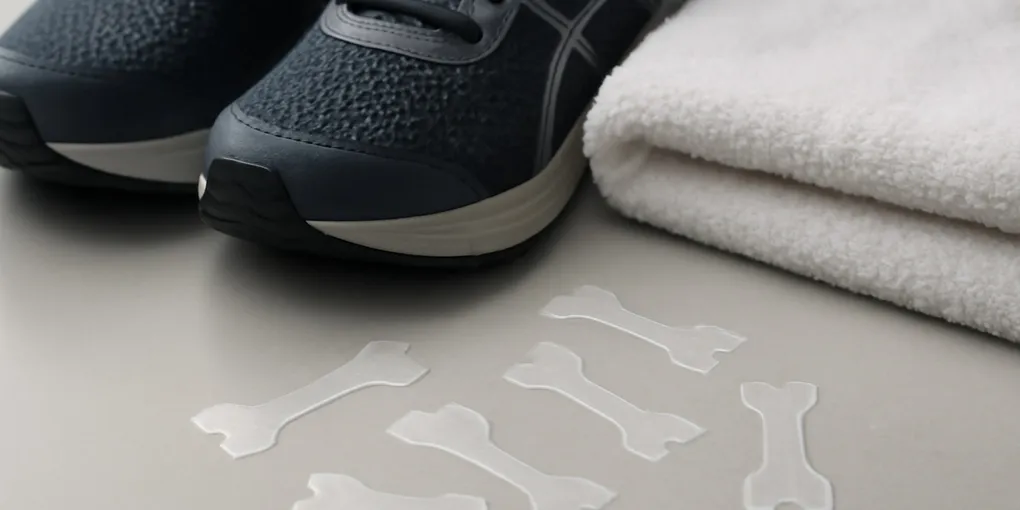
Nasal Strips for Exercise Breathing: Evidence, Fit, and When They Are Just Tape
Evidence ExplainerQuick picks
External nasal strips
★ Top pick Low-risk comfort test- Best Use: Short comfort trial for people whose nasal airflow feels restricted during easy to moderate sessions
- Caveat: Do not expect a reliable performance boost if your breathing is already comfortable
Bottom line
Nasal strips can make some people feel like nasal airflow is easier, especially when the issue is mild nasal narrowing rather than fitness. The evidence does not support treating them as a dependable performance upgrade. They are best viewed as a cheap comfort test, not a shortcut to faster runs or bigger intervals.
If you want to try them, search Amazon for sport nasal strips, buy a small pack, and test them on easy sessions first. If you need them because breathing feels blocked, wheezy, or unusually difficult, that is a medical question before it is a gear question.
What nasal strips actually do
External nasal strips sit across the bridge of the nose and gently pull the nasal sidewalls outward. That can reduce nasal resistance for some users. The mechanism is local and mechanical. It does not increase lung capacity, change oxygen transport, or make an undertrained aerobic system suddenly trained.
That distinction matters because product pages often blur comfort and performance. Easier nasal airflow may help you tolerate nasal breathing during warm-ups, easy runs, or sleep. It does not mean your race pace improves.
What the evidence suggests
Research on external nasal dilators has been mixed, with many studies finding improved nasal airflow sensations or resistance measures without consistent performance gains. A classic review in Sports Medicine concluded that external nasal dilators do not reliably improve maximal oxygen uptake or exercise performance in healthy athletes (PMID: 15063869).
That fits the practical reality. During hard exercise, most people switch to combined nose and mouth breathing because total ventilation demand rises. Opening the nose a little may feel better, but the limiting factor in a hard interval is rarely the adhesive strip on your face.
Who might benefit
A nasal strip is most reasonable if your nose feels partially restricted during easy or moderate exercise and you want a low-risk trial. It can also be useful if you are practicing relaxed nasal breathing during warm-ups, mobility work, or low-intensity aerobic sessions.
It is less convincing for high-intensity training. If you are doing threshold intervals, hill sprints, or race efforts, mouth breathing is normal. A strip that makes the first few minutes feel smoother is not the same as a measurable training advantage.
Who should skip the experiment
Skip nasal strips if adhesive irritates your skin, if you have frequent nosebleeds, or if you are trying to push through wheezing, chest tightness, dizziness, or shortness of breath that feels out of proportion. Those symptoms deserve clinical guidance.
Also skip them if the real issue is training intensity. If every run feels like a breathing crisis, use a pacing tool such as our RPE scale protocol or an easier aerobic progression before buying more accessories.
How to run a useful test
Do not test nasal strips for the first time on race day or during your hardest workout. Use the same route or treadmill session twice: once without the strip and once with it. Keep pace, temperature, warm-up, and caffeine similar. Record nasal comfort, perceived effort, and whether you naturally mouth-breathed anyway.
If the only benefit is that the first 10 minutes feel less stuffy, that may still be worth a few dollars. If you see no comfort difference, stop. There is no reason to keep using a product that only adds trash to your gym bag.
Buying notes
Choose strips by adhesive comfort and size before claims. Sport versions usually stick better when sweaty, but stronger adhesive can irritate skin. People with oily skin may need to wash and dry the nose first. People with sensitive skin should start with the least aggressive adhesive they can find. A mixed-size pack can be useful if standard strips lift at the edges or sit too high on the bridge of the nose.
If the goal is a cheap test, search Amazon for sensitive-skin nasal strips before buying a large sport pack. If the goal is sweaty outdoor workouts, prioritize sport adhesive and test removal after a normal run, not after a shower when the adhesive has softened.
Avoid stacking nasal strips with aggressive breathing drills, mouth taping, or hard workouts in an attempt to force nasal-only training. Your breathing strategy should match intensity. Easy sessions can be nasal-dominant for some people; hard sessions often cannot.
How to interpret your trial
A useful result is specific. For example, you may notice that warm-up jogging feels less stuffy, that low-zone treadmill runs are easier to keep nasal-dominant, or that a spring allergy day feels less annoying. Those are comfort wins. They do not prove the strip made you fitter.
A weak result is vague. If you only feel faster because the strip is new, repeat the same session without it. Keep the watch hidden until after the run if you tend to chase pace. The clearest sign to keep using strips is repeatable comfort at the same easy effort, not one better workout on a cooler day.
Also watch the downside. Red skin, adhesive residue, or a strip that lifts when sweaty can make the product more irritating than useful. In that case, stop the experiment rather than adding stronger adhesive to a face-skin problem.
Sources and safety notes
External nasal dilators may improve nasal airflow measures, but performance effects are not consistent in healthy exercisers (PMID: 15063869). Exercise intensity guidance from the American Heart Association is a better anchor for deciding whether a session is easy, moderate, or hard (AHA: target heart rates).
Nasal strip FAQ
Do nasal strips improve running performance?
Not reliably. They may improve nasal comfort for some people, but evidence does not support a dependable performance boost in healthy athletes.
Are nasal strips safer than mouth tape for workouts?
Yes for most people, because they do not cover the mouth. Still, stop if skin irritation or unusual breathing symptoms appear.
Should I use nasal strips for hard intervals?
Only if they feel comfortable. Hard intervals often require mouth breathing, and that is normal.