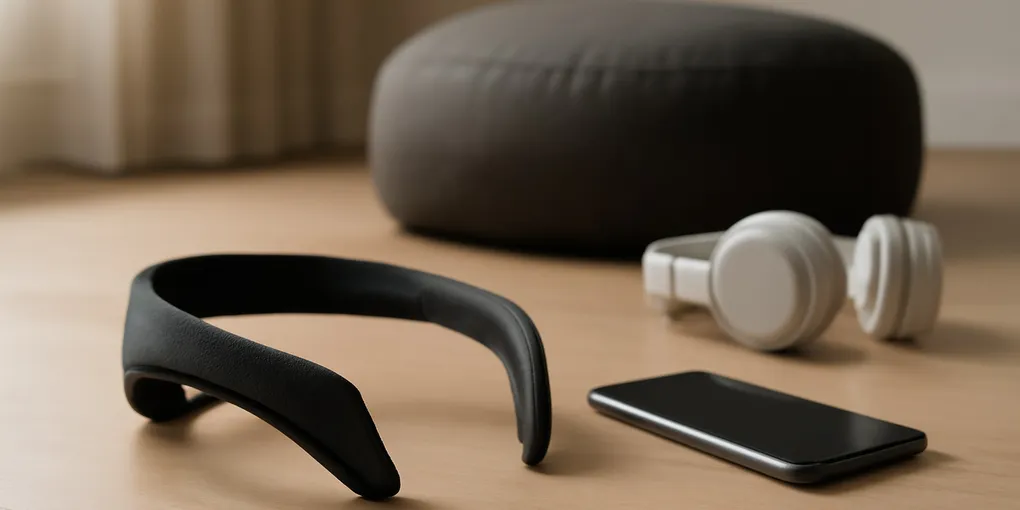
Muse 2 Review: Useful Meditation Feedback or an Expensive Headband?
ReviewMuse 2
Best for real-time meditation feedbackSensors: EEG plus movement, heart, and breathing feedback modes
Quick picks
| Product | Key Specs |
|---|---|
| See price on Amazon |
|
| See price on Amazon |
|
Product availability, certifications, and retailer details can change; check the current Amazon page before buying.
Verdict
Muse 2 is worth considering if you repeatedly abandon meditation because you cannot tell whether you are settling into the exercise. Its real-time audio feedback can make an abstract practice feel concrete. It is not a clinical EEG, it does not diagnose anxiety or attention disorders, and its calm score should not become another performance target.
Buy it when three things are true: you want guided neurofeedback-style sessions, you will tolerate a forehead band, and the current app features and membership terms fit your budget. Otherwise, a timer, comfortable headphones, and a structured meditation app deliver the core practice for much less.
Check current Muse 2 listings on Amazon. Confirm the seller, model generation, return window, included charging cable, and whether advertised app features require a subscription. Readers who do not need sensors can check current Gymboss Classic interval timer listings, verifying the model and seller before purchase.
What Muse 2 actually does
Muse 2 places dry EEG sensors across the forehead and behind the ears. During compatible sessions, the app translates measured signal patterns into audio feedback. It also supports modes built around breathing, body stillness, and heart-related feedback. The useful distinction is that Muse is a consumer meditation aid using physiological signals, not a miniature neurologist visit.
The device needs reliable skin contact. Hair under the ear sensors, makeup, sweat, movement, or a loose band can create poor signal quality. That is not a small usability detail: if setup consumes the first several minutes of every session, the feedback advantage quickly disappears.
Muse’s own support material is the primary source for current hardware, compatibility, session modes, and membership features. Check it immediately before buying because app bundles and subscriptions can change faster than the physical headband.
The best reason to buy it
The strongest purchase case is adherence. Some beginners respond well to an audible environment that changes when the signal becomes calmer and adds small reward cues during sustained calm. That loop can encourage another session tomorrow. A person who likes quantified feedback may find it more engaging than a silent timer.
That is different from proving that the device treats a mental-health condition. Research on consumer EEG meditation devices is still narrower than the marketing category suggests. Studies can evaluate signal acquisition, meditation training, or short-term outcomes without establishing that a retail headband is superior to well-taught meditation for every buyer.
Use the feedback as coaching information: “the band lost contact,” “I moved,” or “this session felt easier.” Do not treat a daily score as a brain-health biomarker.
Setup and fit test
Charge the unit, install the official app on a compatible phone, create the minimum account required, and update firmware before the return period gets tight. Sit in your normal meditation location. Place the band across the center of the forehead and adjust the rear arms behind the ears. The app should show acceptable contact without forcing you to press the sensors by hand.
Run three short sessions on different days before deciding. One successful demo is not enough. Check whether eyeglasses, hair, skincare products, or your preferred seated position interfere. Also notice whether the band creates forehead pressure after 10 to 20 minutes.
A good fit is boring: the signal connects quickly, audio stays paired, and you forget the band is there. A bad fit means repeated sensor adjustments and staring at the app instead of meditating. Return it if your anatomy and routine consistently produce the second experience.
App and membership questions to answer first
Before checkout, verify:
- Which session modes work without a paid membership.
- Whether historical trends and premium courses require recurring payment.
- Phone operating-system compatibility.
- Whether your preferred headphones can play feedback reliably.
- How data export and account deletion work.
- Warranty and return terms for the seller you choose.
The subscription question changes the real price. Compare the full first-year cost with a quality meditation-app subscription or an in-person introductory course. Do not justify the hardware price by assuming every future premium feature is included.
What the evidence can and cannot establish
Dry-electrode consumer EEG can capture brain electrical activity, but signal quality and artifact rejection matter. Eye movement, facial muscle tension, jaw clenching, and motion can contaminate forehead recordings. Laboratory validation of signal features does not transform a consumer calm score into a medical measurement.
Meditation itself has evidence for modest benefits in stress-related outcomes for some people, but results vary and study quality is mixed. The practical claim for Muse 2 should stay narrow: it offers interactive feedback that some users may find useful for learning and adherence. It should not be marketed as a substitute for psychotherapy, medication, sleep care, or evaluation of new neurological symptoms.
If meditation worsens panic, dissociation, traumatic memories, or distress, stop the session and speak with a qualified clinician. More feedback is not always the right answer.
Muse 2 versus a timer
Choose Muse 2 if you want immediate signal feedback, enjoy quantified sessions, and have struggled to maintain a practice with ordinary apps. Choose a timer if you already sit consistently, dislike wearables, want no account or charging routine, or become preoccupied with scores.
A timer also wins for travel and simplicity. There is no sensor contact to troubleshoot and no battery beyond the timer itself. Add comfortable wired or wireless headphones only if guided audio helps. The device decision should serve the practice, not make meditation dependent on a fragile setup.
Privacy and maintenance
Physiological-session data deserves more care than an ordinary shopping list. Read the current privacy policy, use a unique password, and review sharing settings. If you stop using the device, delete stored data and the account according to the manufacturer’s process rather than merely uninstalling the app.
Wipe the sensors according to official instructions and let the headband dry before storage. Do not soak it or improvise with harsh cleaners. A used device may be cheaper, but verify that it can be reset, paired to a new account, cleaned appropriately, and returned if the battery is weak.
Who should and should not buy it
Good fits include a meditation beginner who likes feedback, a data-oriented user who understands the score is not diagnostic, and someone willing to complete several sessions per week. It can also suit a coach-guided practice when both parties agree on what the data means.
Poor fits include someone seeking an ADHD, anxiety, depression, or seizure diagnosis; anyone who dislikes forehead wearables; and a buyer already consistent with a simple practice. It is also a poor impulse gift unless the recipient explicitly wants sensor-guided meditation and accepts the account and app requirements.
FAQ
Is Muse 2 a medical EEG?
No. It uses EEG sensors for consumer meditation feedback, but it is not a diagnostic EEG study and should not be used to rule in or rule out a neurological condition.
Does Muse 2 require a subscription?
Available free and paid features can change. Check the official current membership page and the app listing before purchase, then calculate the first-year total rather than relying on an old review.
Can it improve focus?
Meditation practice may help some people with attention regulation, and feedback may support adherence. Muse 2 does not diagnose or treat ADHD, and a session score is not a clinical focus test.
Sources
- Muse, official Muse 2 product, setup, and technical overview: https://choosemuse.com/pages/muse-2
- NCCIH, meditation and mindfulness evidence overview: https://www.nccih.nih.gov/health/meditation-and-mindfulness-effectiveness-and-safety
- Krigolson et al., consumer EEG evaluation using Muse: https://pmc.ncbi.nlm.nih.gov/articles/PMC5047816/
- Related reading: HRV biofeedback devices for stress and breathing and L-theanine stress evidence.