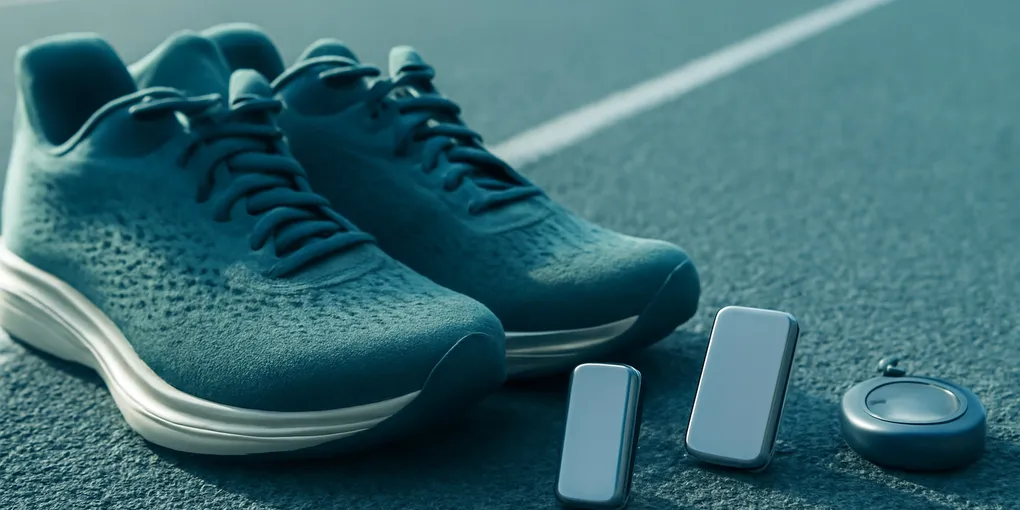
Cadence Running Metronome Protocol: A Practical +5% Stride-Rate Plan
ProtocolQuick picks
Clip-on digital metronome
★ Top pick Best simple cue- Best Use: Audible cadence practice without staring at a watch
- Caveat: Use low volume or one-ear awareness outdoors
Running foot pod cadence sensor
Best measurement tool- Best Use: Checking baseline and beep-off carryover
- Caveat: Must be compatible with your watch or app
Bottom line
Running cadence is steps per minute. It is not true that every runner should force 180 steps per minute, but a small cadence increase can help some runners reduce overstriding, braking, and heavy footfalls. The safest experiment is modest: measure your normal easy-run cadence, add about 3-5%, practice with short metronome intervals, and keep pace easy.
A See current clip-on digital metronomes is the simplest cue. A See current running foot pod cadence sensors is useful if your watch cadence is unreliable or you want to test carryover after the beep is off.
This is a form-practice protocol, not a cure for injuries. If you have worsening pain, bone tenderness, numbness, weakness, or a limp, get evaluated before changing mechanics.
Quick picks
- See current clip-on digital metronomes — best for runners who want an audible rhythm cue without staring at a watch during every stride.
- See current running foot pod cadence sensors — best for measuring baseline cadence and checking whether the new rhythm carries over after the beep turns off.
Who should try this
Try it if video shows your foot landing far ahead of your body, if easy runs sound loud and braking-heavy, or if your cadence is low for your pace and body size. Skip it if you are already running smoothly, racing well, and injury-free; changing cadence for its own sake can create new calf or Achilles stress.
Pair cadence work with easy aerobic training rather than speedwork. If you are building base fitness, see our zone 2 treadmill protocol or incline walking protocol for lower-impact days.
Practical score
| Factor | Weight | Score | Rationale |
|---|---|---|---|
| Research | 30% | 7.0 | Step-rate manipulation has biomechanics research, especially for loading variables. |
| Evidence Quality | 25% | 6.5 | Studies show mechanical changes, but injury prevention and performance outcomes are individual. |
| Value | 20% | 8.0 | A metronome is cheap and the intervention is reversible. |
| User Signals | 15% | 6.3 | Some runners adapt quickly; others feel tense or calf-dominant. |
| Transparency | 10% | 7.0 | Cadence is easy to measure and repeat if pace and terrain are controlled. |
| Composite | 100% | 6.9 | A worthwhile experiment for overstriding, not a universal running rule. |
Step 1: measure baseline cadence
Warm up for 10 minutes at an easy conversational pace on flat ground. Then count right-foot contacts for 60 seconds and multiply by two. Repeat twice and average the three numbers. If you use a watch or foot pod, use a steady three-to-five-minute segment after the warmup and avoid hills, traffic stops, and surges.
Example: right-foot counts of 82, 83, and 81 become 164, 166, and 162 steps per minute. Average baseline cadence is 164.
Step 2: set the first target
Multiply baseline cadence by 1.05. A 164 baseline becomes about 172 steps per minute. If that feels awkward, start at +3% instead. Do not jump straight to 180 unless that happens to be close to your measured target.
Keep pace the same. If breathing suddenly spikes, you probably sped up instead of shortening stride.
Step 3: run the first session
After a 10-minute warmup, do six rounds:
- 1 minute at target cadence.
- 1 minute easy jog or walk.
- 5-10 minutes easy cool-down.
Match each beep with a foot contact, or set the metronome to half cadence and match one foot only. Think “quiet feet under hips.” Do not reach forward, bounce higher, or force a forefoot strike.
Step 4: progress exposure, not intensity
| Week | Main set | Target-cadence time | Rule |
|---|---|---|---|
| 1 | 6 x 1 minute, 1 minute easy | 6 minutes | Stop if form feels choppy. |
| 2 | 8 x 1 minute, 1 minute easy | 8 minutes | Keep breathing conversational. |
| 3 | 6 x 2 minutes, 1 minute easy | 12 minutes | No calf gripping or toe-running. |
| 4 | 4 x 4 minutes, 2 minutes easy | 16 minutes | Rhythm should feel repeatable. |
| 5 | 3 x 6 minutes, 2 minutes easy | 18 minutes | Reduce if soreness rises. |
| 6 | 2 x 10 minutes, 3 minutes easy | 20 minutes | Increase only if natural. |
Hold the same target for at least two weeks. If calves, Achilles, hips, or knees complain, reduce the target and shorten intervals.
Step 5: test beep-off carryover
Once the rhythm feels smooth, alternate two minutes with the metronome on and one minute off. Check cadence afterward instead of staring at the watch during the minute. The goal is to own the rhythm without permanent beeping.
If cadence collapses when the beep stops, use 30-second beep-off segments. If it stays within 2-4 steps per minute, gradually lengthen the beep-off portions.
Common mistakes
The first mistake is chasing a universal number. Taller runners, slower paces, trails, hills, and fatigue all change cadence. The second mistake is combining cadence changes with new shoes, hill sprints, and a mileage jump in the same week. Change one variable at a time.
The third mistake is turning cadence work into forefoot running. Let foot strike happen naturally. A slightly quicker rhythm should shorten the step; it should not make you run on your toes.
FAQ
Is 180 steps per minute ideal?
No. It can be normal for some runners at some speeds, but it is not a rule. Start from your own baseline and test a small increase.
How often should I do cadence sessions?
One or two short sessions per week is enough at first. Keep other easy runs normal until the new rhythm feels natural.
Can cadence prevent injuries?
Not by itself. Cadence can change loading variables, but injuries also depend on training load, sleep, strength, terrain, shoes, anatomy, and prior history.
What if my calves get sore?
Reduce the target, shorten intervals, and make sure you are not forcing a forefoot strike. New calf or Achilles symptoms are a reason to back off.