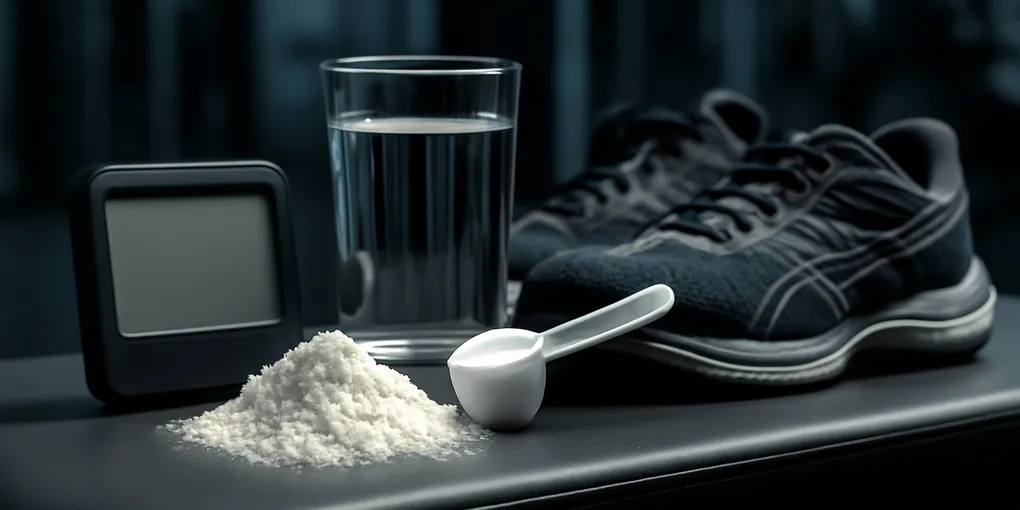
Beta-Alanine for High-Intensity Exercise: Evidence, Tingling, and Who Should Skip the Tub
Evidence ExplainerQuick picks
NOW Sports beta-alanine powder
★ Top pick Simple powder option- Best Use: Users who can measure daily servings and tolerate the taste
- Caveat: Tingling is common and dose splitting matters
Nutricost beta-alanine capsules
Capsule route- Best Use: People who dislike loose powder
- Caveat: Check serving size, capsule count, and total daily grams
Optimum Nutrition Gold Standard Pre-Workout
Pre-workout comparison- Best Use: Comparing all-in-one products against plain beta-alanine
- Caveat: Caffeine and flavoring can hide whether beta-alanine is helping
Bottom line
Beta-alanine is a real sports-nutrition supplement, but it is not a pre-workout spark plug. Its job is to raise muscle carnosine over time, which may help buffer fatigue during hard efforts that last long enough to burn. That makes it more relevant for repeated sprints, rowing pieces, combat-sport rounds, CrossFit-style intervals, and some high-rep lifting than for easy Zone 2 or max-strength singles.
The practical question is whether you will take it daily for several weeks and tolerate the tingling. If yes, compare a plain Search Amazon for NOW Sports beta-alanine powder with Search Amazon for Nutricost beta-alanine capsules. If you are looking at pre-workouts, compare the beta-alanine dose against caffeine and other ingredients before assuming the whole tub is responsible.
Supplement fit
- Best fit: repeated high-intensity work where burning legs or arms end the set before skill does.
- Weak fit: easy aerobic base work, casual lifting, one-rep max attempts, and anyone who quits supplements after a week.
- Main downside: tingling, flushing, and the annoyance of daily dosing.
- Best buying route: a plain powder or capsules with a clear gram amount per serving.
Quick comparison
- Plain powder: lowest cost per gram and easiest to scale, but taste and measuring are on you.
- Capsules: cleaner bag-to-gym use, but check how many capsules are needed to reach a useful daily gram total.
- Pre-workout blends: convenient if you already want caffeine, but harder to isolate beta-alanine because stimulants drive the immediate feel.
- Sustained-release products: worth comparing if tingling ruins adherence, though the price per gram is usually higher.
Practical score
| Factor | Weight | Score | Rationale |
|---|---|---|---|
| Research | 30% | 7.5/10 | Beta-alanine has a serious evidence base and a plausible carnosine mechanism. |
| Evidence Quality | 25% | 7.0/10 | Benefits appear task-specific and smaller than many pre-workout labels imply. |
| Value | 20% | 7.0/10 | Plain powder is affordable, but the loading period makes waste likely for inconsistent users. |
| User Signals | 15% | 6.0/10 | Tingling tolerance varies and pre-workout blends make outcomes hard to isolate. |
| Transparency | 10% | 8.0/10 | The key checks are visible: grams per serving, daily cost, caffeine blend, and third-party testing claims. |
| Composite | 100% | 7.1/10 | Worth considering for interval-heavy athletes, but not a first supplement for most beginners. |
What the evidence says
The International Society of Sports Nutrition position stand describes beta-alanine as a supplement that can raise muscle carnosine, with the strongest use case in exercise bouts where acidosis contributes to fatigue (ISSN position stand). The mechanism is not instant energy. It is a longer-term change in buffering capacity after repeated daily intake.
That distinction matters for buyers. Taking beta-alanine 20 minutes before a workout is not like taking caffeine. A single serving may cause tingling, but the performance question depends on whether you have loaded enough over time. If the label markets beta-alanine as the reason you feel a pre-workout immediately, the sensation is not the same as the training benefit.
A broader National Academies review of dietary supplements for military performance also treats beta-alanine as context-dependent rather than universally helpful (NCBI Bookshelf review). The useful claim is narrow: some high-intensity tasks may improve after loading. That does not mean every gym session, run, or recreational sport needs it.
Who should consider it
Beta-alanine makes the most sense if your sport or training contains repeated hard efforts in the one-to-four-minute neighborhood. Examples include rowing intervals, track repeats, assault-bike tests, swim repeats, combat-sport rounds, and dense conditioning workouts where local muscular burn is the limiting sensation.
It is less compelling if your training is mostly steady endurance, low-rep strength, mobility work, or general health lifting. If your main problem is pacing, sleep, total protein, or inconsistent training, beta-alanine will not solve the bottleneck. Readers deciding between supplement basics should read our creatine monohydrate evidence guide and sodium bicarbonate evidence guide first.
How to dose without chasing tingles
Common study protocols often use daily totals around 3.2 to 6.4 grams, divided across the day. The exact plan should follow the product label and your tolerance. Splitting servings is the simplest way to reduce paresthesia, the prickly tingling feeling that often shows up with larger single doses.
Do not judge beta-alanine by the first workout. Pick a four-to-eight-week block, keep training consistent, and track the specific sessions where beta-alanine should matter. A rower might track repeat 500-meter splits. A lifter might track high-rep accessory sets. A runner might track repeated hill intervals. If the tracked session does not match the mechanism, the experiment is muddy.
What to check before buying
Start with the supplement facts panel. You want the actual grams of beta-alanine per serving, not only a proprietary blend. If a pre-workout lists beta-alanine inside a blend with caffeine, citrulline, flavors, and stimulants, you cannot easily know what dose you are getting.
Capsules are convenient but can require many pills to reach research-like daily totals. Powder is cheaper per gram but demands measuring and taste tolerance. Sustained-release products may reduce tingling for some users, but they usually cost more. Third-party testing is useful for competitive athletes who need lower contamination risk.
Who should skip or ask first
People who are pregnant, have relevant medical conditions, take medications, or compete under strict supplement rules should be conservative and ask a clinician or qualified sports dietitian. Beta-alanine is not a medical treatment, and it should not be used to push through unusual chest pain, dizziness, neurological symptoms, or heat illness signs.
If tingling makes you anxious or distracts from training, that is a valid reason to skip it. A supplement that makes every warm-up feel strange is not automatically worth a small possible performance edge.
Beta-alanine FAQ
Can I take beta-alanine only on workout days?
That is not the usual evidence-based approach. Beta-alanine works by raising carnosine over time, so daily intake during a loading block is more logical than occasional use.
Is beta-alanine better than sodium bicarbonate?
They are different. Beta-alanine is a chronic loading supplement. Sodium bicarbonate is usually an acute buffering strategy with larger GI and sodium concerns. Some athletes use both, but that adds complexity.
Does the tingling mean it is working?
No. Tingling means the dose reached a threshold that caused paresthesia. It does not prove muscle carnosine has increased or that performance will improve.
Should I buy a pre-workout for beta-alanine?
Only if the rest of the formula also fits you. For a clean test, plain beta-alanine powder or capsules are easier to evaluate than a stimulant blend.
Sources
- ISSN position stand on beta-alanine: https://jissn.biomedcentral.com/articles/10.1186/s12970-015-0090-y
- National Academies supplement evidence review: https://www.ncbi.nlm.nih.gov/books/NBK236044/
- Body Science Review sodium bicarbonate guide: /blog/sodium-bicarbonate-high-intensity-exercise-evidence/
Frequently Asked Questions
- No. Beta-alanine is usually a daily loading supplement that raises muscle carnosine over weeks, not an acute stimulant.
- It fits repeated hard efforts and events where fatigue builds over roughly one to four minutes, not easy cardio or one-rep strength tests.
- The prickly feeling called paresthesia is common and dose related, but it can be uncomfortable. Split doses or sustained-release products may reduce it.
- Usually no. Creatine is the simpler first supplement for many strength trainees. Beta-alanine is more niche and takes longer to evaluate.