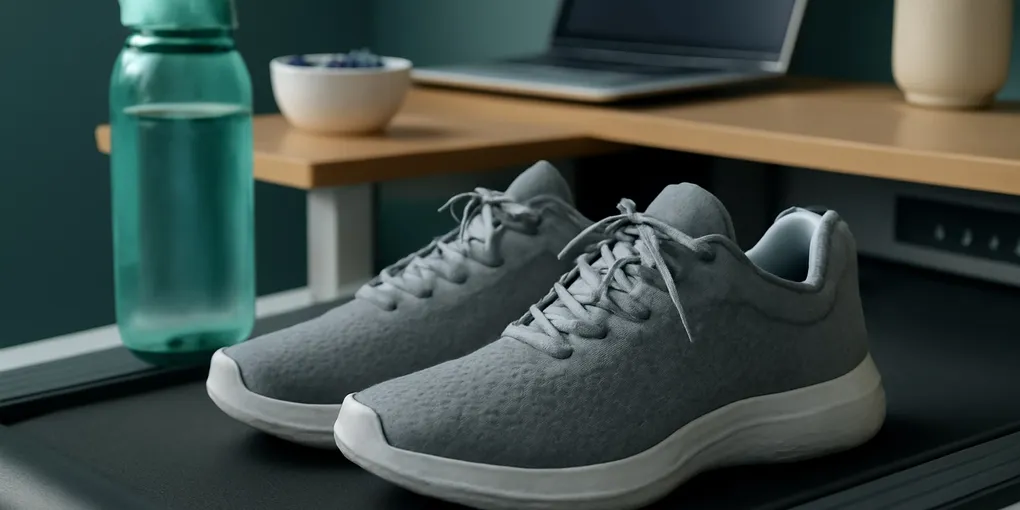
Best Treadmill Desk Walking Shoes: Quiet Cushion, Grip, and All-Day Fit
Buyer's GuideBrooks Ghost 16
Best cushioned defaultBest Use: Slow indoor miles where quiet cushion and a secure heel matter
Check current price
Quick picks
| Product | Key Specs |
|---|---|
| See price on Amazon |
|
| See price on Amazon |
|
| See price on Amazon |
|
| See price on Amazon |
|
Product availability, certifications, and retailer details can change; check the current Amazon page before buying.
Bottom line
The best treadmill desk shoe is quiet, stable, and forgettable at slow speeds. Most readers should compare the Search Amazon for Brooks Ghost 16 first because it is a familiar cushioned daily trainer with a secure heel. If you want a steadier moderate-cushion feel, look at the Search Amazon for New Balance Fresh Foam X 880v14. If your toes swell during long work blocks, compare the Search Amazon for Altra Torin 7.
Skip racing foam, aggressive trail lugs, carbon plates, and very tall shoes unless you already know they feel stable on your specific walking pad.
Quick picks
- Best cushioned default: Search Amazon for Brooks Ghost 16 for quiet indoor miles and familiar fit.
- Best stable daily trainer: Search Amazon for New Balance Fresh Foam X 880v14 if tall soft shoes feel wobbly.
- Best roomy toe box: Search Amazon for Altra Torin 7 for forefoot spread, with a calf-adaptation caveat.
- Best low-profile feel: Search Amazon for Xero HFS II for short blocks if you prefer less cushioning.
Fit check before keeping the pair: walk for one normal work block on the exact belt you use, then check heel rub, toe pressure, outsole squeak, and calf fatigue. Return a shoe that feels good outdoors but noisy, unstable, or cramped on the walking pad.
For the movement habit itself, pair this with our under-desk elliptical guide if a walking pad is not the right fit for your space or joints.
Desk walking is not the same as an outdoor walk. The speed is lower, the stride is shorter, and the surface is predictable. You may also walk while typing, looking forward, or stepping off for calls. That makes stability and quietness more important than speed features.
A shoe that feels great outside can be annoying indoors if the outsole squeaks, the heel rubs during thousands of small steps, or the midsole is so soft that the belt feels narrow. Treat treadmill desk shoes like work equipment: they should reduce friction, not demand attention.
Cushion: enough, not maximum
Moderate cushioning is the sweet spot for most desk walkers. Bare feet or thin slippers can irritate the heel and forefoot when walking volume jumps quickly. Very tall running shoes can feel unstable because walking pads are narrower than full gym treadmills.
Look for a shoe that bends at the forefoot, keeps the heel centered, and does not make you feel perched above the belt. If you walk more than an hour per day, rotate two pairs or give the foam time to recover between long blocks.
Outsole noise and belt grip
Quiet matters when the treadmill sits under a desk, in an apartment, or near coworkers. Hard plastic-like outsoles can slap or squeak. Deep trail lugs can catch awkwardly and track dirt onto the belt. Smooth rubber with shallow tread is usually better indoors.
Before committing, test the shoes at your actual desk speed. A shoe that is silent at 3 mph may squeak at 1.2 mph because the foot stays on the belt longer. If the belt is new, clean, and properly aligned but every step chirps, return the shoe rather than blaming your walking form.
Fit checks for long work blocks
Feet can swell during repetitive standing and walking. The toe box should allow a little spread without the heel sliding. If your toes touch the front when you step downhill or stop the belt, the shoe is too short. If the heel slips during slow walking, try a runner’s loop or a different last rather than tightening the forefoot until it tingles.
Socks matter too. A thin synthetic sock can reduce heat and rubbing better than a thick cotton sock. Keep one clean indoor pair if you use the walking pad near carpet or a bedroom.
When a training shoe beats a walking shoe
Low-profile training shoes can be better for people who feel unstable in plush shoes. They usually have a wider base and firmer foam, which helps on narrow belts and during short strength breaks. The tradeoff is less cushion for long walking blocks.
Choose this category if you alternate walking with bodyweight squats, step-downs, or resistance-band work. Choose a walking shoe if the treadmill is mostly for steady low-intensity movement while working.
Red flags and setup notes
Stop and adjust if treadmill desk walking causes sharp foot pain, numbness, calf tightness that worsens, or one-sided joint pain. The fix may be less volume, a different shoe, a lower speed, or a different movement option. New walking volume should build gradually, especially if you were previously sitting most of the day.
Keep the belt centered and the deck maintained according to the treadmill manual. Shoes cannot compensate for a belt that drifts, skips, or runs hot.
Shoe features to ignore
Most treadmill desk users do not need carbon plates, trail lugs, racing foam, waterproof uppers, or aggressive motion-control posts. Those features solve different problems. Carbon plates are built around faster running mechanics, not typing while walking slowly. Trail lugs are made for dirt, rocks, and wet outdoor surfaces, not a clean treadmill belt. Waterproof uppers can trap heat during long indoor sessions.
Marketing terms can also hide fit problems. A shoe labeled cushioned may still have a narrow forefoot. A shoe labeled stable may be too stiff for slow repetitive walking. A shoe labeled breathable may squeak if the outsole rubber is hard. The only useful test is whether your foot stays comfortable, the belt tracks smoothly, and the sound level is acceptable at your actual desk speed.
How to test a pair during the return window
Do not judge treadmill desk shoes from a standing try-on alone. Wear them for three separate tests before keeping them. First, walk for 10 minutes at your normal desk speed and listen for squeaks, slaps, or heel rubbing. Second, walk for 30 minutes during an ordinary work task and check whether your toes feel cramped. Third, step off the belt and stand for five minutes, because some shoes feel fine while moving but pressure the forefoot when you pause.
Look at the outsole after the test. Black rubber dust, unusual belt marks, or hot spots on the shoe can indicate poor belt compatibility. Check your feet too. Redness on the outside of the little toe points toward a narrow toe box. Heel irritation points toward poor lockdown. Numbness or tingling means the laces, shoe volume, or walking volume needs adjustment.
Volume progression for new desk walkers
Shoes cannot make a sudden jump from sitting to hours of walking risk-free. Start with short blocks, then add time. A practical first week is two or three 15 to 20 minute walks spread through the day. If feet, calves, hips, and back feel normal, add 10 to 15 minutes per block the next week. Keep one seated block after meals or calls rather than trying to walk through the entire workday immediately.
The right shoe should make that progression easier, not invisible. Mild foot fatigue can happen when total steps rise. Sharp plantar heel pain, Achilles soreness that worsens each morning, numb toes, or one-sided knee pain are signs to reduce volume and reassess the setup.
When sandals or socks are a bad idea
Walking pads tempt people to use whatever is already on their feet. That can work for a few minutes, but loose sandals, slippers, and socks create predictable problems. Sandals can catch at the belt edge. Socks can slip during stops. Slippers often have soft sidewalls that let the foot roll.
Use a dedicated indoor walking pair instead. It keeps outdoor grit off the belt, gives the foot a repeatable platform, and makes walking breaks feel automatic. If you need a minimalist feel, choose a real low-profile shoe with a secure upper rather than a house slipper.
Keep that pair near the treadmill instead of in a closet. Friction matters: if the shoes are clean, reachable, and already laced, you are more likely to use the walking pad for a short block between meetings instead of waiting for a perfect workout window. That small setup choice often matters more than another shoe feature.
FAQ
Can I use running shoes on a treadmill desk?
Yes, but slow desk walking does not need aggressive running-shoe features. If the running shoe is tall, unstable, or noisy, use a simpler walking or training shoe indoors.
Should treadmill desk shoes be different from outdoor walking shoes?
Often yes. Indoor shoes can stay cleaner, use smoother rubber, and prioritize quiet steps over weather grip. Outdoor shoes may bring grit onto the belt and wear it faster.
Are barefoot shoes good for walking pads?
They can work for adapted feet and short sessions. If you are new to barefoot shoes or increasing walking volume, transition slowly because the foot and calf workload changes.
How do I know if shoes are too soft for a walking pad?
If you wobble, drift toward the belt edge, or feel your ankles working harder than your legs, the shoe may be too tall or soft for that treadmill.
Sources
- The CDC summarizes the health value of regular physical activity, including walking: https://www.cdc.gov/physical-activity-basics/benefits/index.html
- The American Academy of Orthopaedic Surgeons provides foot and ankle conditioning context for readers managing lower-leg symptoms: https://orthoinfo.aaos.org/en/recovery/foot-and-ankle-conditioning-program/
- For another low-impact indoor cardio path, see our under-desk elliptical guide.