Sunfiber (Partially Hydrolyzed Guar Gum)
Best OverallType: PHGG (partially hydrolyzed guar gum)
~$0.40–$0.60/serving
Quick picks
| Product | Key Specs |
|---|---|
| See price on Amazon |
|
| See price on Amazon |
|
| See price on Amazon |
|
| See price on Amazon |
|
| See price on Amazon |
|
Product availability, certifications, and retailer details can change; check the current Amazon page before buying.
How We Scored These Prebiotic Picks
Prebiotic picks were judged by fiber type, human evidence, tolerable dose, cost per meaningful gram, mixability, and how clearly the label names the substrate. A useful prebiotic is not just any fiber powder: the ISAPP consensus defines prebiotics by selective host-microbe benefit, not by fiber grams alone (PMID: 28611480).
Composite score interpretation: Sunfiber leads because PHGG has a strong tolerability profile, practical 5–6g dosing, and better fit for IBS-sensitive readers than aggressive inulin. Garden of Life scores well for organic positioning and multi-fiber appeal, but value is lower. NOW Inulin scores very high on price and bifidogenic research, then loses points for FODMAP tolerance. Hyperbiotics earns convenience points but cannot match powder-dose evidence. Seed is useful as a synbiotic system, yet its prebiotic contribution is bundled and harder to evaluate independently; this matters because prebiotic effects are substrate- and dose-specific (PMID: 28611480).
Product CTA Validation Notes
Prebiotic labels change frequently, especially serving size, flavoring, and added probiotic strains. Verify the supplement facts panel before checkout and compare grams of actual fiber, not scoop weight alone. If a product uses inulin, FOS, or chicory root, readers with IBS, SIBO history, or low-FODMAP needs should start below the labeled serving and increase slowly only if tolerated, because GI tolerance differs by substrate and dose (ISAPP consensus PMID: 28611480).
How to Choose by Tolerance
Tolerance matters more than theoretical prebiotic strength. A highly fermentable fiber that causes daily pain, urgent stools, or disruptive gas is the wrong product even if it has impressive microbiome data. Start with a half serving for one to two weeks, take it with food or fluid, and track stool consistency plus bloating. If symptoms flare, reduce the dose or switch fiber type before abandoning prebiotics entirely. Food sources still count: oats, legumes, onions, garlic, asparagus, bananas, and resistant starch can deliver meaningful substrate without a supplement when tolerated (prebiotic consensus PMID: 28611480).
Best Prebiotic Supplements 2026: What the Evidence Shows
Prebiotics are dietary compounds that selectively stimulate the growth or activity of beneficial gut microorganisms. The internationally accepted definition (Gibson et al., Nature Reviews Gastroenterology & Hepatology, 2017; PMID: 28611480) requires three criteria: resistance to gastric acid and intestinal hydrolysis, fermentation by gut microbiota, and selective stimulation of growth or activity of bacteria associated with health benefit.
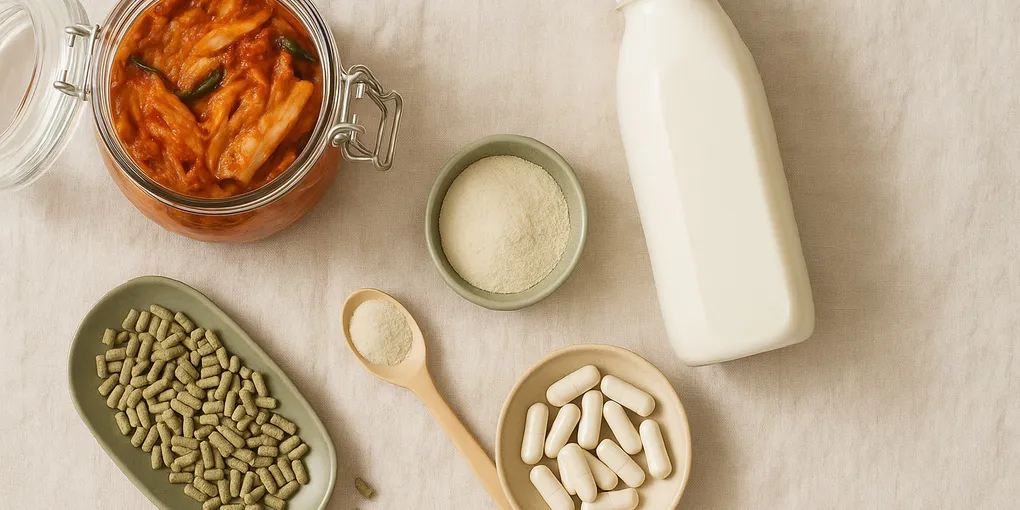
Unlike probiotics — which introduce live organisms — prebiotics feed your existing beneficial microbiota. The most studied prebiotic substrates include fructooligosaccharides (FOS), galactooligosaccharides (GOS), inulin, and partially hydrolyzed guar gum (PHGG).
Quick Decision Guide
| If you need… | Start with | Why it fits | Watch-out |
|---|---|---|---|
| IBS-aware prebiotic fiber | Sunfiber PHGG | PHGG is typically better tolerated than inulin/FOS and has symptom-focused IBS research (prebiotic definition context PMID: 28611480) | Still start with a partial dose |
| Organic multi-fiber powder | Garden of Life Organic Fiber | Combines acacia, baobab, and inulin with organic certification | Higher cost per serving |
| Lowest-cost microbiome support | NOW Inulin Powder | Simple chicory inulin with strong bifidogenic evidence | Often bloats IBS/SIBO users |
| Capsule convenience | Hyperbiotics Prebiotic | Easier travel format than powders | Lower gram dose than studied powder protocols |
Evidence check: A better prebiotic is not always the most fermentable one. Users with IBS, SIBO history, or FODMAP sensitivity often do better with lower, slower titration or PHGG/acacia-style fibers than with aggressive inulin/FOS dosing.
The Evidence Landscape
FOS and inulin are the most extensively studied prebiotics. Both selectively stimulate Bifidobacterium species, with consistent results across multiple RCTs. A systematic review of 26 RCTs found that inulin-type fructans (FOS, inulin, and oligofructose) significantly increased fecal bifidobacterium counts compared to placebo (Niness & Patil, and subsequent reviews).
GOS (galactooligosaccharides) have strong evidence for infant gut microbiome development and emerging evidence in adults. GOS selectively promotes bifidobacteria and lactobacilli at doses of 5–10g/day.
PHGG (Sunfiber) is a partially hydrolyzed form of guar gum with FODMAP-friendly certification from Monash University. This may make it better tolerated by some people with IBS or FODMAP sensitivity than highly fermentable FOS or inulin.
Honest limitation: Most prebiotic research demonstrates microbiome changes (increased beneficial bacteria counts), but direct clinical outcomes (reduced symptoms, improved disease markers) are less consistently established.
Best Prebiotic Supplements: Reviews
1. Sunfiber (PHGG) — Best Overall
Partially hydrolyzed guar gum at 6g per serving. FODMAP Friendly certified by Monash University, meaning it is certified for FODMAP suitability at the studied serving; individual IBS responses can still vary. Multiple clinical trials report bifidogenic effects and stool-consistency outcomes, but the practical advantage is tolerability at useful gram doses rather than a universal symptom guarantee (prebiotic consensus PMID: 28611480). Non-GMO, vegan, gluten-free. Mixes clear without gelling.
Best for: Adults with IBS or FODMAP sensitivity who need a well-tolerated prebiotic; also suitable as a general daily prebiotic fiber.
2. Garden of Life Dr. Formulated Organic Fiber — Best Whole Food Formula
A blend of organic acacia fiber, baobab, and inulin providing 7g total fiber (4g soluble) per serving, plus 1 billion CFU Lactobacillus acidophilus. USDA Organic, NSF Certified for Sport, Non-GMO, Vegan, Gluten-Free.
Best for: Those seeking a USDA Organic, multi-fiber prebiotic formula with added probiotic at a premium price.
3. NOW Inulin Powder — Best Budget Inulin
Pure inulin from chicory root at 3g per teaspoon. GMP-certified, non-GMO, vegan, gluten-free, no fillers or additives. At ~$0.15–0.20 per serving, this is the most accessible entry point for inulin supplementation.
Limitation: FOS and inulin can trigger bloating in individuals with IBS or SIBO — not FODMAP-friendly. Start with half doses.
Best for: Budget-conscious adults without IBS or FODMAP sensitivity who want straightforward inulin supplementation.
4. Hyperbiotics Prebiotic — Best Capsule Form
FOS + inulin blend in vegetarian capsules at roughly 2g per 2-capsule serving. The lower dose may be easier to tolerate than aggressive powder servings, but it also limits fermentation impact compared with gram-dose protocols used in much of the inulin/FOS literature (inulin-type fructan review PMID: 28814978). Convenient for those who prefer capsules over powders.
Best for: Travelers and those who prefer the convenience of capsule format over powder mixing.
5. Seed DS-01 (Prebiotic Component) — Best Synbiotic
Seed’s DS-01 wraps a probiotic inner capsule inside an outer prebiotic capsule made from Indian pomegranate polyphenols and fungal beta-glucans. Treat it as a branded synbiotic system rather than as a standalone, dose-comparable prebiotic powder because the prebiotic contribution is bundled with the probiotic delivery design, while consensus prebiotic evidence remains substrate- and dose-specific (PMID: 28611480).
Best for: Those who want probiotic and prebiotic benefits in a single premium product.
Comparison
| Feature | Sunfiber | Garden of Life | NOW Inulin | Hyperbiotics | Seed DS-01 |
|---|---|---|---|---|---|
| Type | PHGG | Acacia/Baobab/Inulin | Inulin | FOS + Inulin | Polyphenols + beta-glucans |
| Dose | 6g | 7g total | 3g/tsp | ~2g | Bundled |
| Low-FODMAP / IBS tolerance | Yes (FODMAP) | Moderate | No | Moderate | Unknown |
| Certification | FODMAP/Monash | USDA Organic, NSF | GMP | Vegetarian | Informed Sport |
| Price/serving | ~$0.40–$0.60 | ~$0.80–$1.00 | ~$0.15–$0.20 | ~$0.50–$0.65 | ~$1.67 |
How to Use Prebiotic Supplements
Start low, go slow. Prebiotic fibers produce gas as a fermentation byproduct. Start with half the recommended dose for the first 1–2 weeks to allow your microbiome to adapt.
Combine with dietary fiber. Supplements are most effective when combined with — not used instead of — dietary prebiotic foods: garlic, onion, leeks, asparagus, bananas, and oats.
Give it 4–8 weeks. Microbiome changes take time. Assess consistency of symptoms over 4–8 weeks of daily use before drawing conclusions.
Frequently Asked Questions
Are prebiotic supplements safe for daily use?
Yes for most adults. Primary side effects are GI symptoms such as bloating and gas, and they are dose- and substrate-dependent. Individuals with SIBO, severe IBS flares, or medically restricted diets should consult a healthcare provider before supplementing (prebiotic consensus PMID: 28611480).
How long does it take for prebiotics to work?
Detectable microbiome shifts can occur within weeks, but symptom changes are less predictable and depend on the substrate, dose, baseline diet, and condition being targeted. Give a tolerated fiber several weeks before judging it, and stop or step down sooner if gas, pain, or stool urgency becomes disruptive (prebiotic consensus PMID: 28611480; inulin-type fructan review PMID: 28814978).
Can I get enough prebiotics from food alone?
Many people can. Chicory root, garlic, onion, leeks, asparagus, oats, legumes, bananas, and resistant starch foods can provide fermentable substrate, but tolerance varies by FODMAP sensitivity and total fiber load. Supplements are useful when dietary consistency or dose precision is difficult (prebiotic consensus PMID: 28611480).
Do prebiotics survive stomach acid?
Yes for ingredients that meet the consensus prebiotic definition: they resist digestion in the upper GI tract, are fermented by gut microbiota, and selectively support host-beneficial microbial activity. That is why the exact substrate on the label matters more than generic “gut health” wording (PMID: 28611480).
The Bottom Line
Best overall: Sunfiber (PHGG) — the most practical first pick here for IBS-sensitive readers because it combines useful gram dosing with a gentler tolerance profile than many inulin/FOS products, though individual response still matters (PHGG clinical context PMID: 25516417).
Best budget: NOW Inulin Powder — pure, simple, affordable inulin for those without IBS or FODMAP sensitivity.
Best whole food: Garden of Life Dr. Formulated Organic Fiber — USDA Organic, multi-fiber blend with added probiotic.
Best synbiotic system: Seed DS-01 — prebiotic and probiotic in one delivery system for those who want both.
When to Skip or Escalate
Skip the supplement if the goal is vague prevention, if the label does not match the ingredient discussed here, or if the price only makes sense because of an unverified promotional claim; the prebiotic definition is substrate-specific, not a generic gut-health label (PMID: 28611480). Escalate to a clinician when symptoms are severe, persistent, associated with weight loss, bleeding, fever, nutrient deficiency, or medication changes. Supplements can be useful tools, but they are not diagnostic tests; persistent GI symptoms need medical triage rather than another fiber experiment.
For comparison shopping, save the supplement facts panel before purchase and compare it against the bottle that arrives. Return or replace products when the active ingredient, dose, certification mark, or serving count differs from the listing used for the decision.
Evidence and Source Notes
- Gibson GR et al. Expert consensus on the definition and scope of prebiotics. Nature Reviews Gastroenterology & Hepatology. 2017. PMID: 28611480.
- Wilson B et al. Prebiotic inulin-type fructans and human gut microbiota: systematic review. British Journal of Nutrition. 2017. PMID: 28814978.
- Rao SSC et al. PHGG in irritable bowel syndrome: clinical tolerability and symptom evidence. Nutrition. 2015. PMID: 25516417.
- Vulevic J et al. Galactooligosaccharides modulate gut microbiota and immune markers in adults. American Journal of Clinical Nutrition. 2008. PMID: 19056589.
Related Articles
- Best Probiotic Supplements
- Best Digestive Enzyme Supplements
- Best L-Glutamine Supplements
- Best Fiber Supplements
- Best Gut Health Supplements — Prebiotics provide the substrate tier of the full gut health supplement stack.
- Prebiotics vs Probiotics: What You Need to Know — The mechanistic distinction between feeding existing bacteria vs. delivering new strains.
- Fermented Foods vs Probiotic Supplements: Which Is Better? — Fermented foods deliver both live cultures and prebiotic substrates; synbiotic supplementation replicates this dual approach.