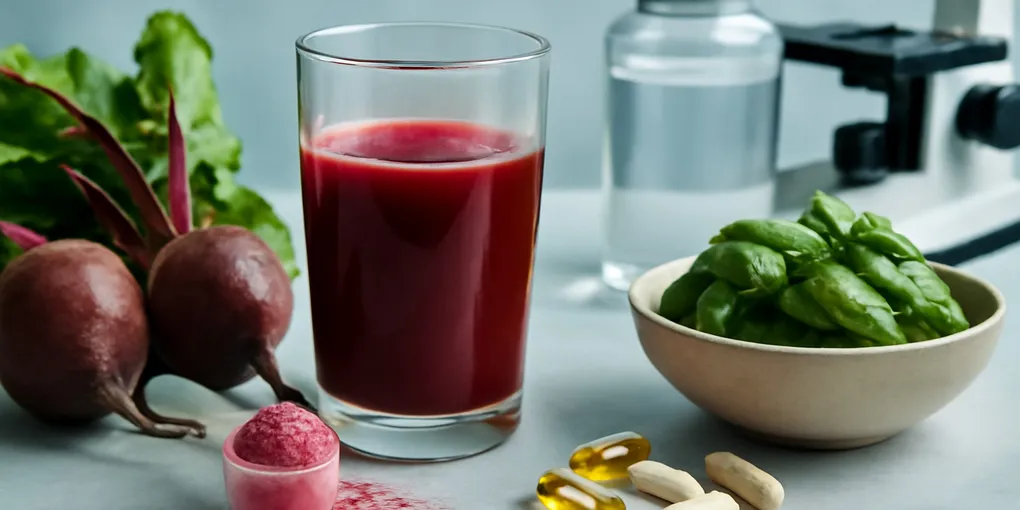
Beetroot Powder for Endurance: Nitrate Evidence, Dosing Reality, and Who Should Skip It
Evidence ExplainerQuick picks
Beetroot powder with stated nitrate content
★ Top pick Best label to check first- Best Use: Endurance athletes who want a powder instead of shots
- Caveat: Many powders do not state nitrate yield clearly
Concentrated beetroot shot
Best studied format- Best Use: Race-day testing when dosing consistency matters
- Caveat: More expensive per serving than bulk powder
Nitrate-free pre-workout alternative
Best if beet causes GI issues- Best Use: Athletes who tolerate caffeine and want a better-known ergogenic aid
- Caveat: Stimulants are not suitable for everyone
Beetroot powder is not magic red dust. The performance argument is about dietary nitrate, which the body can convert into nitric oxide-related pathways that may reduce the oxygen cost of some exercise. That makes beet products interesting for endurance athletes, but the label details matter more than the color of the scoop.
If you want to try the category, search Amazon for beetroot powder with nitrate details. If dosing consistency matters for a race, search Amazon for concentrated beetroot shots. If you are comparing other workout supplements, our electrolyte powder guide for hot workouts explains a more basic hydration use case.
Quick take
- Beetroot can be useful when the product provides enough nitrate and you test timing before the event.
- Bulk beet powder is not automatically equivalent to concentrated beet shots used in studies.
- Skip or get medical guidance if nitrate intake conflicts with blood-pressure medication, kidney-stone history, GI tolerance, or clinician advice.
Quick picks
- Label-first powder: Search Amazon for beetroot powder with nitrate details if you want bulk servings and can confirm nitrate information.
- Race-day consistency: Search Amazon for concentrated beetroot shots when the serving format matters more than lowest cost.
- Beet-free backup: Search Amazon for caffeine endurance powders only if caffeine fits your sleep, heart-rate, and GI tolerance.
Practical score for beetroot powder
| Factor | Weight | Score | Rationale |
|---|---|---|---|
| Research | 30% | 7.0 | Dietary nitrate has a plausible mechanism and multiple endurance studies, especially around time-trial and oxygen-cost outcomes. |
| Evidence Quality | 25% | 6.5 | Effects vary by training status, dose, event type, and product standardization. |
| Value | 20% | 5.8 | Value depends on whether the powder states nitrate content; vague red powders are a gamble. |
| User Signals | 15% | 6.2 | Taste, GI tolerance, mixing, and urine/stool color surprises affect repeat use. |
| Transparency | 10% | 5.5 | Many listings show beet grams but not nitrate yield, which is the key performance variable. |
| Composite | 100% | 6.5 | Worth testing for some endurance athletes, but only with label discipline and realistic expectations. |
What the evidence actually supports
Dietary nitrate research is stronger than many supplement trends, but it is not universal. A 2018 International Society of Sports Nutrition position stand lists nitrate/beetroot among supplements with evidence for certain exercise contexts while emphasizing dose, timing, and athlete variability (https://jissn.biomedcentral.com/articles/10.1186/s12970-018-0242-y). Recent umbrella-review work also frames beetroot effects as performance-context dependent rather than guaranteed (PMID: 39408214, https://pubmed.ncbi.nlm.nih.gov/39408214/).
The practical reader takeaway is simple: the active feature is nitrate availability. A scoop that says organic beetroot powder but does not state nitrate content may still be a nutritious food powder, but it is harder to treat as an endurance supplement. Concentrated beet shots often make dosing clearer, which is why they appear frequently in sport protocols.
Dose and timing reality
Many research-style protocols use nitrate several hours before exercise, often around 2 to 3 hours before the target session. Some protocols use several days of loading before an event. That does not mean you should copy a study blindly. Start with a half serving on an easy training day, then test the full serving before a workout that resembles your race or event.
Do not try beetroot for the first time on race morning. The most common practical problems are stomach upset, earthy taste, and bathroom surprises from red pigment. None of those are dangerous for most people, but they can ruin a run or ride if you learn about them late.
Powder vs shot vs food
Powder is convenient and usually cheaper per serving. It mixes into water or smoothies, stores well, and can be adjusted. The problem is standardization. If the label gives only grams of beet powder, you do not know how much nitrate you are getting.
Concentrated shots are usually more expensive but often easier to dose. They are also easier to pack before an event. Whole beets and leafy greens can contribute dietary nitrate, but food timing, fiber, and meal size are different from supplement timing.
If you buy powder, check whether the company lists nitrate amount, third-party testing, serving size, added sugar, and country of origin. If the listing leans on color and detox-style wellness language instead of nitrate details, choose a clearer product.
Safety and skip rules
Beetroot products can lower blood pressure in some contexts, which may matter if you take blood-pressure medication or already run low. Beets are also higher in oxalates than many foods, so people with kidney-stone history should ask a clinician before high-dose use. GI symptoms are common enough that tolerance testing is part of the protocol, not an afterthought.
The Australian Institute of Sport supplement framework places nitrate among performance supplements used in specific sport contexts while emphasizing athlete-specific risk management and product quality (https://www.ais.gov.au/nutrition/supplements/group_a). That is a better framing than treating beetroot as a general health shortcut.
When beetroot is not the bottleneck
If your endurance training lacks consistency, your easy days are too hard, or your fueling is poor, beetroot is not the first fix. It may help a prepared athlete at the margin. It will not create aerobic base, replace race fueling, or make a poorly paced event feel easy.
Use beetroot only after the basics are stable: training volume, sleep, carbohydrate availability for harder sessions, heat plan, and equipment fit. Then test whether the supplement changes a workout you can repeat, such as a tempo interval set, time trial, or long climb.
Beetroot powder FAQ
Why do some beet powders not work like beet shots?
They may not provide the same nitrate dose. Beet grams and nitrate milligrams are not the same label claim, so a bright red scoop can still be underdosed for performance.
Can I stack beetroot with caffeine?
Some athletes use both, but test separately first. Caffeine has its own heart-rate, sleep, anxiety, and GI tradeoffs. Combining new supplements makes it harder to know what helped or hurt.
Is red urine after beetroot normal?
Red or pink urine and stool can happen after beet intake. If you are unsure whether color changes are food-related or medical, stop the supplement and seek medical guidance.
Frequently Asked Questions
- It may help some endurance efforts when the product delivers enough nitrate and is timed correctly, but effects are variable and often modest.
- Many nitrate protocols use a dose roughly 2 to 3 hours before exercise, after testing tolerance in training rather than on race day.
- Look for nitrate amount or standardized nitrate information, serving size, third-party testing, sugar content, and warnings for blood-pressure or kidney-stone concerns.