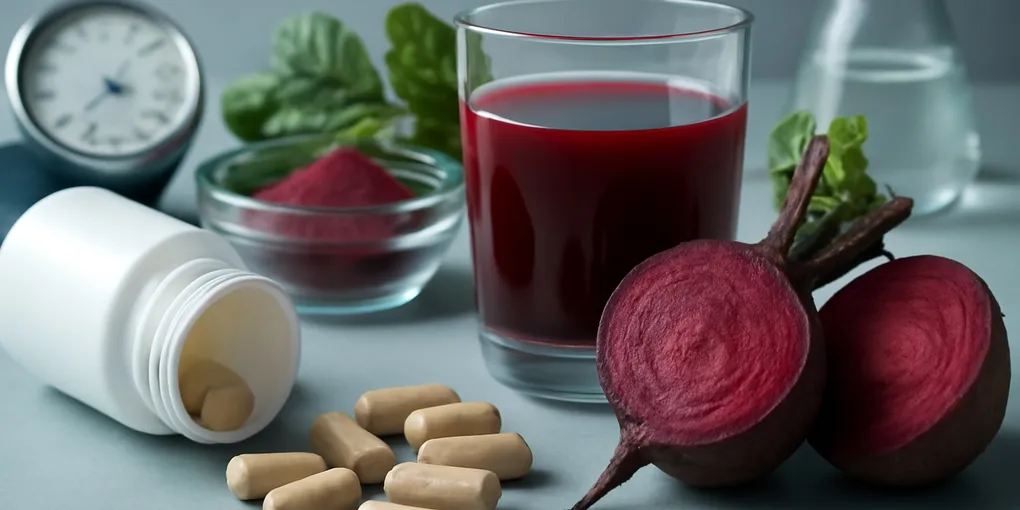
Beetroot Nitrate for Blood Pressure: Evidence, Dose, and Product Reality
Evidence ExplainerQuick picks
| Product | Key Specs |
|---|---|
| See price on Amazon |
|
| See price on Amazon |
|
Product availability, certifications, and retailer details can change; check the current Amazon page before buying.
Bottom line
Beetroot products are mostly nitrate products. The relevant pathway is nitrate to nitrite to nitric oxide, which may relax blood vessels and lower systolic blood pressure modestly in some adults. That is interesting, but it is not a substitute for prescribed hypertension care, sodium reduction, weight management, sleep apnea screening, or clinician-guided medication. Source: PMID: 23596162.
What the evidence actually says
Randomized trials and meta-analyses generally show small average blood-pressure reductions from beetroot juice or dietary nitrate, especially when baseline blood pressure is elevated and the product delivers a meaningful nitrate dose. The effect is not predictable for every reader. Oral bacteria, mouthwash use, baseline diet, kidney function, medications, and product standardization all matter.
Useful references include a nitrate and blood pressure meta-analysis in Journal of Nutrition: https://pubmed.ncbi.nlm.nih.gov/23596162/ and NIH hypertension guidance: https://www.nhlbi.nih.gov/health/high-blood-pressure. Readers should treat supplement claims as adjunctive, not medical treatment.
Practical score
| Factor | Weight | Score | Rationale |
|---|---|---|---|
| Research | 30% | 7.8 | Multiple human nitrate trials exist. |
| Evidence Quality | 25% | 7.1 | Trials are mixed and product doses vary. |
| Value | 20% | 7.3 | Powders are cheaper than bottled shots but taste varies. |
| User Signals | 15% | 7.0 | Adherence depends on flavor and stomach tolerance. |
| Transparency | 10% | 8.0 | Nitrate dose and ingredient panels can be checked. |
| Composite | 100% | 7.4 | Reasonable adjunct for measured self-tracking. |
| Source: PMID: 33661594. |
Buying criteria
Look for a declared beetroot serving, minimal added sugar, third-party testing when possible, and serving instructions that do not hide behind a proprietary blend. Avoid products that promise medication-like results, instant detox language, or vascular reversal.
| Check price | Product category | Why it fits |
|---|---|---|
| Search Amazon | HumanN SuperBeets Powder | convenient nitrate-focused powder format |
| Search Amazon | Force Factor Total Beets | capsule or chew format for readers avoiding drink mixes |
| Search Amazon | Bulk beet root powder | budget option when dose and taste are acceptable |
Use these shopping options as a starting point only; confirm the current label, serving size, seller reputation, and return policy before buying.
Two-week test
Measure home blood pressure before changing anything. Use a validated upper-arm cuff, sit quietly for five minutes, take two readings one minute apart, and record the average. Add beetroot at the same time daily for two weeks. Do not change medication, caffeine, sodium, or exercise deliberately during the test. Compare weekly averages, not single readings. Pair this with our isometric handgrip protocol if you want a non-supplement experiment.
Safety notes
Beetroot can discolor urine or stool, upset the stomach, and interact with low-blood-pressure concerns. People using nitrates, PDE-5 inhibitors, antihypertensive medication, kidney-disease dietary restrictions, or oxalate-sensitive stone histories should ask a clinician first. Stop if readings become unusually low or symptoms appear.
FAQ
Does beetroot lower blood pressure immediately?
Some studies see acute changes within hours, but the consumer decision should be based on repeated readings over days or weeks.
Is juice better than powder?
Juice may have better studied nitrate delivery; powder is easier to store. Choose the format you will actually use and verify serving details.
Can I use mouthwash?
Antibacterial mouthwash may blunt nitrate conversion because oral bacteria help convert nitrate to nitrite.
Practical follow-through: treat beetroot nitrate as a measurable experiment, not a vague wellness add-on. Record baseline blood pressure, training session timing, serving size, and any gastrointestinal effects for one to two weeks. Stop and ask a clinician if readings are already low, medication timing changes, or headaches and dizziness appear. Source: PMID: 35369064.
Final recommendation
Use beetroot only as a measured experiment. If two-week averages do not improve, do not escalate servings blindly. Bring logs to a clinician if blood pressure remains elevated. Source: PMID: 23596162.
Practical context checks
Beetroot is easiest to evaluate when the rest of the routine stays stable. Keep sodium intake, medication timing, caffeine, and exercise roughly consistent during a short trial, and compare weekly blood-pressure averages rather than a single favorable reading. If readings fall too low or symptoms appear, stop the supplement experiment and ask a clinician.
Sources and refresh notes
This page was refreshed on 2026-05-30 because beetroot nitrate articles can drift into hypertension-treatment language. Sources checked include the nitrate/blood-pressure meta-analysis linked above (https://pubmed.ncbi.nlm.nih.gov/23596162/), an updated dietary nitrate review (https://pubmed.ncbi.nlm.nih.gov/33661594/), and NHLBI high-blood-pressure guidance (https://www.nhlbi.nih.gov/health/high-blood-pressure). The practical boundary is simple: beetroot may be a measurable adjunct for some adults, but persistent high readings, medication questions, kidney disease, chest pain, neurologic symptoms, pregnancy-related blood-pressure concerns, or symptomatic low blood pressure are clinician issues.
When to skip or downgrade the pick
Skip beetroot nitrate if you need a reliable blood-pressure treatment decision today. The evidence is most useful as an adjunct habit for adults already tracking home readings, not instead of prescribed medication, sodium reduction, weight management, sleep-apnea evaluation, or clinician follow-up. Also pause before buying if you take nitrates, PDE-5 inhibitors, multiple blood-pressure drugs, have kidney-stone concerns, or have been advised to limit potassium or oxalate.
Downgrade from concentrated shots or high-dose powders if you cannot tolerate the taste, GI effects, red urine/stool surprise, or daily timing. A lower-dose beetroot powder or whole-food beet approach is more sensible when adherence matters more than chasing the largest acute nitrate bolus. Track seated morning/evening readings for at least a week before and after a consistent dose, and stop if readings run unusually low, dizziness appears, or the product makes your routine harder to sustain. Source: PMID: 23596162.